


Despite rising antisemitism and hostility toward Israel abroad, the number of Israelis choosing to return home has fallen sharply in recent years, according to a new report by the Knesset Research and Information Center.
At the center of the report is a striking figure: the number of returning Israeli residents dropped by 53% between 2022 and 2024. The decline comes alongside recently published data from Israel’s Central Bureau of Statistics and academic researchers showing a sharp rise in the number of Israelis leaving the country.

The Knesset report points to a combination of bureaucratic, economic and social barriers that can make returning to Israel difficult, including long waits for state health insurance, fewer benefits than those granted to new immigrants, employment challenges and difficulties integrating children into the education system.
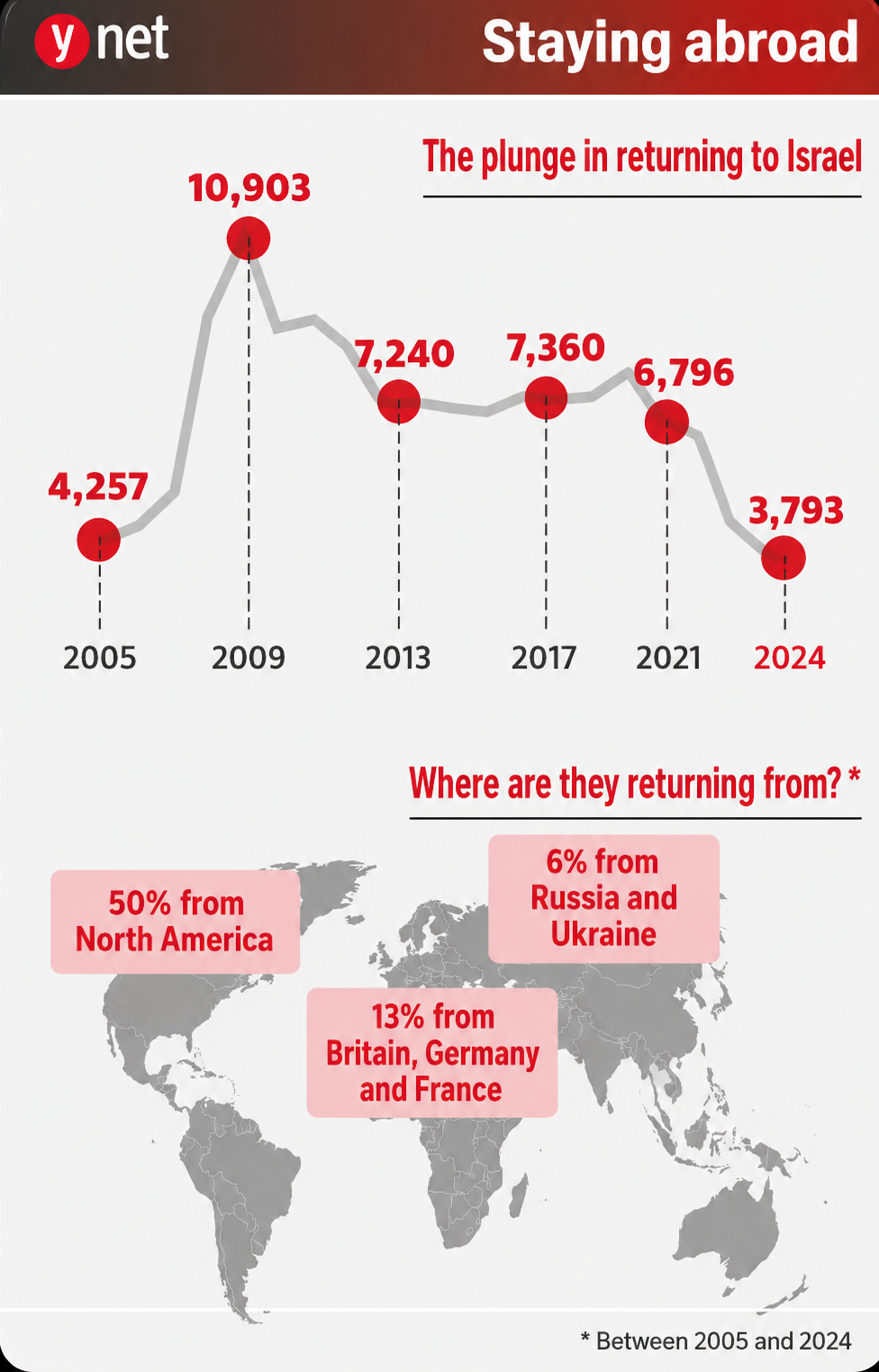
The annual average number of Israelis returning between 2008 and 2012 stood at about 9,300. Between 2013 and 2020, the average fell to roughly 7,400. The decline accelerated after 2020. About 8,000 Israelis returned that year, compared with only about 3,800 in 2024, the lowest figure in recent years. According to the report, the steepest drop occurred in 2023.
The fall in return migration has also contributed to Israel’s negative migration balance between 2022 and 2024, which measures the difference between those entering and leaving the country. According to Central Bureau of Statistics data cited in the report, Israel recorded a negative migration balance of about 140,000 people during those three years.
North America has historically accounted for the largest share of returning Israelis, but the number returning from there has also fallen sharply.
Roughly half of all returning residents between 2005 and 2024 came from North America. Another 13% returned from Britain, Germany and France, while 6% came back from Russia and Ukraine. The number returning from the United States dropped significantly, from about 3,700 in 2020 to only 1,500 in 2024.
Russia and Ukraine were an exception to the broader trend in 2022. That year, returnees from Ukraine accounted for 9% of all Israelis coming back, while those from Russia made up 8%, an increase the report said was likely linked to the Russia-Ukraine war.
Health care, jobs and unequal benefits
The report identifies several barriers that may discourage Israelis living abroad from returning. One is the disparity between assistance provided to returning residents and benefits available to new immigrants.
Returning Israelis receive significantly less support in areas including direct financial assistance, taxation and higher education. In housing, the report notes, returning residents are not entitled to assistance at all.
Health coverage is another major obstacle. Israelis who have spent an extended period abroad and stopped paying National Insurance contributions may face a waiting period of up to six months before regaining eligibility for state health insurance. They can avoid the waiting period by paying a special fee of 16,860 shekels.
According to the report, 94% of Israelis who were assigned such a waiting period between 2022 and 2024 did not pay the fee and instead waited between two and six months without state health coverage. The report also highlights employment difficulties, including problems finding work in Israel at an adequate salary.
For Israelis returning with a spouse who is not an Israeli citizen, regulating the partner’s legal status can also become a lengthy process lasting between five and seven years.
Families with children face another challenge. Many children of returning Israelis have limited ability to read and write Hebrew, yet the assistance available through the Israeli education system is limited, according to the report.
‘A historic missed opportunity’
MK Gilad Kariv, chairman of the Knesset Immigration, Absorption and Diaspora Affairs Committee, requested the report and accused the government of failing to make the return of Israelis abroad a national priority.
“A government that wants to bring Israelis home should have put the issue on its agenda,” Kariv told ynet and Yedioth Ahronoth. “The wave of hostility toward Israel around the world and the sense of belonging could have led to an increase in the number of Israelis returning, despite the war, but the government preferred to continue with the judicial overhaul, avoid dealing with the cost of living and continue dividing Israeli society,” he said.
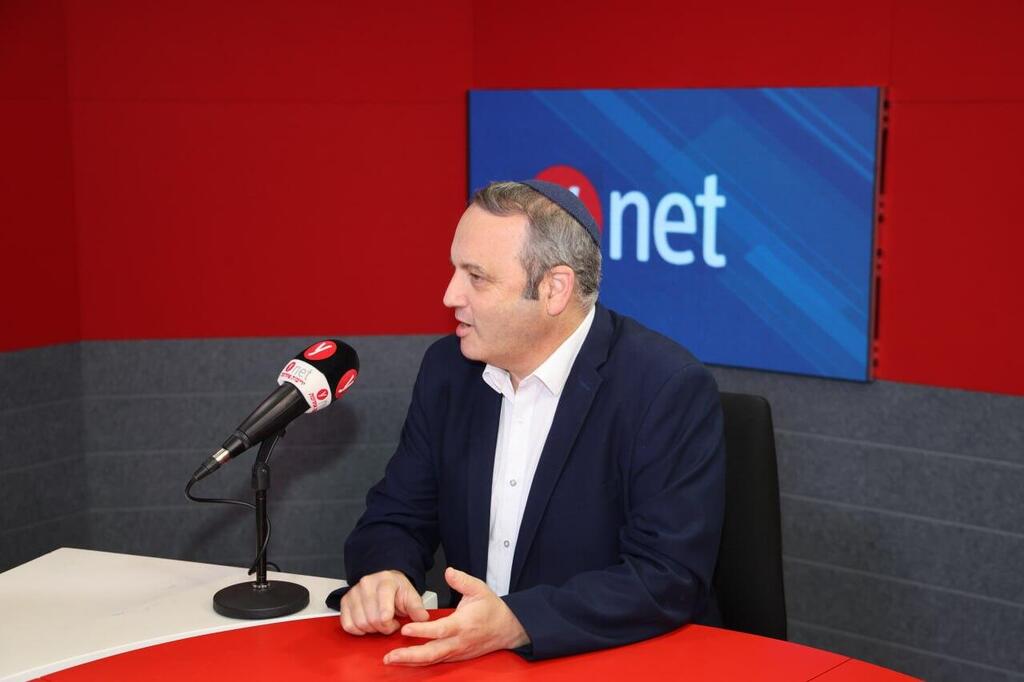
MK Gilad Kariv
(Photo: Yariv Katz)
Kariv’s committee has held a series of discussions on Israelis leaving the country and on returning residents.
Despite its requests, he said, the government has not formulated a strategic plan to encourage Israelis abroad to return and has not appointed a designated authority to address the growing emigration trend.
Kariv also criticized the government for failing to create a five-year plan to encourage Israelis to return, unlike a similar program implemented between 2010 and 2015. “In the next government, we will advance the issue through a series of measures, first and foremost a dedicated five-year plan that will provide solutions in the areas of legal status, employment, education and absorption,” Kariv said.
“We will not give up on Israelis who chose to leave, and we will do everything possible to make it easier for them to return.”
Kariv argued that government policy itself had contributed to the decline. “There is a direct line between the judicial overhaul and the government’s performance during three years of war and the plunge in the number of returning Israelis,” he said. “Just as happened with emigration from Israel, the government did not merely neglect the issue. It created a situation in which many Israelis living abroad find it difficult to imagine their future here.”
First published: 07:44, 08.17.26