

President Donald Trump on Friday threatened to punish countries, apparently in Europe, if they try to block his plans to take control of Greenland, escalating rhetoric that has alarmed Denmark, Greenland’s leaders and U.S. allies.
Speaking at a White House event focused on health care for rural Americans, Trump recalled using tariffs in the past to pressure European countries over drug prices and suggested he could do the same over Greenland, which he described as vital to U.S. national security. Trump has frequently used tariffs as a diplomatic tool against both allies and rivals, and last year imposed sweeping duties on imports from nearly every country, including Israel.
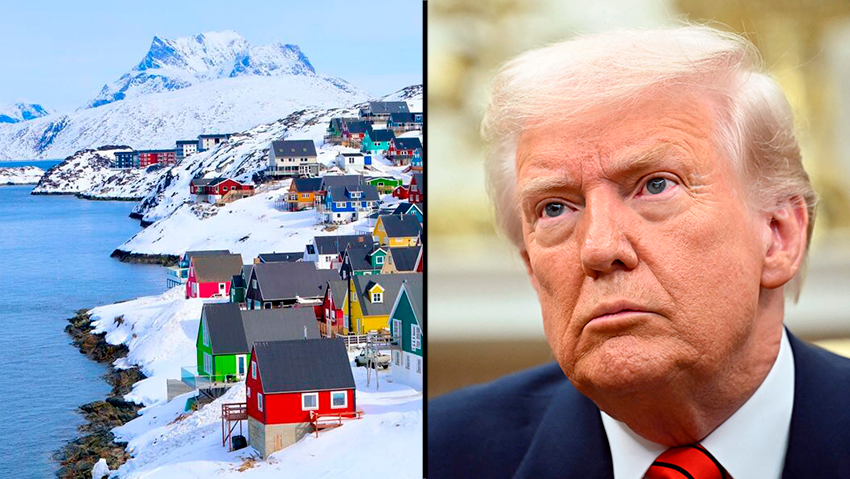
Trump's threat


His comments come as the Supreme Court has yet to rule on a legal challenge to his authority to impose such broad tariffs, a power the Constitution assigns to Congress. Trump again defended his approach, expressing hope the administration would prevail in the case.
Greenland, a vast Arctic island with about 57,000 residents, has belonged to Denmark for centuries but enjoys broad autonomy and has the right under Danish law to declare independence. Trump, who first floated the idea of buying Greenland during his initial term, views the island as a critical security asset in the Arctic, where Russia and China are expanding their presence, and as a territory rich in natural resources.
Danish Prime Minister Mette Frederiksen has repeatedly said Greenland is not for sale and that only its people can decide its future. Trump has responded in the past by threatening economic measures against Denmark and has not ruled out using military force to seize the island.
Since returning to the White House in January last year, Trump has repeatedly raised the prospect of annexing Greenland and has taken steps meant to signal seriousness, including appointing a special envoy for Greenland and sending his son, Donald Trump Jr., on a visit to the island. In recent days, following what the administration described as a successful U.S. military operation in Venezuela that removed President Nicolás Maduro, Trump renewed his focus on Greenland with statements that heightened concern in Copenhagen and Nuuk.
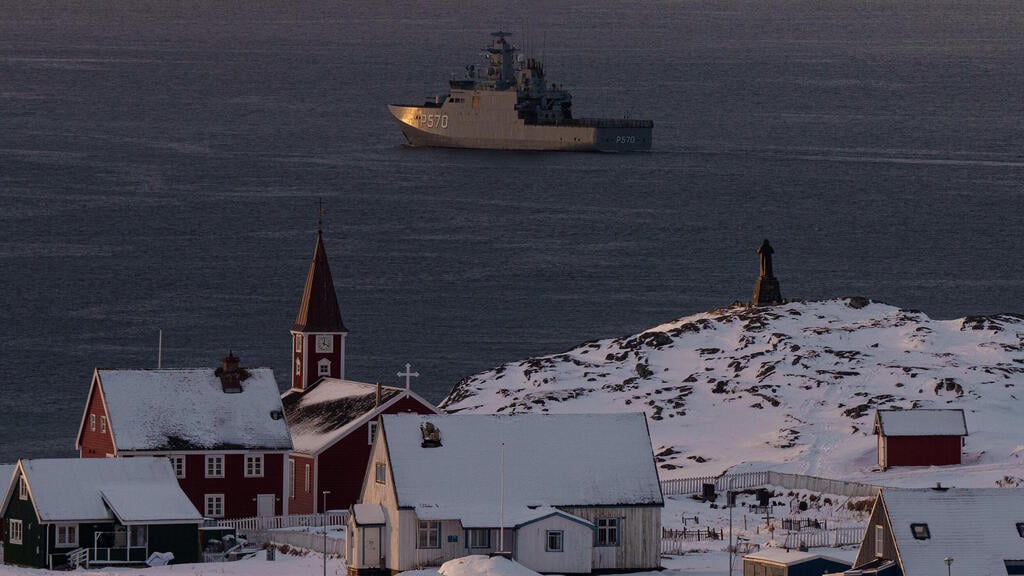
A show of presence, not a deterrent. Vessels of the Royal Danish Navy
(Photo: AP Photo/Evgeniy Maloletka)
Those concerns deepened after the White House issued a statement saying senior officials were discussing ways to take control of Greenland and that military options were being considered. U.S. officials have also been reported to be weighing one-time financial grants to Greenlanders to encourage a break from Denmark and closer alignment with Washington.
Frederiksen warned last week that a U.S. attack on Greenland could lead to the collapse of NATO. She appeared this week alongside Greenland’s prime minister, Jens-Frederik Nielsen, to present a united front. While Greenland has a strong independence movement, Nielsen said that if forced to choose now between Washington and Copenhagen, he would side with Denmark, NATO and the European Union.
Trump argues that Greenland’s strategic location makes U.S. control essential, saying Russia or China could otherwise move in. Denmark, like the United States, is a NATO member, meaning an attack by one ally on another would in principle trigger the alliance’s collective defense obligations, a scenario Frederiksen has said could unravel NATO.
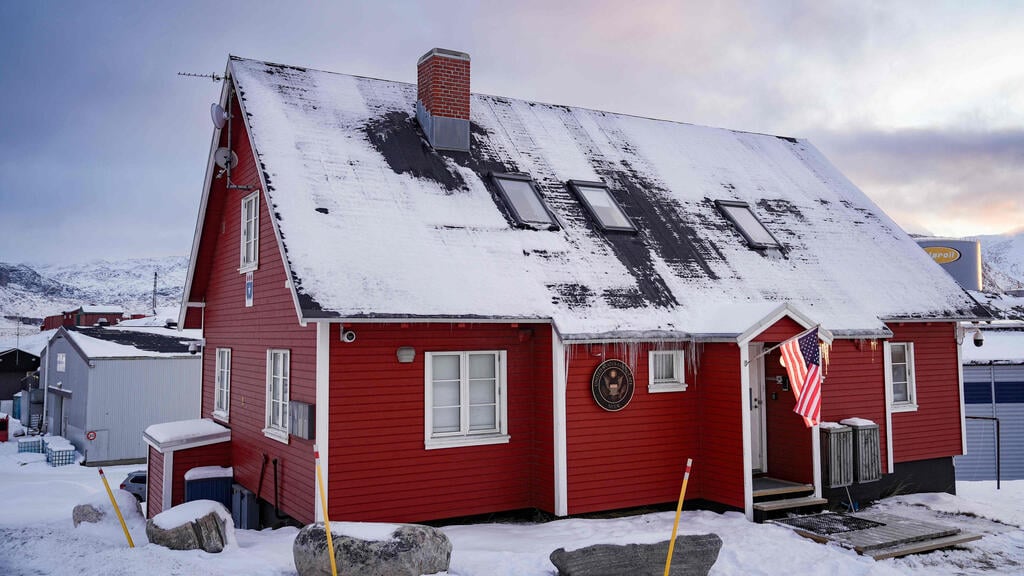
The US consulate in Greenland
(Photo: Alessandro Rampazzo / AFP)
Trump’s remarks came as European troops began arriving in Greenland as a show of support for Denmark. The small deployments, intended for patrol and monitoring, are largely symbolic and no match for U.S. military power, but underscore a growing crisis of trust between Europe and Washington. Denmark earlier announced it would boost its own military presence on the island with aircraft and naval vessels, aiming to establish a larger, more permanent force with help from NATO allies.
The European deployments followed a failed high-level meeting at the White House this week between the foreign ministers of Denmark and Greenland and U.S. Secretary of State Marco Rubio and Vice President JD Vance. Danish Foreign Minister Lars Løkke Rasmussen said the talks did not persuade the Trump administration to abandon the idea of taking over Greenland, and resulted only in an agreement to form a working group to continue dialogue.
France said 15 alpine troops were en route and arrived this week. Germany announced it would send 13 soldiers, while Sweden, Norway, Finland, the Netherlands and Britain pledged small numbers of personnel.
Greenland already holds major strategic importance for the U.S. military. The shortest route between Europe and North America passes over the island, and the U.S. Air Force operates Thule Air Base in northwestern Greenland under a 1951 agreement with Denmark. During the Cold War, the United States maintained dozens of bases and nearly 10,000 troops there, though that presence was sharply reduced after a 2004 agreement and now numbers only a few hundred.
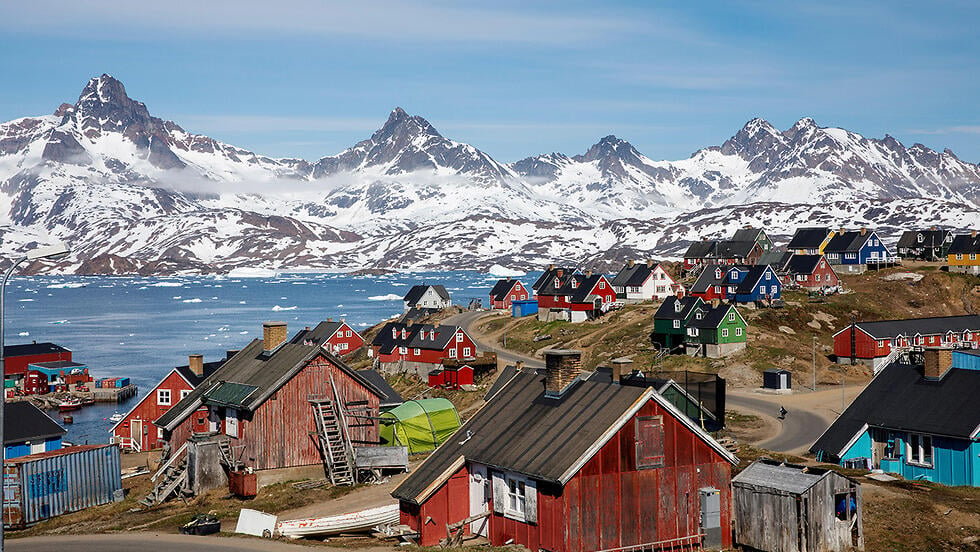
(Photo: Reuters)
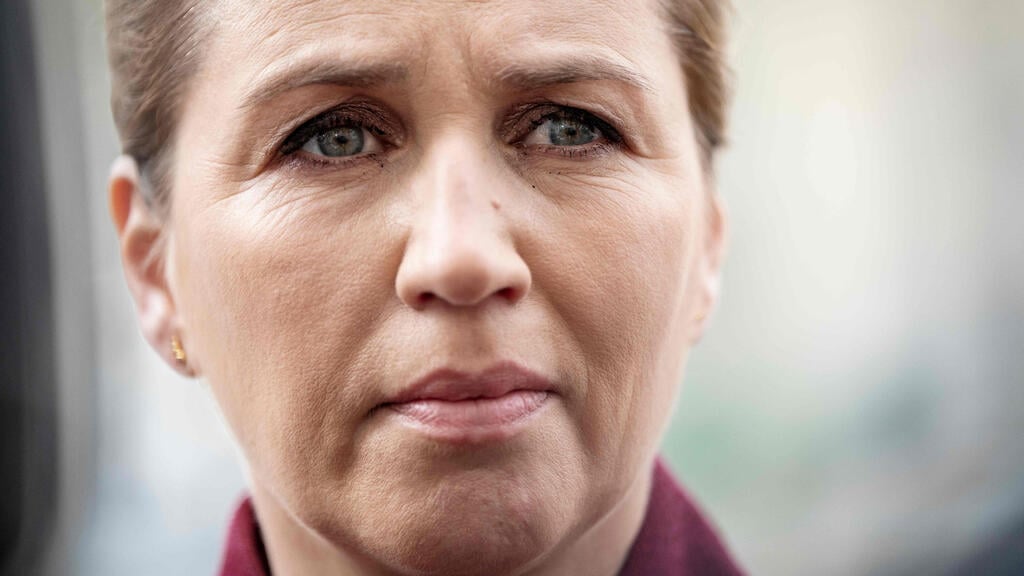
Danish Prime Minister Mette Frederiksen
(Photo: Mads Claus Rasmussen / RITZAU SCANPIX / AFP)
In recent years, as Russian and Chinese activity in the Arctic has increased, Washington has sought to expand its footprint in Greenland, including by deploying radar systems to monitor waters between Greenland, Iceland and Britain used by Russian nuclear submarines. Russia has reopened several Arctic bases closed after the Cold War, modernized its Northern Fleet and conducted frequent military exercises, while also seeking to develop new shipping routes as ice melts.
Geographically part of North America, Greenland’s capital, Nuuk, is closer to New York than to Copenhagen. The island is believed to hold large deposits of minerals, oil and natural gas, though extraction has been slow. Its economy still relies heavily on fishing and annual subsidies from Denmark. Basic infrastructure is limited, with no roads linking its 17 towns and only one commercial international airport.
Estimates suggest offshore reserves of up to 50 billion barrels of oil and gas, potentially placing Greenland among the world’s top exporters. However, about 80% of the island is covered by thick ice, limiting exploration largely to coastal areas, where harsh conditions, environmental concerns and complex bureaucracy have slowed development.
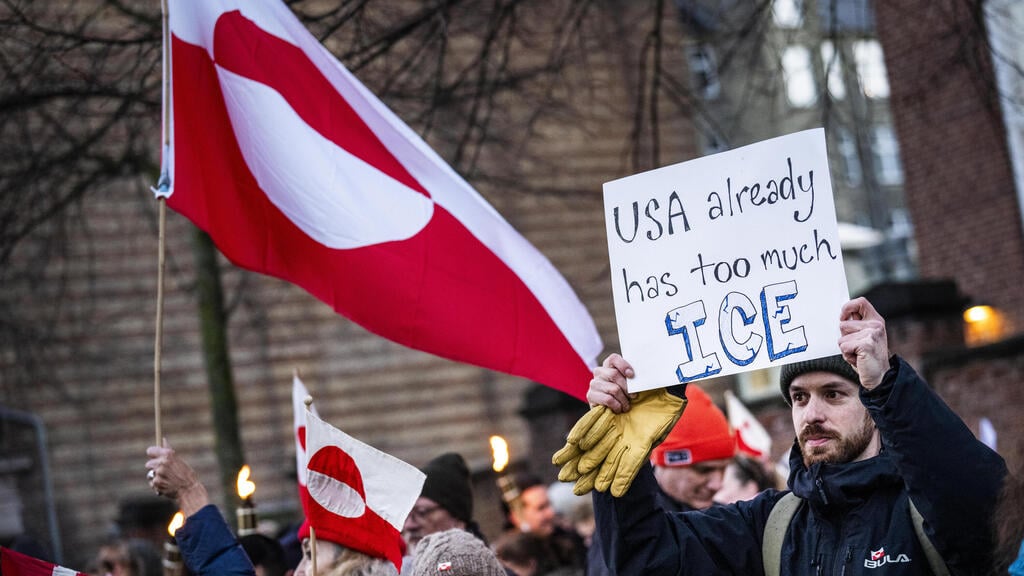
Protesters in Copenhagen outside the US Embassy holding Greenland flags
(Photo: Martin Sylvest Andersen/Getty Images)
Greenland was a Danish colony until 1953, when it became an official territory with expanded self-rule. Since 2009, it has had the right to declare independence, after which it could in theory choose to align with another country. While many Greenlanders favor independence, polls show uncertainty over timing and concerns about economic viability without Danish support.
U.S. interest in acquiring Greenland is not new. During the early Cold War, the Truman administration sought to buy the island for strategic reasons, but Denmark refused.