

Lebanon’s Hezbollah group would not intervene militarily in the event of “limited” U.S. strikes against Iran, but would consider any harm to Iran’s Supreme Leader Ayatollah Ali Khamenei a “red line,” a senior official from the Iran-backed terror group told AFP on Wednesday.
The official, who spoke on condition of anonymity because he was not authorized to brief the media, said Hezbollah’s position would be “not to intervene militarily” if American strikes on Iran remain limited in scope.
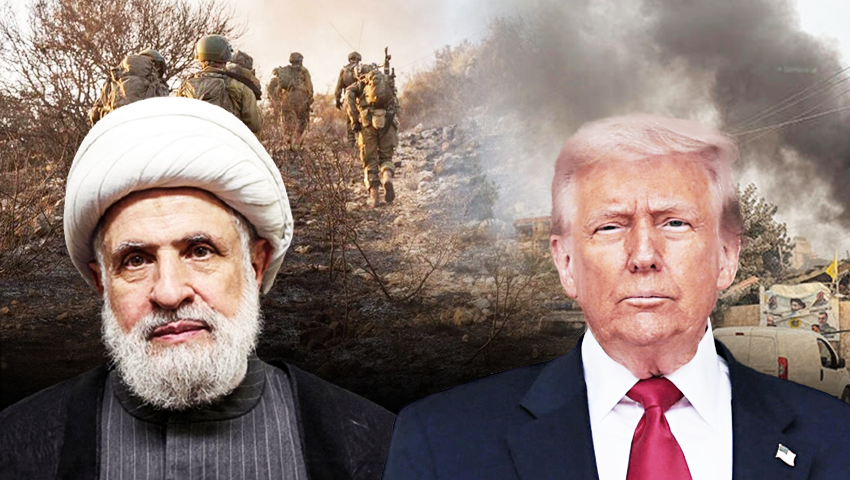
(Photo: IDF, REUTERS/Jessica Koscielniak)
However, he warned that any direct attack on Khamenei would cross a “red line,” without specifying what response that might entail.
Lebanese authorities have expressed concern that Hezbollah could be drawn into a broader regional war if U.S. strikes on Iran escalate. Officials in Lebanon say Israel has warned that in such a scenario it would severely target civilian infrastructure, including Beirut’s international airport.
The comments come as Bloomberg reported that Iran has accelerated oil shipments in recent days, in what analysts see as a possible effort to safeguard exports ahead of potential U.S. military action.
Citing data from energy analytics firm Kpler, Bloomberg said roughly 20 million barrels of oil were loaded from Iran’s Kharg Island terminal between Feb. 15 and Feb. 20 — nearly triple the volume shipped during the same period in January. That amounts to more than 3 million barrels per day, well above Tehran’s usual export pace.
Satellite imagery analyzed by Bloomberg showed the number of oil tankers waiting southeast of Kharg Island more than doubled during that period, from eight to 18. A partial image from Feb. 22 showed nine tankers still in the area.
Samir Madani, co-founder of TankerTrackers.com, which monitors oil shipments using satellite imagery, told Bloomberg that Iran appears to be loading “as much oil as possible.” He estimated exports this month could average between 1.5 million and 1.6 million barrels per day, with a sharp increase since mid-February.
Iran’s crude storage levels on Kharg Island appeared to decline as tankers were loaded. Bloomberg reported that at least seven storage tanks were full on Feb. 15, while by Feb. 20 six of them had partially emptied. Madani said storage occupancy stood at about 67% over the weekend, down from 88% — or roughly 30 million barrels — on Jan. 26.
Oil production and exports are a cornerstone of Iran’s economy. Most shipments leave from Kharg Island and pass through the Strait of Hormuz, often aboard tankers that attempt to avoid detection.
The developments come as U.S. forces continue to build up in the Middle East. According to the Institute for National Security Studies in Tel Aviv, more than 250 American fighter jets — including F-35 and F-22 stealth aircraft as well as F-16 and F-15 jets — are now in the region, not including those stationed in Europe. With European-based aircraft included, the number rises to about 350, excluding refueling, transport and surveillance planes.
Twelve F-22 jets landed in Israel this week, the institute said. U.S. naval movements have also continued, including the deployment of destroyers linked to the USS Abraham Lincoln carrier strike group to the Persian Gulf and Arabian Sea.
In his State of the Union address, President Donald Trump said he prefers a diplomatic solution with Tehran but vowed never to allow Iran to obtain a nuclear weapon. He accused Iran of seeking to develop missiles capable of reaching the United States and said negotiations are ongoing, though Tehran has not pledged to permanently forgo nuclear arms.