

Hours after the IDF, following directives from Israel’s political leadership, began striking Syrian regime military assets that had entered the Druze-majority province of Sweida, Syria’s Foreign Ministry issued a sharp condemnation: “Israel bears full responsibility for the latest attack in southern Syria and its consequences.” The statement continued: “We affirm our legitimate right to defend our territory by all means guaranteed under international law.”
Footage of dozens of Israeli Druze entering Syria


IDF attacks regime forces in Syria
(Video: IDF)
The Israeli strikes came amid intensifying clashes between Druze fighters and regime-backed Bedouin militias, prompting Syrian forces to enter Sweida in an attempt to assert control. Local resident Mohannad al-Din described to Ynet the stark contrast between official state propaganda and the dire reality on the ground: “The news says the state has won, law is being enforced, and life is back to normal. But in reality, I see bodies, fires, burned homes and shops—including mine. After the regime forces left, they handed the houses over to Bedouins, who began looting, burning and humiliating. I saw people being killed in the street in the name of ‘law enforcement.’”
Al-Din said President Ahmad al-Sharaa “sent thugs, not responsible leadership. They came to curse, steal and abuse—uncontrolled criminal factions.”
Gallery
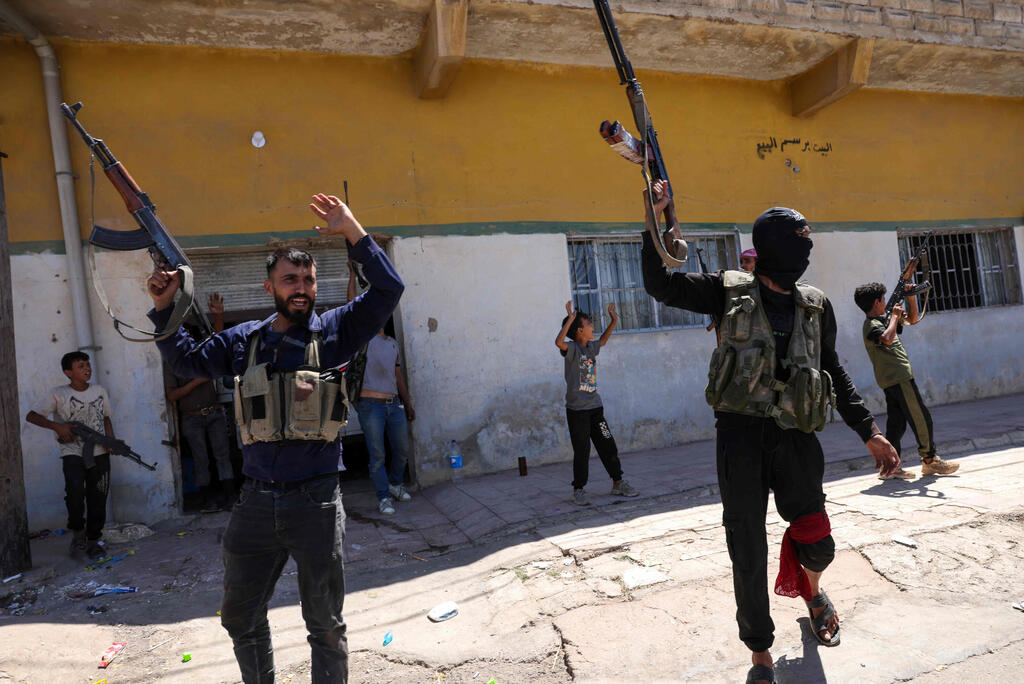
'We see killings, bodies, houses and shops burned' in the Syrian province of Sweida
(Photo: Bakr Alkasem/ AFP)
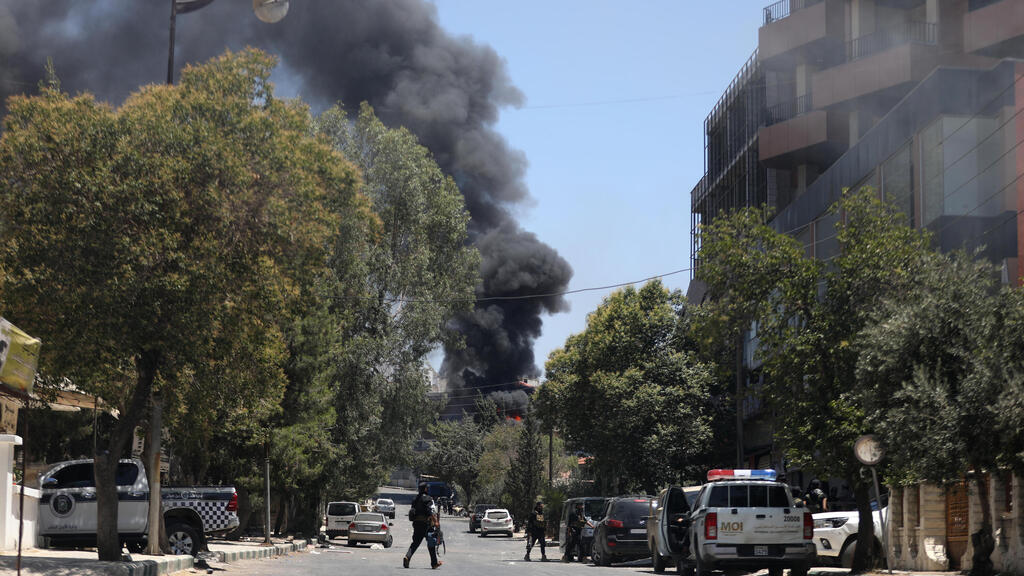
Israeli attacks in Sweida, southern Syria
(Photo: Getty Images)
A former political prisoner under the Assad regime, he said he participated in the 2011 uprising and now considers himself “a wounded man in search of identity.” He added: “I belong to the revolution of pride and freedom, to the Syrian homeland, to the identity Mashaal Tammo spoke of—be Syrian first, then whatever you choose. The wound in Syria today is so deep it cannot be healed without real justice and accountability. The state is supposed to serve its people—not act like a criminal faction.”
Commenting on the Israeli strikes, he said: “I don’t hope for Israeli intervention, nor do I welcome it—it harms the Syrian people. But unfortunately, the responsibility lies with the president. He acted irrationally, sending not leaders but thugs. It’s the same old pattern—a power-driven, anti-people regime.”
Get the Ynetnews app on your smartphone: Google Play: https://bit.ly/4eJ37pE | Apple App Store: https://bit.ly/3ZL7iNv
Another resident of Sweida said that while some had initially welcomed the end of Assad’s rule, disappointment with the new regime is growing, particularly amid concerns that the new government is enforcing sectarian policies. “Most here demanded local security forces and the reinstatement of former Druze police officers. But disputes broke out over the proportion of outsiders in the security ranks and proposals to form a local brigade,” he said. There is growing grassroots support for decentralization, and some are now calling for federalism.
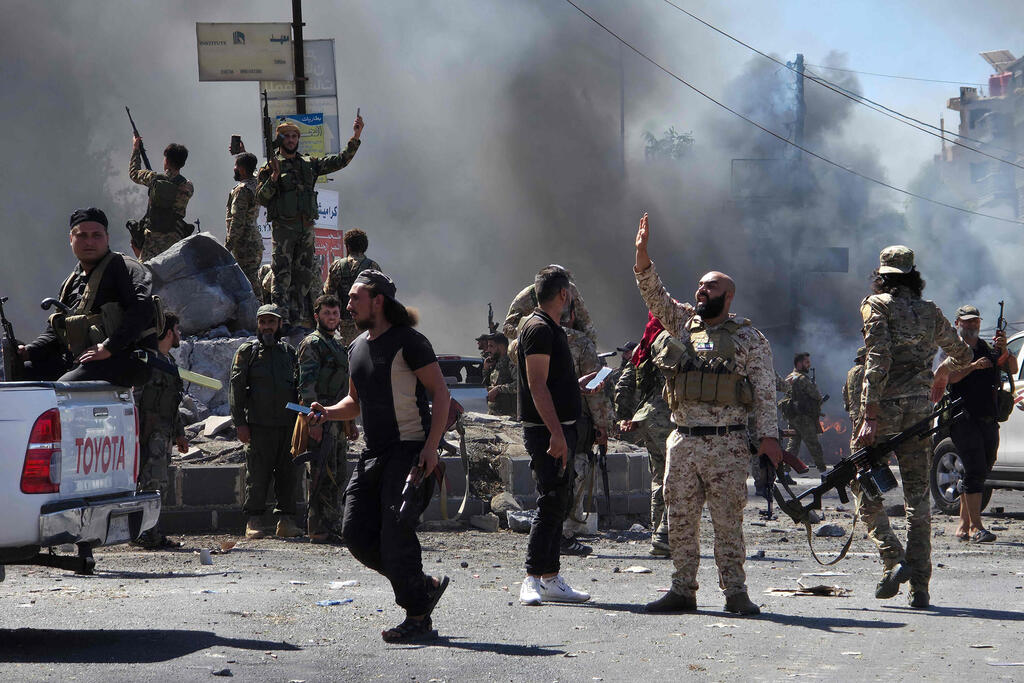
Israeli attacks in Sweida, southern Syria
(Photo: Sam Harari / AFP)
One resident described the current curfew in the province: “The streets are deserted. The forces haven’t entered our neighborhood yet, but we’ve heard of murders, home invasions and blatant sectarian rhetoric. Many fled to rural villages where there’s less military presence. We wanted an orderly, calm entry—not a violent one. I support Arab and international pressure to ensure a state that respects diversity, freedom of religion and civil liberties—as long as there’s no direct foreign intervention.”
Regarding Israel, he said: “Any pressure that can stop these violations is welcome—but not if it means embracing Israel’s agenda. Peace with Israel, if it ever happens, would be circumstantial—not a free choice.”
Escalation reaches Israeli border and sparks local protests
Back in Israel, Wafa al-Shaar, a peace activist from the Druze town of Mas’ade in the Golan Heights, said Tuesday she still hadn’t heard from her relatives in Syria’s Druze-majority Sweida province amid intense fighting there. “There’s guerrilla warfare in the streets—the situation is extremely difficult on every level,” she said, as violent clashes continued between Druze fighters and forces loyal to Syrian President Ahmad al-Sharaa across the border.
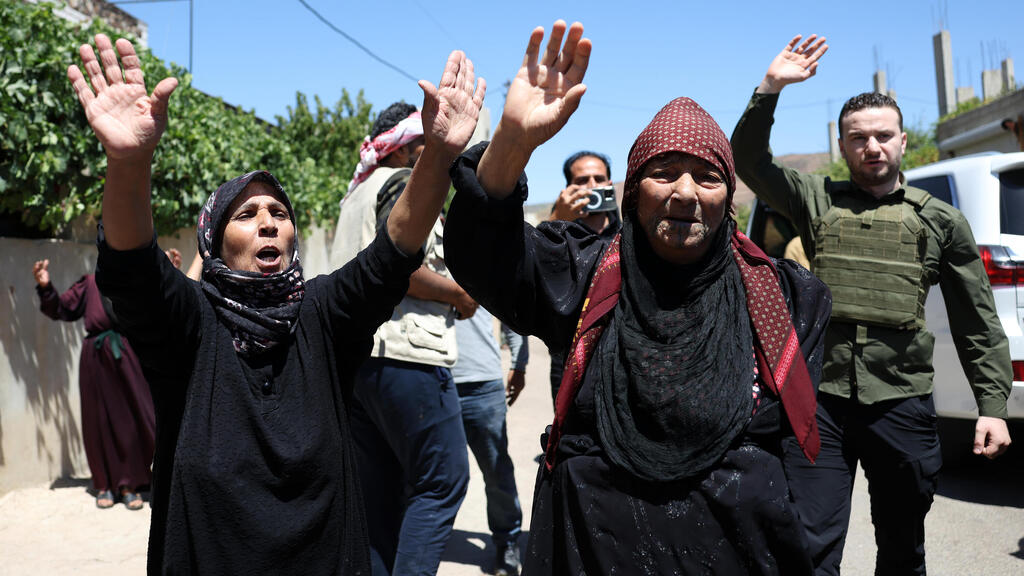
Druze residents of Sweida, Syria
(Photo: Getty Images)
She warned that “If the Druze region falls into the hands of the regime and Daesh-affiliated forces, all of Syria will plunge into a dark and dangerous period.” She added that her relatives face the risk of massacre, citing an incident in Sweida in which regime forces allegedly stormed a family home and slaughtered 15 members, from children to the elderly.
Fears of collapse also spurred action on the ground. Around 30 Druze citizens from Israel crossed the border near Majdal Shams and advanced several kilometers into Syrian territory near the Druze village of Khader, where an IDF outpost is located. The army worked to return them safely to Israel. Meanwhile, reports from Lebanon and social media indicated that Druze in northern Israel were also preparing to cross into Syria—a move that could escalate the situation further.
Israeli attacks in Syria
Tensions were also felt within Israel, as dozens of Druze protesters blocked major junctions in the Galilee and the Yokne’am area. Tires were set ablaze, and traffic on Highway 6 near the Elyakim Interchange was temporarily shut down .Yisrael Beitenu MK Hamad Amar, a member of the Druze community, said: “The prime minister and defense minister have repeatedly promised to protect our brethren across the border. Today’s events prove al-Sharaa is incapable of governing and demilitarizing the border region with Syria is a critical security interest for Israel.”
Inside Syria, eyewitness reports paint a grim picture. Dozens of Druze civilians have been murdered, with others abducted and humiliated. Al-Shaar warned: “In one family that remained in their home in Sweida, regime forces broke in and slaughtered 15 members—from children to the elderly.”