


Retired Supreme Court justice and former state prosecutor Edna Arbel died Wednesday at the age of 82. Arbel was one of the most influential figures in Israel’s legal establishment.
Arbel was born in Jerusalem to a father who worked as a public-sector attorney and a mother who worked in the Haifa District Prosecutor’s Office. She began her legal career in 1969 as a criminal defense attorney at the Heik law firm in Tel Aviv, and about two years later entered what became a long career in public service.
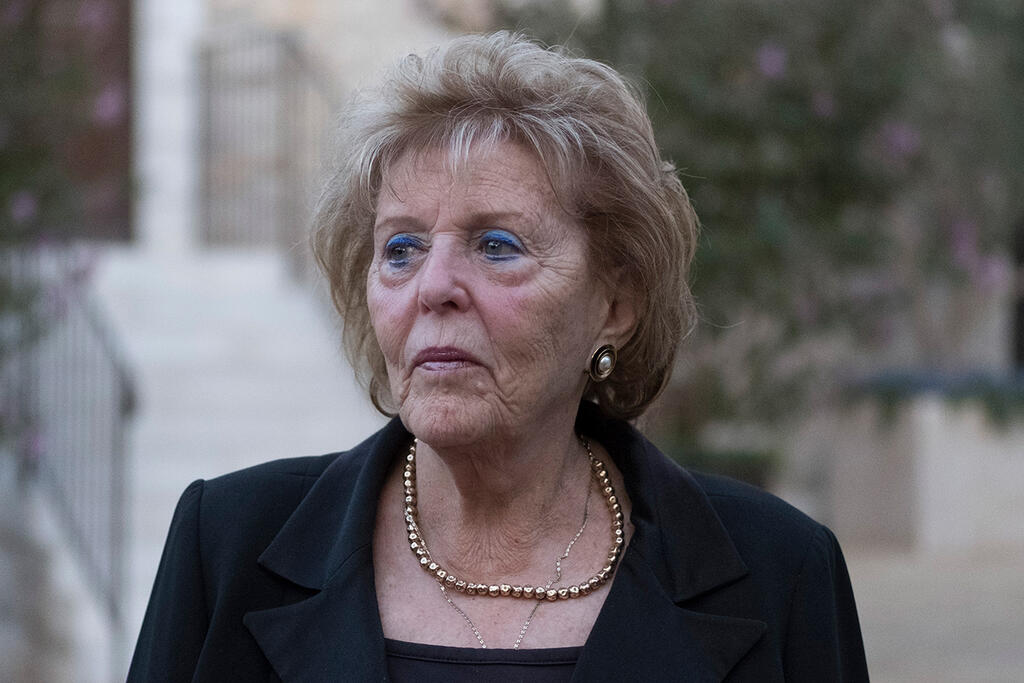
Former Supreme Court justice and state prosecutor Edna Arbel
(Photo: Yoav Dudkevitch)
In 1984, she was appointed district prosecutor. About four years later, she became a judge in the Tel Aviv District Court, where she served for roughly five years. In 1996, she was appointed state prosecutor. In May 2004, she was selected to serve as a justice on the Supreme Court, a position she held until her retirement in the summer of 2014.
Arbel also served as the public prosecutor in disciplinary proceedings for Mossad and Shin Bet employees, took part in the team that gathered material for the commission that investigated the Sabra and Shatila massacre, and served as the attorney general’s representative on the committee examining the Bus 300 affair.
“Under the submarine-like conditions in which we worked, in the tension we experienced, among boxes of material and interrogatees, an eternal bond was formed,” she once said. “We were required to take on countless missions and challenges. A daily routine with no routine, but with a sense of mission, challenge and interest.”
In her retirement speech from the Supreme Court, Arbel said she viewed the law as a means of helping the individual litigant, whoever they were, and ensuring their ability to exercise their rights.
“Human dignity was a sacred value for me, whether the matter concerned the high and mighty or the poorest among us,” she said. “Victim, complainant, defendant, witness, litigant or petitioner, I always tried to see the person standing before me. Always, but always, I allowed that person to speak, to say what was in their heart.
“I end my judicial path with the belief that I acted according to my professional conviction and moral outlook, while remaining faithful to the state and its laws, and that I fulfilled my oath,” she said.
In her final ruling, Arbel stressed that foreign workers could not be treated as “the hewers of wood and drawers of water” of Israeli society while their basic needs were ignored.
“Abandoning these obligations contains an element of exploitation that is inconsistent with the values of a Jewish and democratic state and its protection of human rights,” she wrote.
In that decision, she ordered the relevant ministers to formulate regulations or an order under the Foreign Workers Law that would bring health arrangements for long-term foreign caregivers closer to those granted to Israeli residents.
Arbel was married to Uri and is survived by three daughters.