


A similar mechanism already operated in Lebanon, with the participation of the United States, the Lebanese government and Israel. One thing about the new cell, however, is already clear: Iran is directly involved, alongside Lebanon. Israel, according to the public statements, is not a direct participant.
Gallery
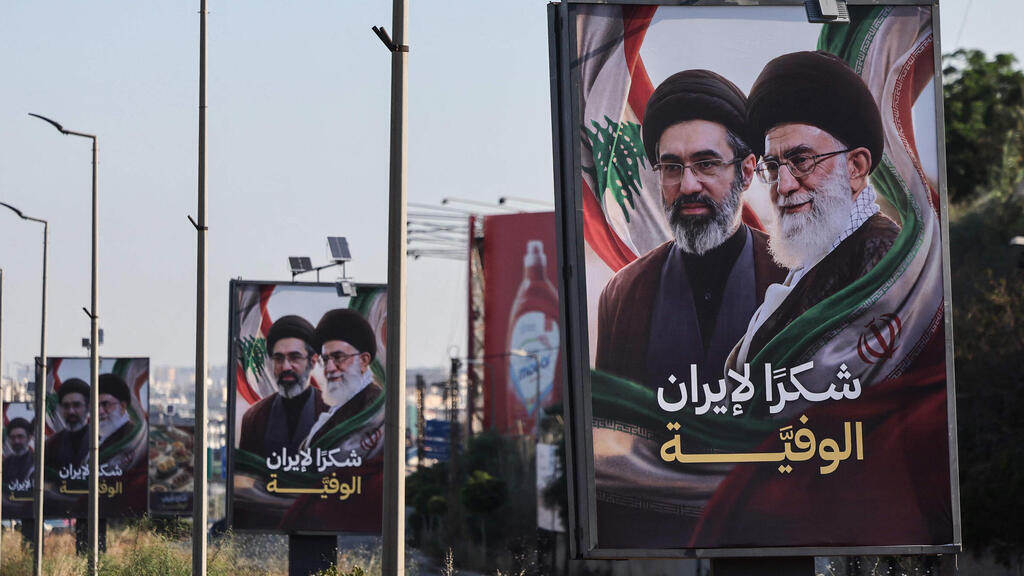
Billboards near Beirut’s Rafic Hariri Airport reading ‘Thank you, Iran’
(Photo: Anwar AMRO / AFP)
The commander of the IDF Northern Command, Maj. Gen. Rafi Milo, told northern community leaders after Hezbollah’s first fire during Operation Roaring Lion that “Hezbollah fell into a strategic ambush.” In Iran, however, the decision to establish a cell with Iranian involvement was celebrated.
Tasnim, a news agency affiliated with the Iranian regime, stressed Monday morning that Iran is now “part of the security story in Lebanon.” The agency repeated the announcement that “a dispute resolution unit will be established with the participation of Iran, the United States and Lebanon to monitor the implementation of the first clause” of the memorandum of understanding in Lebanon.
The ceasefire monitoring mechanism established in November 2024 failed to supervise the ceasefire in recent months after fighting resumed. The mechanism, an international committee headed by an American general, was tasked with overseeing, verifying and assisting with the commitments made by Israel and the Lebanese government.
Among its missions was the disarmament of Hezbollah, a task the Lebanese army claimed it had completed in January. The situation on the ground in southern Lebanon suggested otherwise.
The ceasefire monitoring committee included the United States, Lebanon, Israel, France and UNIFIL. Its goal was to track ceasefire violations, coordinate the deployment of the Lebanese army and help maintain stability along the border. It also relayed to the Lebanese army locations that Israel said contained Hezbollah weapons or military facilities, so Lebanese forces could inspect them.
The committee held 16 meetings in total in Naqoura, in southern Lebanon, attended by its various representatives. The last meeting took place on February 25 and included only military personnel, although civilian representatives from Lebanon and Israel had already been added to the committee by that point.
Lebanon had appointed its former ambassador to the United States, Simon Karam, as its civilian representative on the committee. Karam now heads the Lebanese delegation to direct negotiations with Israel, which are expected to resume on Tuesday in the United States.
With the start of Operation Roaring Lion, the committee’s planned meetings for March, April and May were canceled.
In practice, the mechanism has operated in recent months as an operations room coordinating movement in southern Lebanon. Hezbollah-affiliated figures have repeatedly accused it of cooperating with Israel.
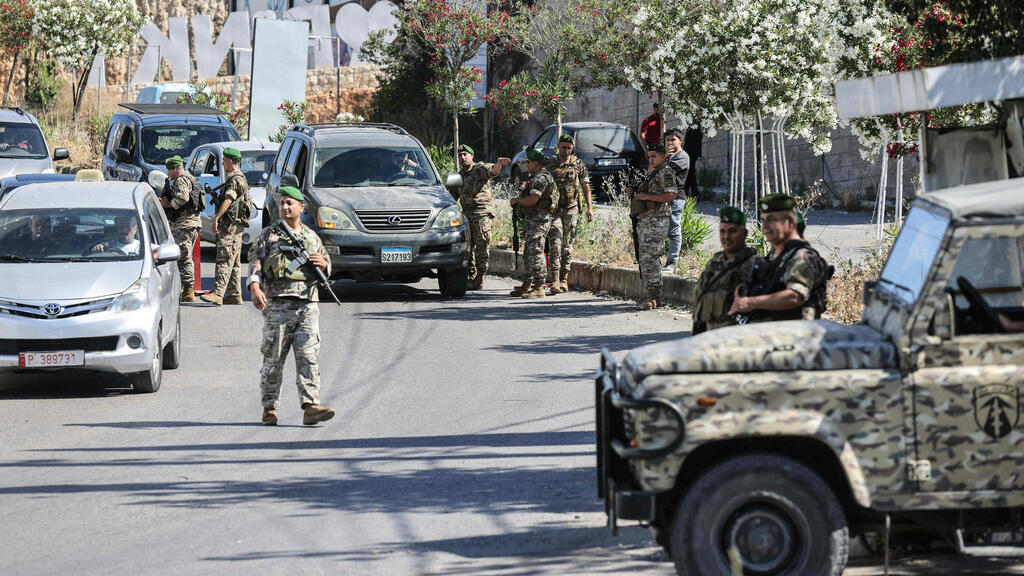
Lebanese army soldiers in Nabatieh; the mechanism also relayed locations from Israel for raids on Hezbollah targets
(Photo: Mahmoud ZAYYAT / AFP)
Hezbollah’s parliamentary bloc said in May that the ceasefire monitoring committee had “failed to fulfill its role, which worsened the suffering of the Lebanese people.” Lebanese officials also complained about the need to coordinate every movement in southern Lebanon to avoid becoming a target for attack, including medical evacuations.
Only days ago, Lebanese media reported that the committee did not allow members of Lebanon’s civil defense to reach the village of Deir Mimas to extinguish a fire caused by strikes, while residents requested help over fears the fire would spread.
On June 6, when two officers and a soldier in the Lebanese army were killed in an Israeli strike, a Hezbollah-affiliated channel claimed that the soldiers’ entry had been coordinated with the ceasefire monitoring mechanism and that Israel had received the vehicle’s license plate number.
The IDF said after the incident that it was “investigating the incident and will draw the necessary lessons,” adding that the area was “a combat zone that requires movement coordination with the IDF.”
Last week, the ceasefire monitoring mechanism approved electrical work carried out under Lebanese army escort near the village of Kfar Houna in southern Lebanon.
Uncertainty over the fate of the existing mechanism, which includes Israel and the Lebanese government, grew Monday following the Qatari-Pakistani announcement.
Lebanese President Joseph Aoun was among those briefed on the new cell, speaking Monday with U.S. Vice President JD Vance, Jared Kushner and Qatari Prime Minister Mohammed al-Thani.
Aoun’s office said the call dealt with “consolidating the ceasefire in Lebanon, stopping the Israeli military escalation and the steps that must be taken in this context, including the establishment of a cell for this purpose.”