

The American magazine The Atlantic published an extensive report over the weekend on the final days of Bashar Assad as president of Syria, on the eve of the collapse of his regime. The article claims that his close adviser, Luna al-Shibl, was in fact his lover — and that she also arranged sexual encounters for him with other women, including the wives of senior Syrian officers.
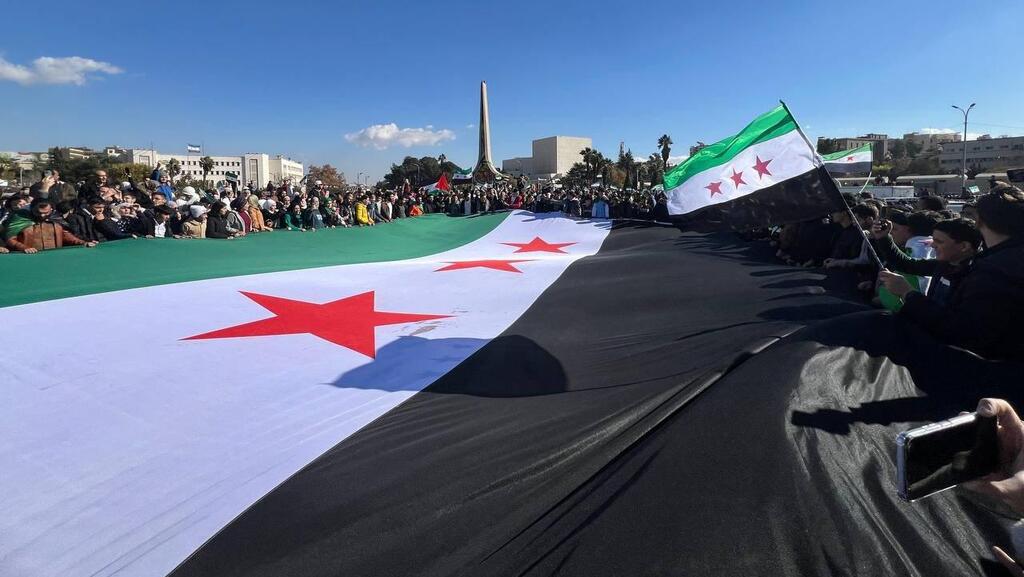
According to the report, which is based on former senior officials in Assad’s regime, people close to the presidential palace and a former official in Israel’s security establishment, Assad did not believe his rule would collapse until the final hours before Damascus was captured by rebels led by Ahmad al-Sharaa, who replaced him as Syria’s new president. The Atlantic reported that as rebel forces closed in on Damascus on December 7, 2024, Assad was still reassuring aides and subordinates, insisting that victory was near. Shortly afterward, he fled in the dead of night aboard a Russian aircraft, telling almost no one.
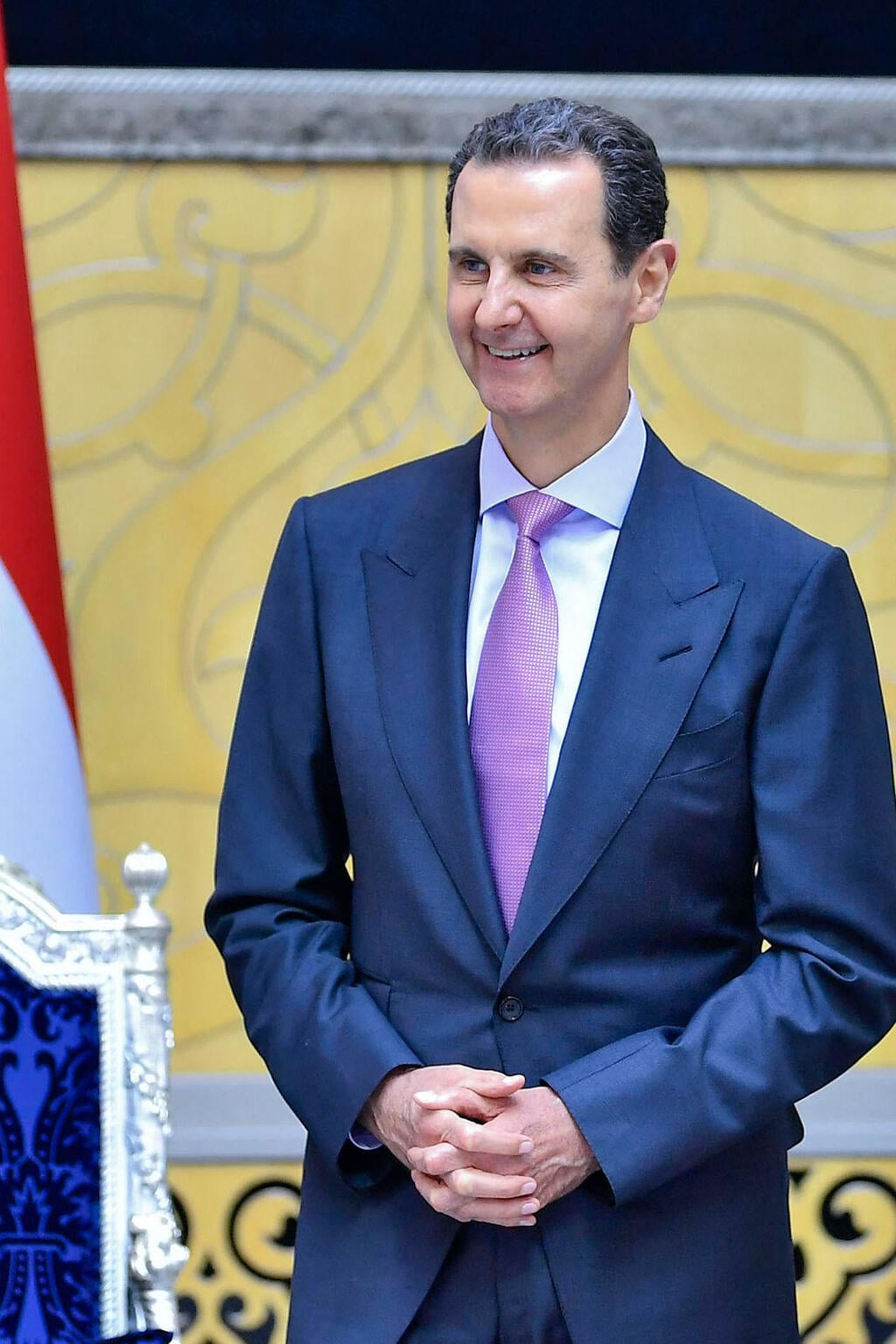
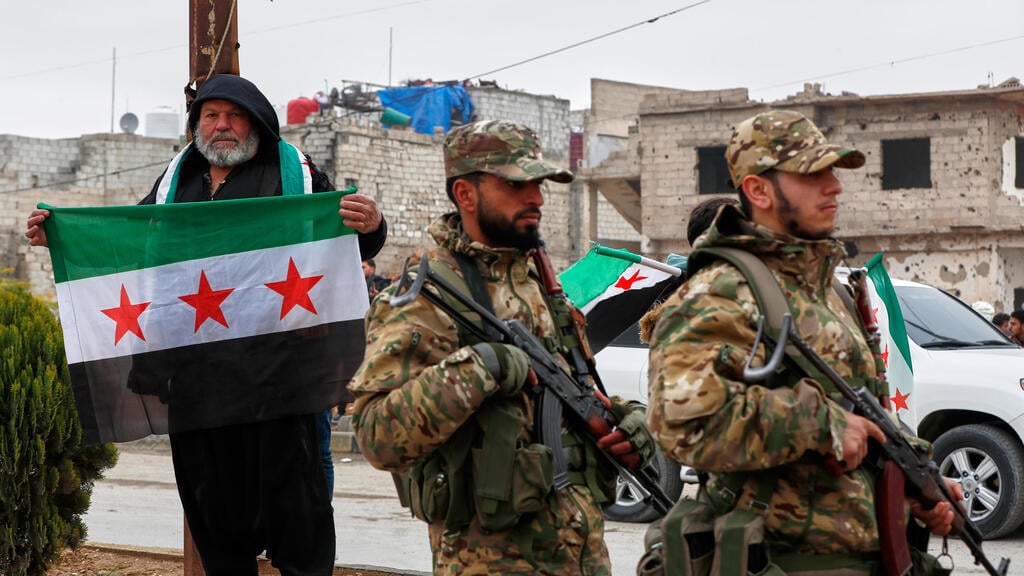
Forces of Syria’s new regime in the suburbs of Damascus
(Photo: AP Photo/Omar Sanadiki)
Some of his closest aides were misled and were forced to flee the country by whatever means they could as rebel forces lit up the skies over the city with celebratory gunfire. Assad’s “betrayal,” the article says, was described as “so cowardly and astonishing” that some people initially struggled to believe he had acted that way.
The Atlantic’s author, Robert Worth, writes that the article is based on conversations over the past year with dozens of people and officers who staffed Assad’s palace in Damascus, as well as a former official in Israel’s security establishment. They described Assad as a detached ruler, obsessed with sex and video games, who might have been able to save his regime had he not been so stubborn and arrogant. That arrogance, they said, was reflected in his refusal to accept lifelines offered by regional countries, including foreign ministers who called him in the regime’s final days and proposed deals. “He didn’t answer,” one source said. “He seemed to be sulking, angry at the idea that he would have to give up the presidency.”
Worth links that obstinacy to Assad’s sense of confidence after surviving multiple near-death experiences in the early years of Syria’s civil war. He appeared headed for removal until Russian President Vladimir Putin sent troops in 2015 to help the Syrian regime repel the rebels, restoring Assad’s control over most of the country. “That deceptive moment of victory, many Syrians told me, was when everything began to go wrong,” Worth writes. “Assad did not seem to understand that his victory was hollow. Large parts of his country had become ruins. The economy had shrunk to almost nothing, and U.S. and European sanctions weighed on it further. Syria’s sovereignty was partly mortgaged to Russia and Iran, which pressed Damascus to repay the money they had invested in the conflict. Assad’s supporters, who had endured years of war and hardship, could not remain patient forever. When the fighting ended, they began to expect some measure of relief.”
Worth portrays Assad as particularly enamored of Hezbollah leader Hassan Nasrallah. Hezbollah is a Shiite militant group backed by Iran and designated a terrorist organization by the United States. Assad, Worth writes, was overly tempted to believe the propaganda fed to him by Nasrallah that the so-called “axis of resistance” would deliver a decisive blow to Israel, after which Assad could dictate whatever terms he wanted for peace. “In other words, Assad would not have to make hard choices or sacrifices. Everything would be handed to him on a silver platter,” Worth writes.
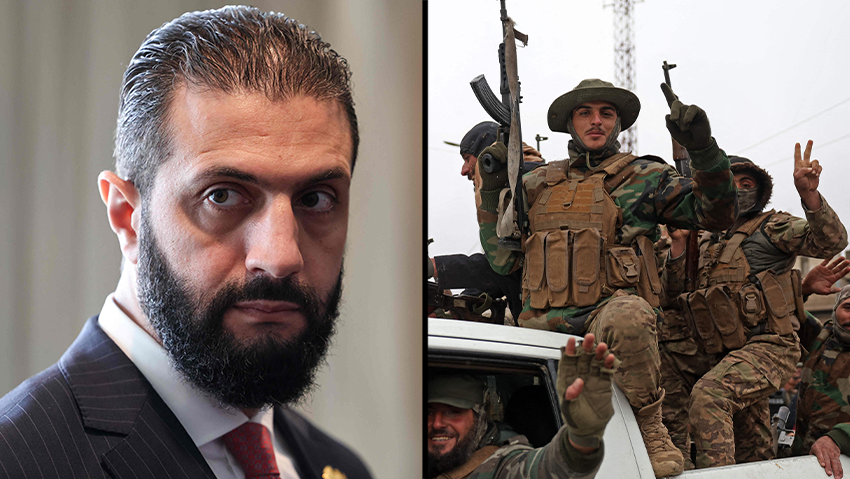
Rebel leader al-Sharaa and his forces
(Photo: OMAR HAJ KADOUR / AFP / Ludovic MARIN / POOL)
A former official in Israel’s security establishment, who no longer works in government, told Worth that around 2019 he began to worry that Assad, previously seen as hostile but not especially dangerous, had become too weak to be reliable. “The regime was an empty shell,” the official said. He explained that until then, many in the Middle East were comfortable with Assad’s grip on power because despite his rhetoric against Israel, he was seen as someone who sought to maintain relative quiet along the border and as an enemy who was “easy to manage.” According to Worth, Assad appears to have misread that quiet consensus as strength. “Bashar lived in a fantasy world,” a former Hezbollah political operative who frequently visited Syria in those years told Worth. “He thought, ‘The Iranians need me. The Russians have no choice. I’m the king.’”
'Maybe she sensed the end was coming': Who killed Luna?
Worth’s article describes Assad, through the eyes of a Hezbollah operative, as a leader who spent much of his time playing Candy Crush and other video games on his phone while his country became a “narco-state” — a state whose economy relied heavily on the production and smuggling of the amphetamine Captagon, overseen by Assad’s brother Maher. The report says Assad pushed aside the old guard from his father’s era — his father, Hafez Assad, was Syria’s longtime ruler — and relied instead on a small circle of younger, dubious figures. One of them was al-Shibl, a former Al Jazeera journalist and Assad’s media adviser, who also served as his lover.
Former palace insiders and the Israeli source told The Atlantic that al-Shibl also procured other women for Assad, including the wives of senior Syrian officers.
Assad and his 'assistant-lover,' Luna al-Shibl, mock Syrians in a video revealed after his downfall


Worth writes that al-Shibl, who was married to a regime insider, encouraged Assad’s habit — born inside the palace — of looking down on ordinary citizens.
In a recording revealed last December, Assad and al-Shibl can be heard laughing dismissively at Hezbollah’s pretensions and mocking soldiers who salute them as they drive through the suburbs of Damascus. At one point, Assad, who is behind the wheel, says of Syrians they pass on the street: “They spend money on mosques, but they don’t have enough food.”
Worth notes that in July 2024, as the war in Gaza dominated headlines, al-Shibl was found dead in her BMW on a highway outside Damascus. State media described the incident as a traffic accident, but the circumstances were unusual. According to some reports, the car sustained only minor damage, yet her skull was crushed. “Rumors quickly spread that she had been murdered on orders from Tehran for providing information to the Israelis,” Worth writes. But he says the Israeli source and two people connected to the regime told him that Assad himself ordered the killing of his former lover.

Luna al-Shibl
(Photo: Philippe DESMAZES / AFP)
According to the Israeli official, al-Shibl had effectively become a Russian agent, providing Moscow with information on Iran’s activities in Syria. Worth writes that “perhaps she sensed that Assad’s end was coming and that she needed another protector.” He emphasizes that he had difficulty verifying these claims.
Assad and his son got in the vehicle: 'Others were told there was no room'
Worth describes the final chapter of Assad’s rule as beginning in November 2024. When rebels began advancing on Aleppo on November 27, Assad was in Russia, where his son was scheduled to defend his doctoral dissertation. As Aleppo’s defenses collapsed, Assad remained in Moscow, to the astonishment of his commanders at home. He appeared to hope that Putin would save him, but when the Russian president met him briefly, he made clear that Russia could not fight the war on his behalf. By the time Assad finally landed in Damascus, Aleppo had already fallen. On December 7, 2024, as regional foreign ministers tried to reach him in a last-ditch effort to prevent the regime’s collapse, his phone was switched off.
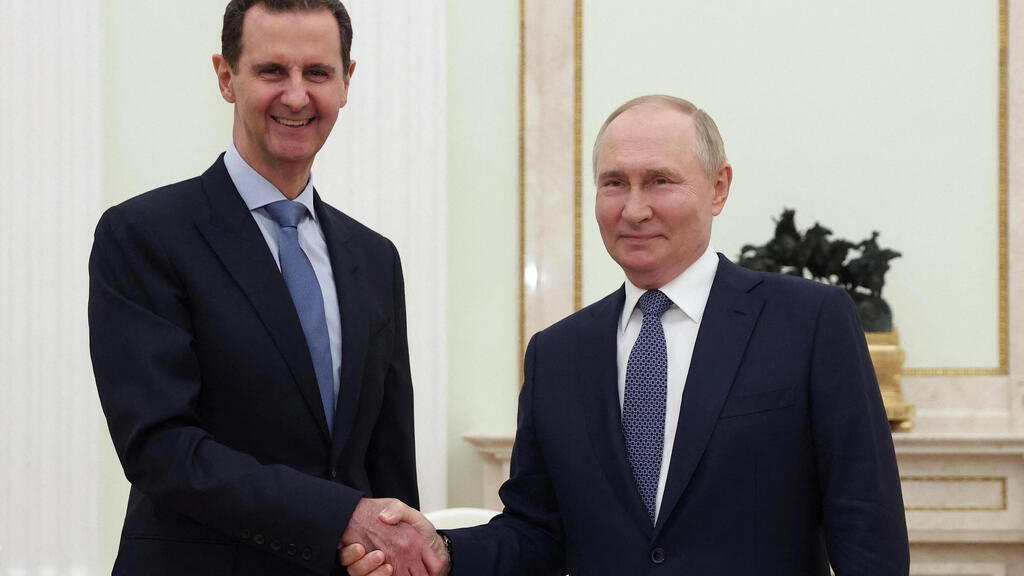
(Photo: Sputnik/Valeriy Sharifulin/Pool via REUTERS)
A member of Assad’s inner circle who was with him in his final hours gave Worth the following account: Assad returned from the presidential palace to his private residence in the al-Malki neighborhood around 6 p.m. He appeared calm and said he had just reassured his cousin Iyad Makhlouf that there was no reason to worry — the United Arab Emirates and Saudi Arabia would find a way to halt the rebels’ advance. Makhlouf was later shot dead that night while fleeing by car toward Lebanon.
At 8 p.m., word arrived that the city of Homs had also fallen, and panic set in among Assad’s entourage. The president continued to promise his aides that regime forces were approaching from the south to encircle and defend the capital, but this was untrue. “In the hours that followed, he seemed to swing between despair and delusional assurances that victory was near — a state of mind familiar to anyone who has seen the film ‘Downfall,’ about Hitler’s last days in his Berlin bunker,” Worth writes.
Shortly after 11 p.m., Mansour Azzam, one of Assad’s senior aides, arrived at the house with a small group of Russian officials. They went into a room with Assad to talk. The source told Worth he believes the Russians showed Assad videos proving that regime forces were no longer fighting. By 1 a.m., Assad and his inner circle knew that many regime loyalists had abandoned the fight and fled Damascus for the Syrian coast, the Alawite stronghold. At 2 a.m., Assad emerged from his private quarters, told his longtime driver he would need vans and ordered his staff to begin packing his belongings as quickly as possible. A group of Russians was waiting outside the house.
“Until that moment, many in the entourage believed that Assad would go to the presidential palace to deliver a speech of defiance to his supporters,” Worth writes. “Now they finally understood that the battle was over. He was abandoning them for good.”

Hafez Assad, Bashar’s son
According to Worth’s sources, Assad walked to the front door with two aides and his son Hafez. Others were told there was no room. Assad’s driver stood by the door, looking at the president with what the source described as “an unmistakable expression of disappointment,” and asked, “Are you really leaving us?”
Sources told Worth that Assad looked back at him. Even at that final moment, he did not take responsibility for what had happened to his country. He did not betray his supporters, Assad believed — they had betrayed him by refusing to sacrifice their lives to prolong his rule. “What about you people?” Assad asked the driver. “Aren’t you going to fight?” He turned and walked into the night. The Russians were waiting.
Assad was smuggled by the Russian military to Moscow, where he now lives with his wife, Asma, and their children. Syria’s new government, led by Ahmed al-Sharaa, is demanding that Russia extradite Assad in exchange for advancing relations between Syria and Russia, which still maintains strategic military bases along Syria’s coast.