

Yisrael Beytenu Chairman Avigdor Liberman sharply criticized Yashar! leader Gadi Eisenkot during a tense meeting Saturday, accusing him of damaging the anti-Netanyahu bloc's electoral prospects through his campaign messaging and efforts to promote a minority government, sources familiar with the discussion told ynet.
The confrontation came amid efforts by parties seeking to replace Prime Minister Benjamin Netanyahu to form the next government following elections to the 26th Knesset. Liberman has emerged as a major obstacle to those efforts, ruling out cooperation with both Arab parties and ultra-Orthodox factions, potentially complicating attempts to assemble a governing majority.
Gallery
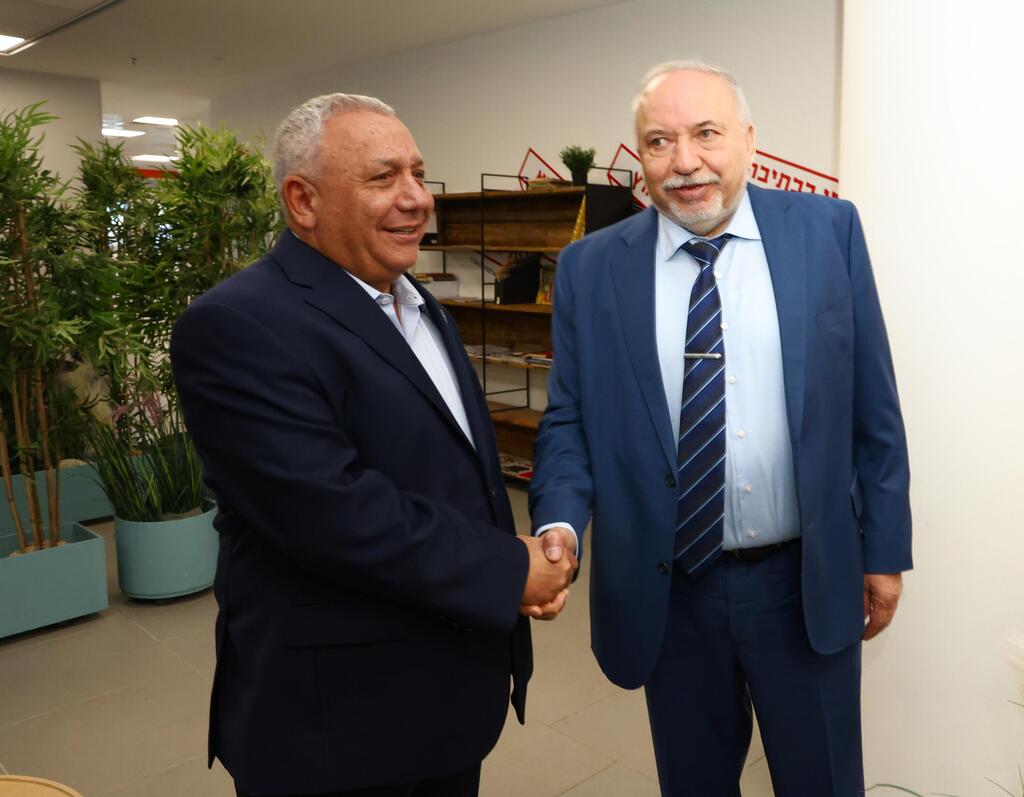
Yashar! leader Gadi Eisenkot and Yisrael Beytenu Chairman Avigdor Liberman
(Photo: Shaul Golan)
According to sources briefed on the meeting, Liberman accused Eisenkot of undermining the bloc's chances in the election through his campaign strategy and his support for a minority government dependent on outside parliamentary backing.
The two leaders also discussed who should serve as the next Knesset speaker. Liberman believes Eisenkot currently lacks sufficiently experienced and qualified candidates for the position, the sources said.
The discussion took place as parties in the anti-Netanyahu bloc explore replacing Knesset Speaker Amir Ohana as one of the first parliamentary moves of the new Knesset, even before a new government is sworn in.
Neither Yisrael Beytenu nor Yashar! commented on the reported exchange.
The tensions have intensified as Eisenkot seeks to secure enough support to receive the first mandate to form a government from President Isaac Herzog, who is expected to begin consultations with party leaders Wednesday.
On Sunday evening, former prime minister Naftali Bennett's Beyachad party formally announced that it would recommend Eisenkot for the premiership, providing a significant boost to his candidacy.
"Former Prime Minister Bennett made clear throughout the election campaign that he would respect the voters' decision, and that is what he is doing," the party said in a statement. "Former Prime Minister Bennett informed Yashar! Chairman Gadi Eisenkot of his decision."
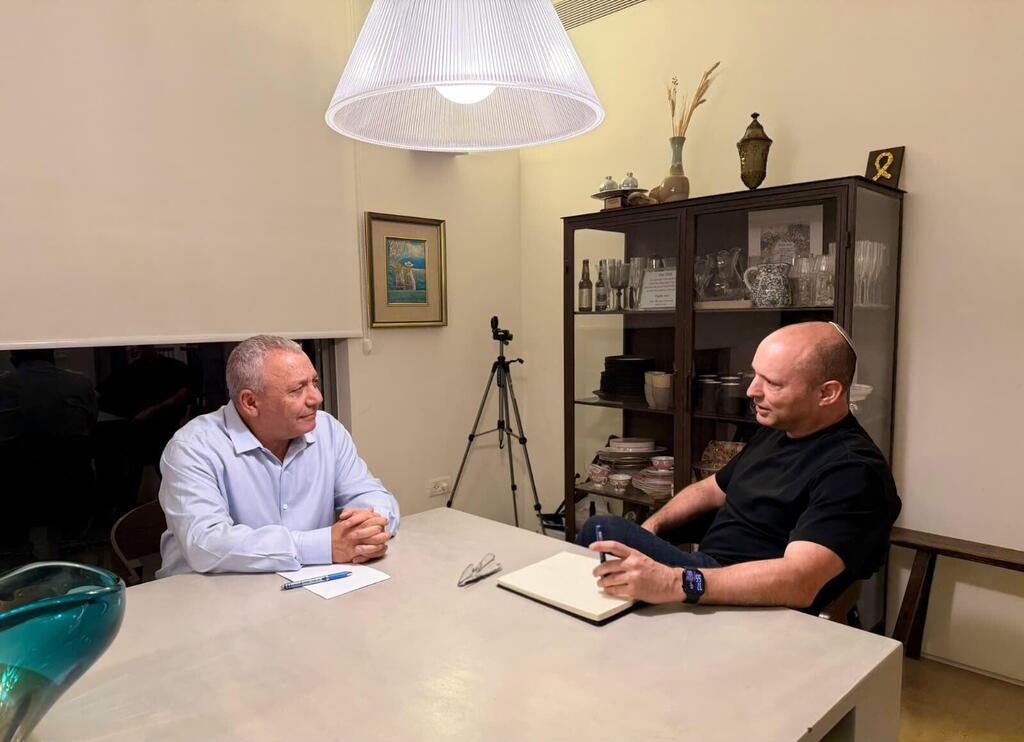
Eisenkot and Naftali Bennett
The announcement marked a shift from the election campaign, when Bennett and other leaders in the anti-Netanyahu bloc declined to publicly endorse Eisenkot as their candidate for prime minister.
Senior figures in Eisenkot's camp said Sunday that securing the first opportunity to form a government would carry considerable political significance, even if the bloc has yet to agree on a governing coalition.
Liberman, however, has not publicly committed to recommending Eisenkot and has remained conspicuously silent since the election results were announced, apart from several social media posts.
His refusal to clarify his position has frustrated other opposition leaders, who are seeking to present a united front ahead of the presidential consultations.
Liberman is expected to convene his party's first faction meeting Monday and make a public statement afterward.
Liberman rejects government backed by Arab parties
The dispute between Liberman and Eisenkot centers in part on whether the anti-Netanyahu bloc should seek to establish a minority government with parliamentary support from parties that would remain outside the coalition.
Eisenkot has authorized an examination of a possible government formed with the abstention of United Torah Judaism and the United Arab List, known by its Hebrew acronym Ra'am.
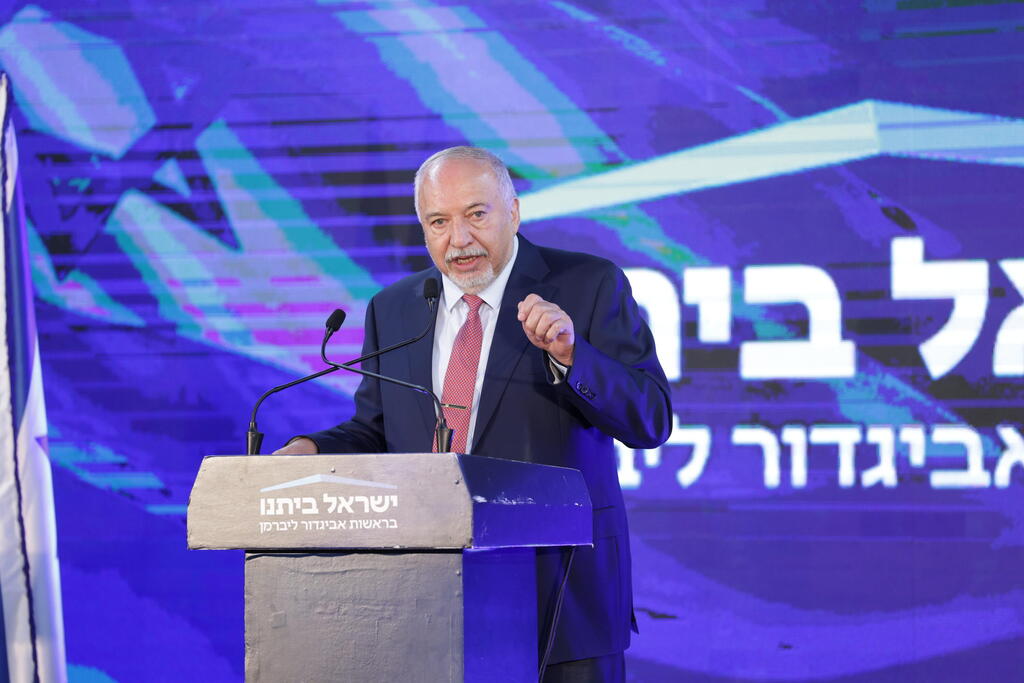
Liberman
(Photo: Oz Moalem)
Under the proposal, the two parties would refrain from voting against the government, allowing it to take office without formally joining the coalition. Ra'am lawmaker Yoav Segalovitz would actively support the government.
Eisenkot's camp does not want to negotiate with the Joint List, an alliance of predominantly Arab parties, but the proposal assumes the faction would not oppose the formation of a government intended to remove Netanyahu from office.
Joint List lawmaker Ahmad Tibi has already indicated that his party wants to bring down Netanyahu's government.
Liberman has repeatedly rejected such arrangements, insisting that Yisrael Beytenu will not participate in a coalition with either the Joint List or Ra'am.
Over the weekend, he reiterated his position in a post on X, accusing politicians from the two parties of supporting terrorism.
"We will not sit with supporters of terrorism!" Liberman wrote.
He cited Joint List lawmaker Ofer Cassif's support for South Africa's genocide case against Israel at the International Court of Justice following the Oct. 7, 2023, Hamas-led attack, as well as Cassif's allegation that the IDF carries out acts of terrorism.
Liberman also pointed to remarks he attributed to Ra'am lawmaker Yasser Hujirat weeks before the election, claiming Hujirat had described Hamas not as a terrorist organization but as a charitable organization.
The Yisrael Beytenu chairman further criticized celebrations at Joint List headquarters on election night.
He said Osama Saadi had dedicated the party's electoral achievement to "our people in the Gaza Strip, the West Bank and occupied Jerusalem," while supporters sang "Biladi, Biladi," the Palestinian national anthem.
"Anyone who wants to rely on supporters of terrorism is welcome to do so," Liberman wrote. "Yisrael Beytenu will not be there."
Bennett backs Eisenkot as Liberman keeps his cards close
Bennett's endorsement Sunday strengthened Eisenkot's position ahead of Herzog's consultations, but uncertainty remains over whether all parties in the anti-Netanyahu bloc will recommend him.
Senior officials in Eisenkot's camp are seeking to consolidate support across the bloc and initially secure recommendations from all its parties.
One senior figure outside Eisenkot's party warned that failure to unite behind him could have consequences beyond the immediate struggle to form a government.
"If the entire bloc does not recommend Eisenkot, all the judicial overhaul laws passed by the current coalition will take effect on Jan. 1, 2027, as stipulated by law," the official said.
The warning reflects concerns among opposition parties about legislation advanced by Netanyahu's coalition and the potential consequences of failing to establish an alternative government before the measures take effect.
Current assessments within the bloc suggest Eisenkot can count on recommendations from his own Yashar! party, the Democrats and Bennett's Beyachad faction.
Liberman, meanwhile, has not disclosed his intentions, even during closed-door discussions among leaders of the anti-Netanyahu bloc.
His silence has raised questions about whether he intends to recommend Eisenkot, demand political concessions or pursue another course.
The uncertainty has been compounded by disagreements over the Knesset speakership, a position that could become a central bargaining chip in negotiations over parliamentary control.
Reports have suggested that figures in the anti-Netanyahu bloc proposed offering the speakership to Liberman or fellow Yisrael Beytenu lawmaker Oded Forer.
Liberman denied that he had requested the position for himself.
The issue also surfaced during Saturday's meeting with Eisenkot, when Liberman reportedly questioned whether the Yashar! leader had sufficiently experienced candidates to fill the role.
Replacing Ohana could allow the anti-Netanyahu parties to assert parliamentary control before a new coalition is formally established, making the speakership one of the first potential tests of their ability to cooperate.
Herzog to begin consultations Wednesday
Herzog is expected to begin consultations with parliamentary factions Wednesday to determine which lawmaker should receive the mandate to form Israel's next government.
The meetings are expected to continue Thursday and could extend into Friday.
Under Israeli law, the president has seven days to conduct consultations, reach a decision and assign the task of forming a government, giving Herzog until Nov. 11 to make his choice. He could act sooner.
The president traditionally selects the lawmaker considered most likely to assemble a viable coalition, generally taking into account the number of recommendations received from parliamentary factions.
According to current calculations, Eisenkot is expected to receive 60 recommendations even if Yisrael Beytenu ultimately declines to endorse him.
Netanyahu is projected to receive 46 recommendations, while United Torah Judaism is expected to remain uncommitted.
The figures suggest Eisenkot could enter the coalition-building process with a substantial advantage in presidential recommendations, although they do not guarantee that he can assemble a government capable of winning the Knesset's confidence.