


The pilot program in Lebanon is increasingly looking like a failure, with potentially serious security consequences for Israel. More than 100 days have passed since the IDF handed control of three villages in southern Lebanon to the Lebanese army, but Hezbollah is gradually returning to the areas it evacuated.
Instead of the gradual dismantling of Hezbollah's infrastructure and the expansion of Lebanese army control, the terrorist organization is managing to return to the area, reactivate parts of its civilian networks and reestablish its influence among the local population.
Tensions are already rising
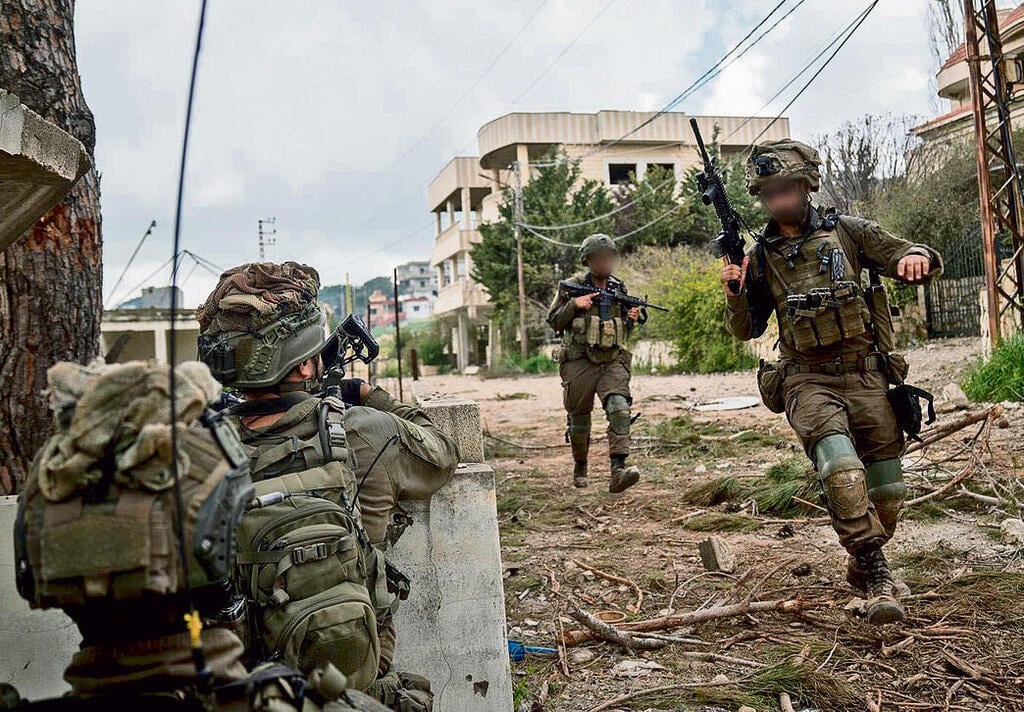
As the results of the pilot become increasingly clear, the IDF has struck suspects approaching its forces in Lebanon for the first time in several weeks. The military deployed a Zik drone against two suspects riding a motorcycle in the southern Lebanese village of Qabrikha, killing at least one of them. The man killed was identified as Nasr Mohammed Younes, a medical team member with the Amal movement's Risala Scouts. The relatively unusual targeted strike was the first in several weeks against suspects who, according to Israeli security officials, posed an immediate threat to troops by approaching too closely. The incident comes alongside the IDF's ongoing strikes against Hezbollah infrastructure.
Against the backdrop of the pilot's apparent failure is political uncertainty in both Israel and the United States. Talks between the parties over a mechanism to monitor the agreement have been stalled for months, and there is still no agreement on how to ensure that the Lebanese army is actually dismantling Hezbollah's infrastructure. Israeli officials say the Lebanese army is not conducting sufficient searches and, as previously reported, is avoiding entering private homes or searching private property.
The IDF, meanwhile, continues to hold defensive positions, although with significantly fewer troops than during the ground maneuver and the period leading up to the demolition of the tunnel network beneath the Ali al-Taher Ridge in early September. Troops continue clearing the area and preparing for the possibility of renewed fighting. Since completing operations on the ridge, the forces have shifted to a defensive deployment, with a much smaller presence than during the period of intensive operations.
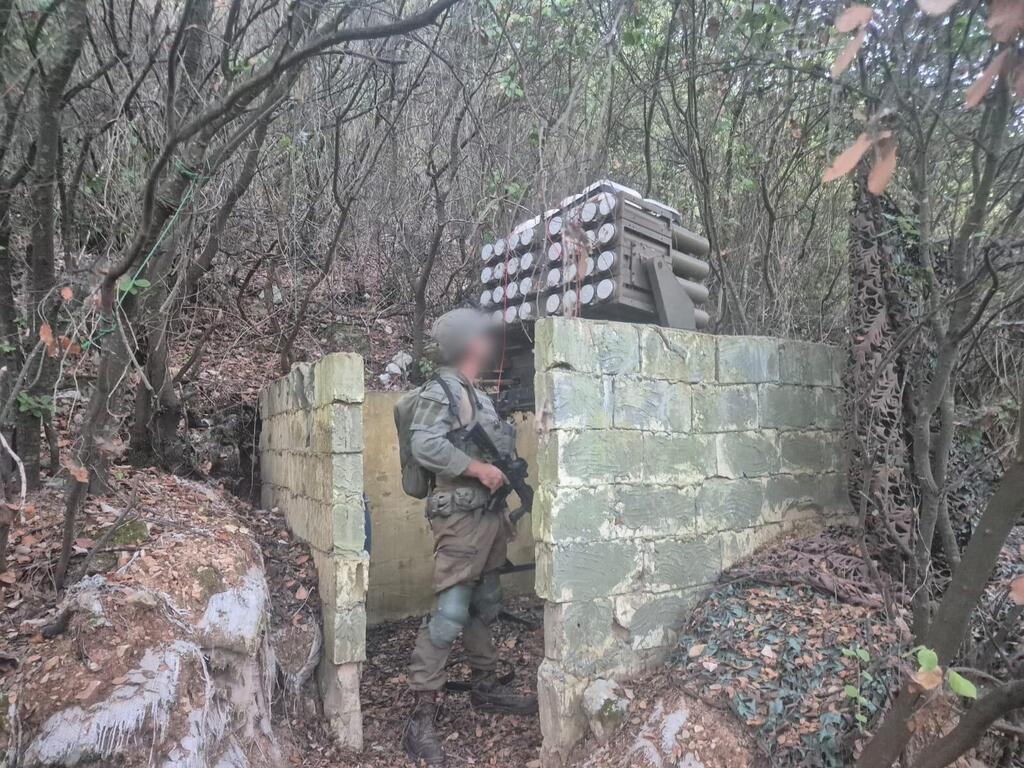
Launchers discovered in southern Lebanon
(Photo: IDF)
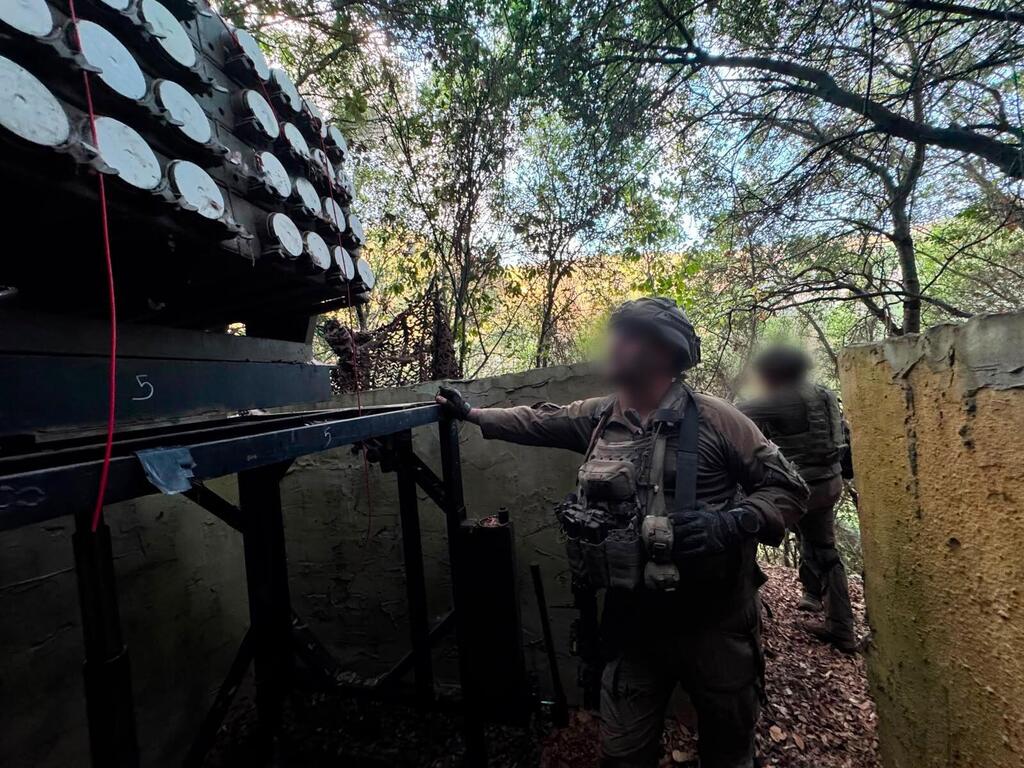
(Photo: IDF)
Hezbollah is exploiting this period to rebuild its capabilities, bring operatives back into the area and gather intelligence on IDF forces. The military does not disclose details about the devices it intercepts along the northern border, but at least some are believed to be Hezbollah drones used for reconnaissance and surveillance.
One of the clearest examples of the gap between the pilot's objectives and the reality on the ground comes from Zawtar al-Gharbiyeh, the village where implementation of the arrangement began. After the Lebanese army deployed there in late July 2026, Hezbollah-affiliated organizations began reappearing. Reports and footage collected by the Alma Research and Education Center indicate the return of civilian organizations linked to Hezbollah, including the Islamic Health Organization and the Wataawano Association, whose name means "Help One Another." In other words, it is not only residents who are returning to the village, but also organizations affiliated with Hezbollah.
Hezbollah's comeback
In one video, members of Hezbollah's Islamic Health Organization are seen recovering the bodies of the group's operatives in the village, accompanied by Lebanese army personnel. The fact that the organization itself publicly released documentation of the activity indicates that its presence is open, rather than concealed from the Lebanese military. The Islamic Health Organization, which operates under Hezbollah's Executive Council, provides medical services. But according to information presented by the Alma Center, it also forms part of the organization's broader support network.
The Wataawano Association, another civilian organization affiliated with Hezbollah, has also returned to the village. The association describes itself as a charity, but an analysis of publicly available materials indicates that its activities also serve to establish influence and create social and economic dependence among local residents.
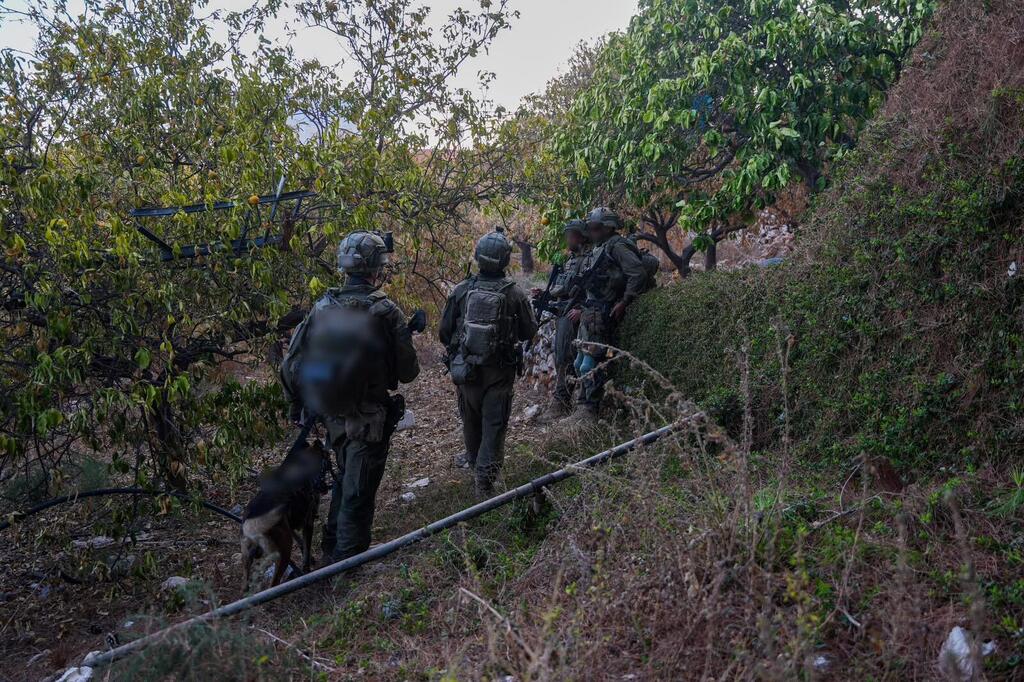
IDF forces deployed along the northern front
(Photo: IDF)
The activity in Zawtar al-Gharbiyeh is not an isolated incident. Since the first ceasefire in November 2024, the Wataawano Association has launched a campaign to install dozens of portable structures across southern Lebanon, ostensibly to provide temporary housing for residents whose homes were damaged. However, some of the structures were also intended to allow Hezbollah to restore its civilian and intelligence activities in the south, providing an alternative network to facilities previously associated with the Green Without Borders organization, which had been targeted by the IDF. Some of the new structures were subsequently destroyed by Israeli forces.
The test in Zawtar al-Gharbiyeh is not simply about who finances reconstruction or who delivers housing units to residents. The central question is who is actually present on the ground, who distributes assistance, who accompanies residents as they return and who they perceive as the authority providing for their needs. The emerging picture suggests that Hezbollah and Amal continue to play a central role in civilian life alongside Lebanese state institutions.
Additional footage from October demonstrates that this presence extends beyond Zawtar al-Gharbiyeh. In Froun, another village included in the pilot, Lebanese army soldiers were documented alongside members of Hezbollah's Islamic Health Organization and Amal's Risala Scouts during the recovery of a body following an explosion caused by remnants of war. As in the first pilot village, civilian organizations affiliated with the Shiite movements were seen operating alongside Lebanese soldiers.
From Israel's perspective, the situation is particularly troubling because the pilot was intended to test whether the Lebanese army could fill the vacuum left by the IDF and prevent Hezbollah's return. Yet on the ground, at least in some of the areas meant to serve as a model for implementing the agreement, the organization's networks are becoming active again. Hezbollah does not necessarily need to display an overt military presence at this stage to reestablish its grip. It can rely on its civilian organizations instead.
Israeli officials also assess that Hezbollah is using the current period to rebuild its military capabilities and prepare for the possibility of another round of fighting. At the same time, it is important to remember that Hezbollah is in its weakest position in years. Its military capabilities have suffered significant damage, and its standing within Lebanon has also been severely weakened. Its principal patron, Iran, is itself in a difficult position.
For its part, the IDF continues operating in the area, holding defensive positions and clearing territory. But these activities are taking place under the restrictions of the agreement and in a reality in which, according to Israeli officials, the Lebanese army is failing to provide the response expected of it.
Yet the ability to change the situation does not depend on the IDF alone. Political uncertainty in Israel and the United States, combined with the deadlock over the monitoring mechanism and the lack of agreement on implementing existing understandings, has created a diplomatic impasse that makes decision-making increasingly difficult.