

The Trump administration is preparing a $2.8 billion sale of heavy bombs to Israel, including 20,000 MK-84 munitions whose delivery was previously halted by former President Joe Biden over concerns about civilian casualties in Gaza, according to a U.S. official cited by The Washington Post.
The proposed package would include 40,000 two-thousand-pound bombs, half of them MK-84s and half BLU-117s, as well as 20,000 I-2000 Penetrator warheads designed to penetrate fortified targets.
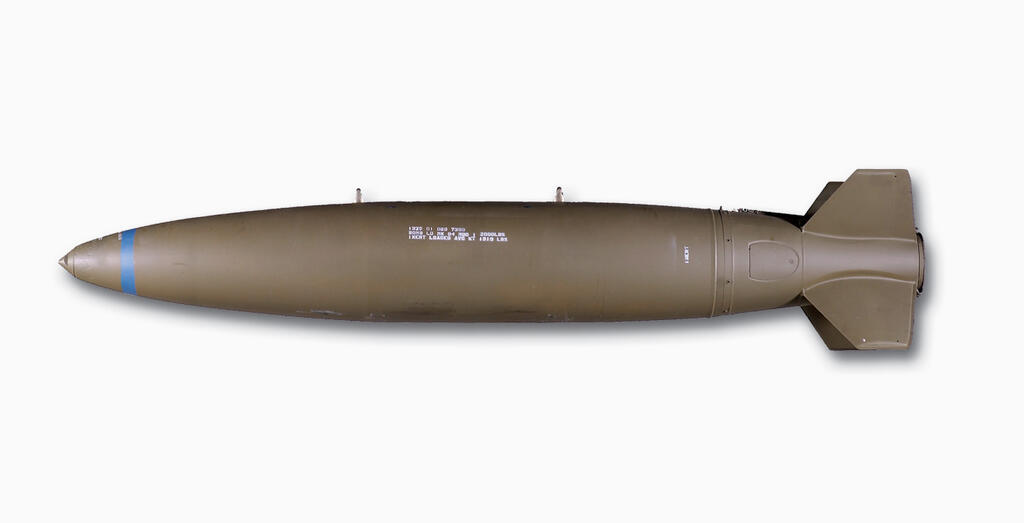
According to the Post, it would be the largest single sale of this type of munition to Israel in recent years. The package has been informally presented to the relevant congressional committees, the newspaper reported, as the Trump administration presses the leadership of the Senate Foreign Relations Committee and House Foreign Affairs Committee to approve it.
A senior administration official, responding to questions over humanitarian concerns, said all foreign weapons sales undergo the appropriate process and declined to comment on transactions that are still pending. The Israeli Embassy did not respond to the Post’s request for comment.
The MK-84 is a two-thousand-pound general-purpose bomb capable of causing extensive blast and fragmentation damage and penetrating thick concrete and metal. The munition, nicknamed “the Hammer” by U.S. pilots during the first Gulf War, was the only type of weapon whose shipment to Israel the Biden administration suspended during the Gaza war because of concerns over Palestinian civilian casualties.
That policy involved a single shipment held back in the spring of 2024. Trump reversed the policy shortly after returning to office in January 2025. The proposed $2.8 billion package is larger than previous U.S. sales of similar munitions to Israel under both the Biden and Trump administrations, including a $2.04 billion deal approved in 2025.
The Washington Post noted that Israel has used two-thousand-pound bombs hundreds of times in Gaza and Lebanon and has faced criticism over their use in densely populated areas.
“They really like using them a lot when they’re trying to hit some sort of building,” Trevor Ball, a former U.S. Army explosive ordnance disposal technician, told the newspaper. “If Hezbollah or somebody else is inside a building, an MK-84 will destroy the entire building.”
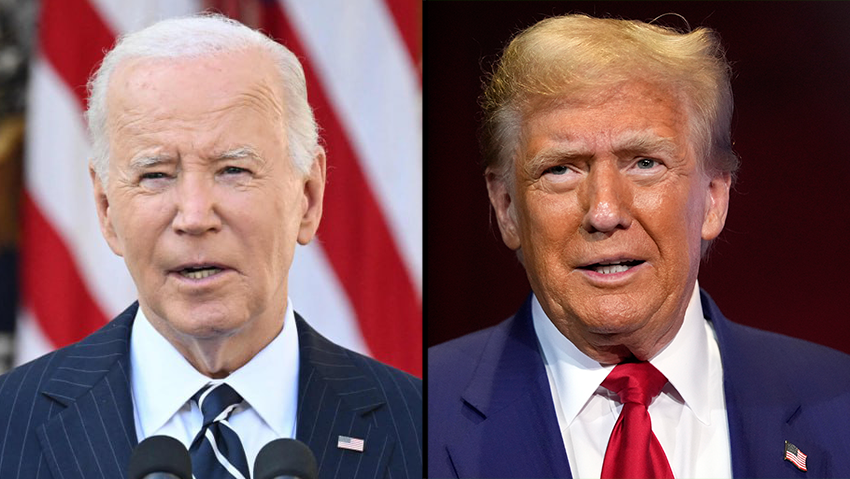
Joe Biden and Donald Trump
(Photo: AP Photo Alex Brandon , SAUL LOEB AFP)
Brian Finucane, a senior adviser at the International Crisis Group, said Israel’s conduct of its air campaign in Gaza, and to a lesser extent southern Lebanon, raised concerns about how such weapons might be used in populated areas. “That is assuming there are legitimate military targets in the first place, because there are concerns about what Israel defines as legitimate military targets,” he said.
Although orders of this scale can take years to deliver, their approval also sends a broader political message about relations between Washington and Jerusalem. “If the Trump administration’s goal is to calm the situation in the Middle East, the timing of this deal is extraordinary,” Finucane said. “Whether they intend it or not, it signals a vote of confidence in Israel.”
Iran war has cost US $38 billion
Separately, the Congressional Budget Office estimated that the war with Iran has so far cost the United States $38 billion, with the bill expected to rise by about $3 billion each month. The nonpartisan CBO calculated the costs over roughly six months through Aug. 1 and estimated that the war could push inflation up by 0.5% during the first three months of 2027.
Reuters reported that the soaring costs have placed pressure on U.S. ammunition stockpiles while higher energy prices have added further economic strain. Those pressures have raised concerns over Washington’s ability to respond to another major conflict while adding to an already strained federal budget.
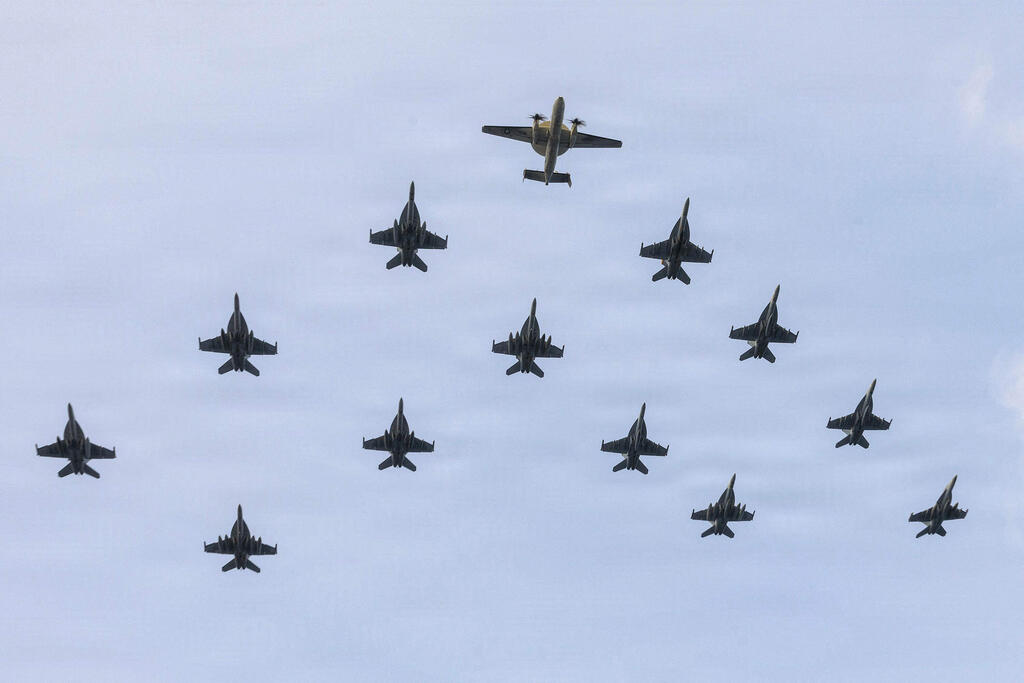
US military aircraft in the Middle East
(Photo: AFP PHOTO / US NAVY / NAVCENT PUBLIC AFFAIRS)
The CBO said a large share of the cost stemmed from the rapid use of munitions and estimated that replenishing U.S. stockpiles could take five years. Reuters reported in August that the United States had used “almost all” of its long-range precision missiles during the war. The CBO also said the Defense Department did not cooperate with congressional budget auditors. The White House and Pentagon did not respond to Reuters requests for comment.
The review was requested by Rep. Brendan Boyle of Pennsylvania, the senior Democrat on the House Budget Committee. “Donald Trump’s devastating war in Iran has already claimed the lives of brave American service members and left others wounded,” Boyle said in a statement. “Beyond the human cost, this report from the nonpartisan CBO makes clear that the war has cost American taxpayers tens of billions of dollars, and the costs continue to climb.”
The CBO estimate did not include the costs of the latest attacks on commercial vessels in the Strait of Hormuz or strikes against U.S. military installations in the region. It also excluded financing costs associated with the war, including interest on additional government borrowing, which could add tens of billions of dollars to the eventual total.
Reuters said its analysis of the CBO figures pointed to broader consequences for U.S. defense readiness and the domestic economy, with shortages of critical munitions, including missile interceptors, potentially limiting the Pentagon’s ability to respond to another major confrontation, including a possible crisis involving China and Taiwan.