


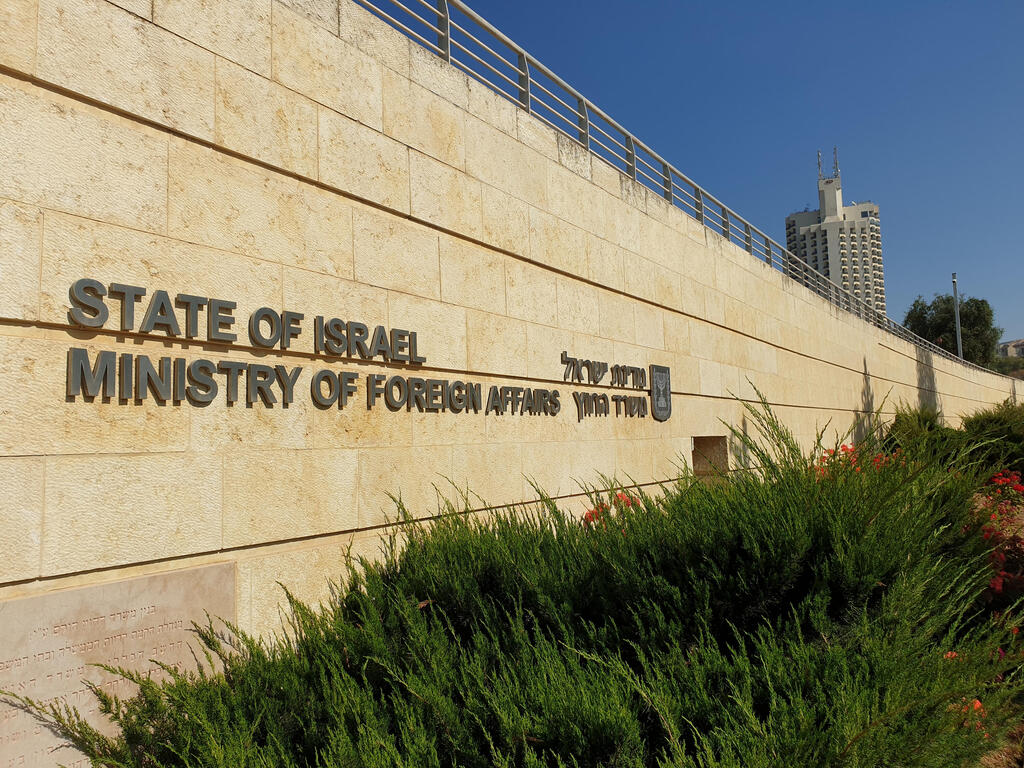
Employees of the Foreign Ministry around the world have become targets of a sophisticated phishing attack in recent days. The attackers, who portrayed themselves as senior officials such as cabinet secretary Yossi Fuchs or well-known personalities such as Avi Berkowitz, a close associate of U.S. President Donald Trump, attempted to dupe the staffers using fake messages that appeared as if they were formal communication, asking them to click on links or accept Zoom calls which would enable the attackers to access ministry computers and retrieve information.
One such message addressed to an employee of the ministry was claimed to be from Berkowitz.
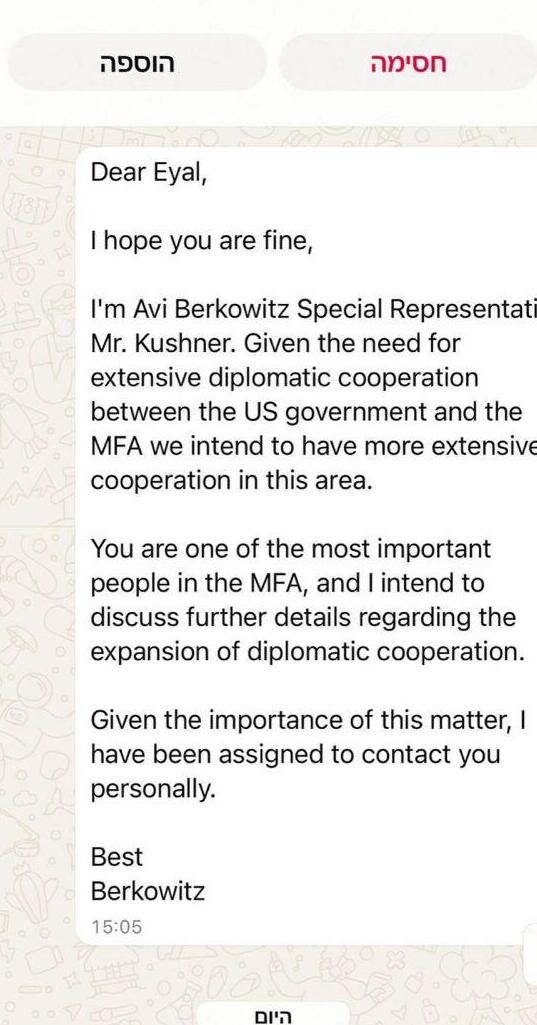
A message sent to a Foreign Ministry employee
(Screenshot )
Dear Eyal, the message read, I am a Special Representative of Mr. Kushner. Given the need for extensive diplomatic cooperation between the US government and the MFA we intend to have more extensive cooperation in this area. You are one of the most important people in this area and I intend to discuss further details regarding the expansion of diplomatic cooperation. Given the importance of this matter, I have been assigned to contact you personally.
Another message claiming to be from Fuchs was sent to a staffer in the ministry. "I decided to cooperate more in this matter," the message said. "I hope we can discuss more details in the future."
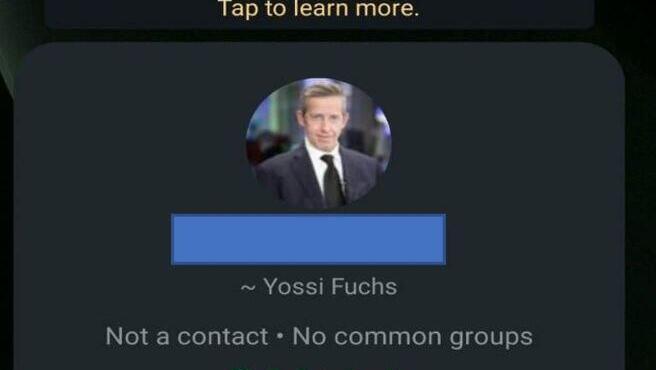
Message sebt to a diplomat claiming to be from cabinet secretary Yossi Fuchs
(Screenshot)
A senior ministry official said the matter is under investigation and the ministry is working in cooperation with security and cyber authorities to identify the attackers and prevent further harm. Similar attacks have been made against official and strategic targets in Israel in recent months.
Get the Ynetnews app on your smartphone: Google Play: https://bit.ly/4eJ37pE | Apple App Store: https://bit.ly/3ZL7iNv
Data security officials said these attacks were especially sophisticated and meant to retrieve sensitive information and erode the confidence in Israel's diplomacy. Among clear indications that these are false messages are the misspelling of names, requests to connect to unknown links and invitations to Zoom calls from suspicious sources.
The Foreign Ministry published guidance to its employees, stressing that such communications must be blocked and the relevant authorities notified. "Remember, do not click on links sent by unfamiliar sources on WhatsApp or via e-mail."