

Alongside the “Gaza division plan,” which envisions reconstruction beginning only on the Israeli-controlled side of the enclave, the United States is weighing a new proposal to deliver humanitarian aid to Gaza that would replace the operations of the controversial Gaza Humanitarian Foundation it supports.
According to an American source and a humanitarian official familiar with the details, the proposal is one of several options being reviewed as Washington seeks to expand the amount of aid entering Gaza under the cease-fire agreement between Israel and Hamas. That agreement stipulates an increase in humanitarian deliveries to the Strip.
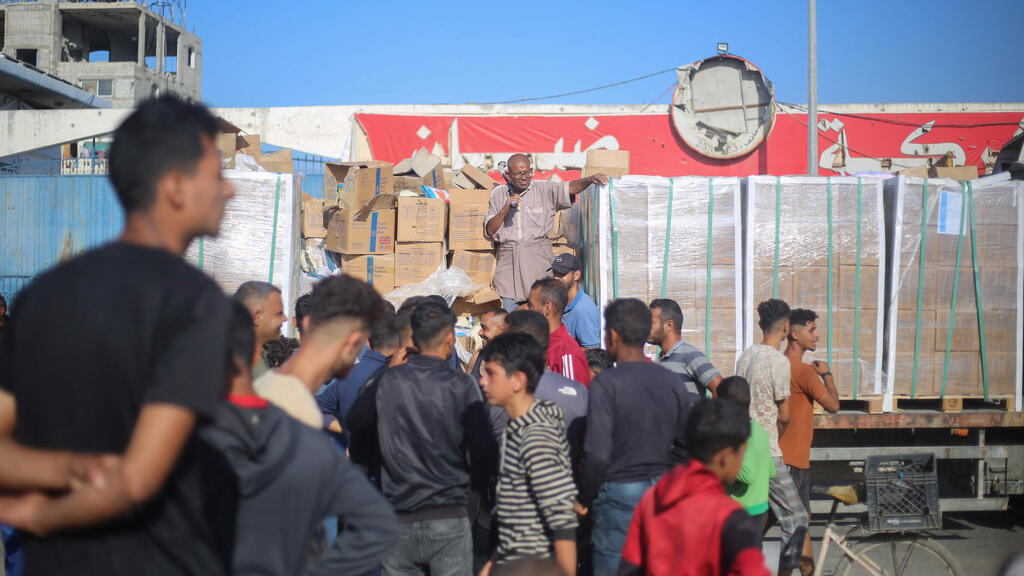
A copy of the proposal obtained by Reuters describes its operational backbone as a “humanitarian belt in Gaza” — the establishment of 12 to 16 humanitarian centers along the line to which IDF forces withdrew after the cease-fire. These centers would serve civilians on both sides of the line.
The proposed centers would include facilities where terrorists could voluntarily surrender their weapons in exchange for amnesty, as well as future bases for an international force expected to help disarm Gaza.
According to the plan, still in early stages, the GHF fund would be replaced by the Red Crescent of Morocco and the United Arab Emirates and by the Christian evangelical aid organization Samaritan’s Purse. These entities would operate the humanitarian centers, while the UN and Gaza-based relief organizations would be tasked with distributing the aid — in coordination with the CMCC (Civil-Military Coordination Center) established by the U.S. military in Kiryat Gat.

(Photo: AP/ Jehad Alshrafi)
The CMCC, which oversees the entry of humanitarian and security aid into Gaza, would monitor convoy security — including by drone — and ensure Hamas does not interfere with aid deliveries. Under the proposal, all humanitarian shipments to Gaza would be rerouted through the new centers within 90 days.
Israel and the U.S. have accused Hamas of stealing humanitarian supplies during the war, a charge the group has denied.
UN agencies and aid groups are expected to react warily to the emerging plan, which closely resembles the GHF’s operations — secured aid compounds protected by armed convoys. Before the cease-fire, both Israel and the U.S. sought UN cooperation with the GHF, but UN officials refused, questioning the fund’s neutrality and accusing it of militarizing aid distribution and contributing to the displacement of Palestinian civilians.
“Such ‘aid centers’ are very concerning because they resemble GHF sites in areas previously controlled by the IDF,” a senior humanitarian official told Reuters.
Reuters noted that the proposal reflects a “conceptual approach” still under U.S. review. An American official told the agency that it is not the only idea under consideration and declined to speculate on its chances of implementation. “Several approaches are being discussed to deliver aid effectively to Gaza’s population. Nothing is final,” the official said.
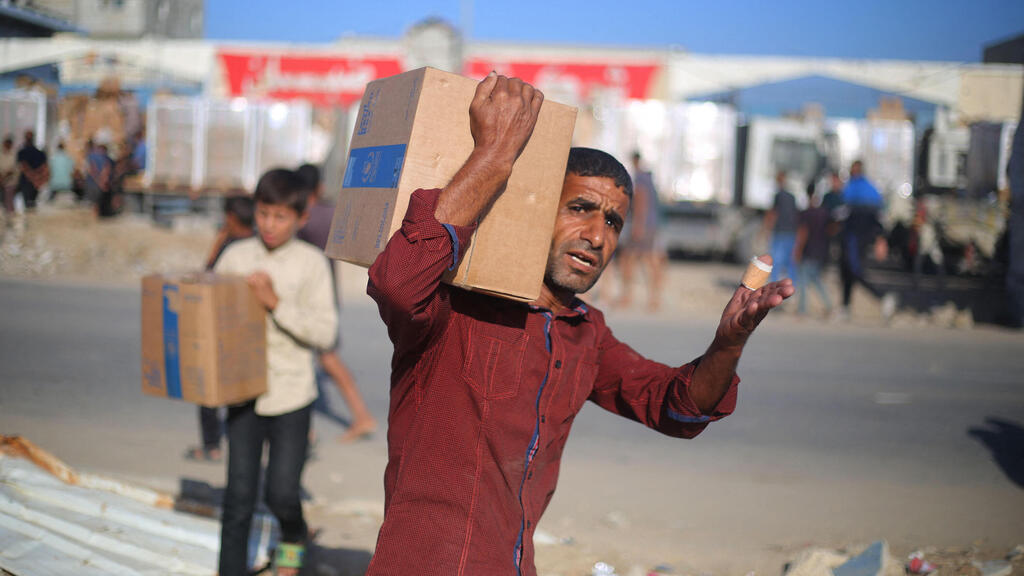
(Photo: Eyad Baba/ AFP)
The GHF has suspended its operations in Gaza. Its last humanitarian deliveries were made 13 days ago — the day the cease-fire agreement between Israel and Hamas took effect.
Earlier Thursday, The Wall Street Journal reported that a separate U.S.-backed initiative under discussion would divide Gaza into two zones — one under Israeli control and one under Hamas — with reconstruction initially limited to the Israeli-controlled side. The plan is reportedly led by Jared Kushner, son-in-law of President Trump, and has drawn opposition from Arab mediators.