

Last month, the U.S. president once again managed to bewilder the international community.
During a Cabinet meeting at the White House focused extensively on the possibility of reaching an agreement with Iran, he addressed the crisis in the Strait of Hormuz, saying, "These are international waters. Nobody will control them. We will oversee that. Oman will behave like everyone else — and if it doesn't behave, we may have to bomb it."
Gallery
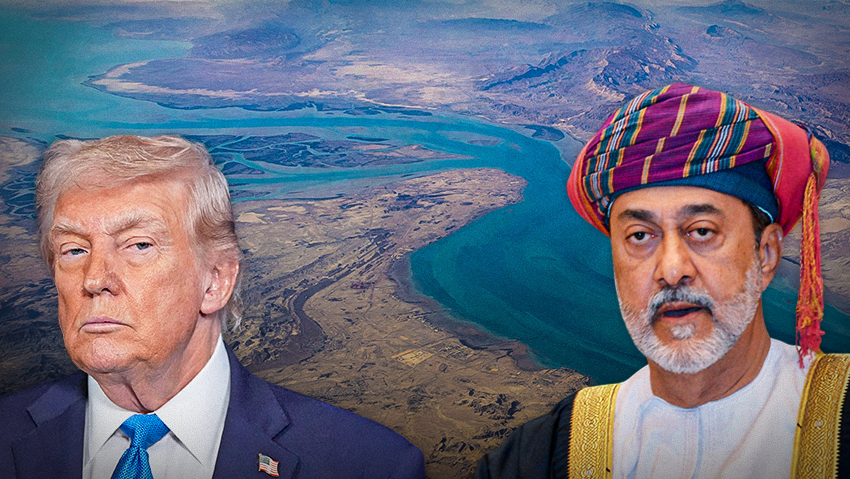
US President Donald Trump and the Sultan of Oman Haitham bin Tariq Al Said
(Photo: Brendan Smialowski/AFP, Reuters/Stringer, AP, Oman News Agency)
At first, most observers assumed he had misspoken.
During the same Cabinet meeting, the American president also appeared to confuse Iran with Venezuela, saying that "it doesn't have a navy, an air force or people who led it to bad places," deepening the confusion even further.
But as the war between the United States and Israel on one side and Iran on the other ignited the region, the normally quiet Sultanate of Oman found itself in the crosshairs of the Trump administration and at odds with its Arab Gulf neighbors, which increasingly viewed it as overly sympathetic to Iran.
Oman, the prosperous neighbor of Yemen located south of the Strait of Hormuz, has long been one of the region's most important behind-the-scenes mediators. It has brokered talks between Iran and the United States and between Iran and Saudi Arabia, and before the war it came close to facilitating an agreement between the latter two countries, which continue to compete for influence in Yemen.
This is how Oman is often perceived in Israel as well, although its mediation efforts are largely conducted behind closed doors and focus primarily on the Gulf and the broader Middle East.
“Sometimes standing in the middle is not easy,” Abdullah Babood, an Omani academic, told the New York Times. “For Washington, it is almost that you are either with us or against us — and Oman doesn’t want to do that.
Oman has spent years facilitating dialogue between Washington and Tehran, insisting that it is fulfilling its traditional role as a neutral mediator working to preserve regional stability.
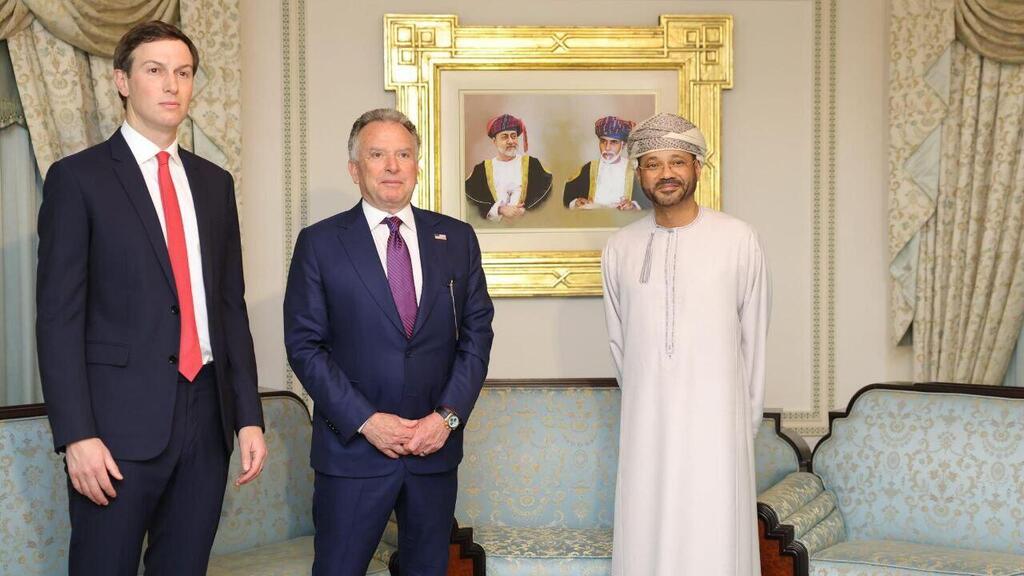
Steve Witkoff and Jared Kushner in consultation talks in Oman
(Photo: Omani Foreign Ministry)
Then, last month, reports emerged that Oman was discussing possible cooperation with Iran in collecting fees from ships passing through the Strait of Hormuz. The move came despite warnings from the Trump administration against cooperating with Tehran's demand that vessels pay for passage through the waterway, which has effectively been blocked since the start of U.S. and Israeli strikes on Iran.
The president reacted angrily.
"Oman will behave just like everybody else, or we'll have to blow them up," Trump said during the Cabinet meeting. "They understand that. They'll be fine."
The threat generated confusion across the region, although many believed it was simply a mistake. Oman's response was complete silence.
"What they would say to me is, 'Well, we are the Gulf's window on Iran, and that's a function that needs to be respected," Mark Sievers, a former U.S. ambassador to Oman, told The New York Times. " And I think it was to a certain degree."
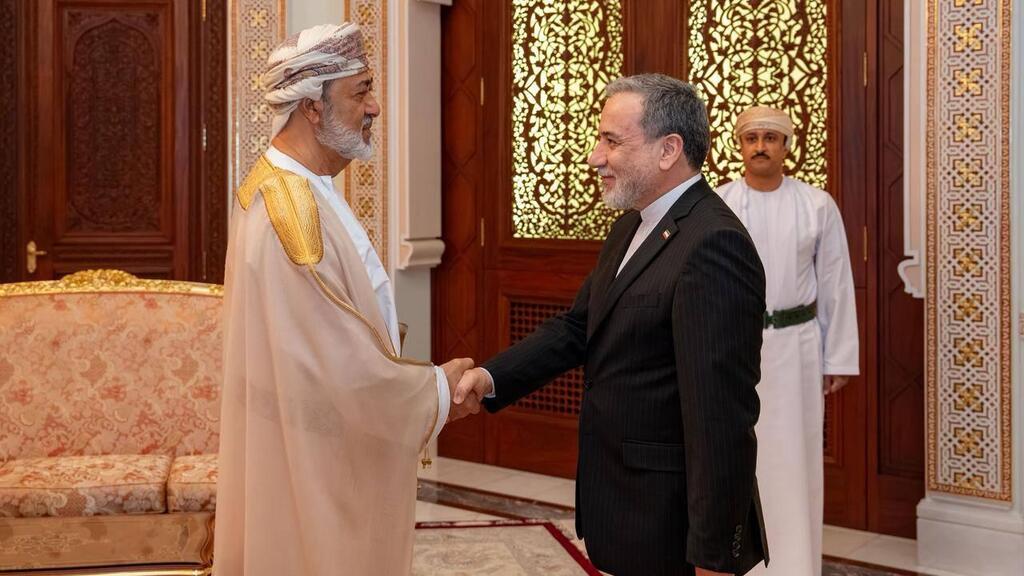
Iranian Foreign Minister Abbas Araqchi in a meeting with Sultan of Oman Haitham bin Tariq
But the latest war has widened the gap between Oman and its neighbors, whose relations with Iran are considerably more hostile.
For example, in March, while other Gulf countries hosting U.S. military bases came under Iranian missile and drone attacks, Oman's ruler, Sultan Haitham bin Tariq Al Said, sent congratulations to Iran's new supreme leader, Mojtaba Khamenei.
That warmth caused frustration among certain figures in other Gulf states, said Bader Al-Saif, an assistant professor of history at Kuwait University. "There is the questioning, has Oman gone rogue?" he said. "It's not an era of vagueness and murkiness. Everybody needs to be clear on where they stand."
Unlike other Gulf states, Oman has suffered relatively little from Iranian attacks. Thanks to its relative calm and strategic location, it has even found itself in an unexpectedly favorable economic position.
The closure of the Strait of Hormuz disrupted the ability of oil- and gas-rich Gulf countries to export their products, sending global energy prices soaring. Oman, however, has ports facing the Arabian Sea, hundreds of kilometers beyond the strait, allowing it to continue exporting oil without interruption.
While its neighbors suffered massive losses, Oman recorded a 13% increase in revenues.
For similar reasons, the war also strengthened Oman's position as a logistics hub. Cargo that previously arrived by sea in the United Arab Emirates was redirected to more accessible Omani ports and then transported overland by truck.
Officials across the Gulf argued that the war should lead to closer regional cooperation and called on Gulf states to unite against a common threat. Oman's experience, however, illustrates how the conflict has in many cases deepened divisions among countries in the region.
After an attack on Kuwait International Airport last week, Oman condemned the strike but did not mention Iran by name. Instead, the government expressed its "rejection of all military acts that undermine the region's security," wording that many interpreted as a reference not only to Iran but also to Israel and the United States.
During Trump's first term, Oman enjoyed strong relations with Washington. The U.S. president's family business even signed an agreement to develop a luxury real estate project bearing his name in the sultanate.
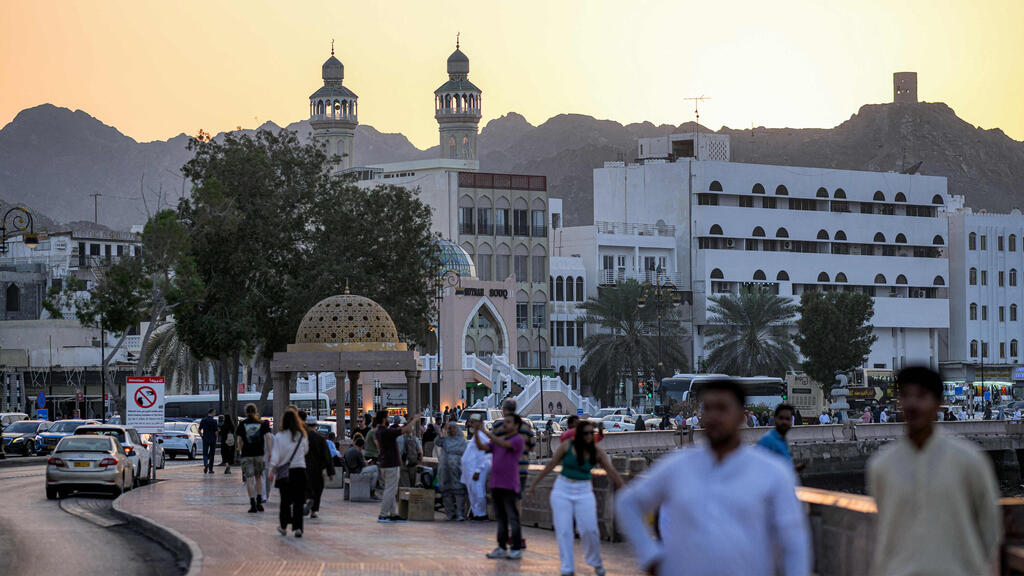
Muscat, the capital of Oman
(Photo: Loic Venance/ AFP)
Those warm ties began to deteriorate last year following Operation Rising Lion, which included U.S. participation in strikes on Iranian nuclear sites. The conflict effectively ended negotiations between Iran and the United States that Oman had helped facilitate.
Similarly, ahead of the current war, Oman once again served as a mediator. But it soon became clear that the sultanate viewed the situation differently from Trump.
In a rare interview with CBS, Oman's foreign minister argued that a peace agreement was "within our reach, if we just allow diplomatic the space it needs to get there" — and then Trump decided to strike.
From Oman's perspective, there may be a sense of frustration and embarrassment that it worked intensely to prevent a war, only for the United States to attack Iran not once, but twice.
The foreign minister's remarks also generated discomfort and anger in Washington.
"He depicted the Iranian position as quite reasonable, and I think that made a lot of people in Washington angry," the former ambassador told the Times.
In an article published in The Economist in March, Oman's foreign minister wrote that "America's friends have a responsibility to tell the truth" and suggested that the United States had "lost control of its own foreign policy" in favor of Israeli interests.
Oman's willingness to discuss collecting transit fees in the Strait of Hormuz together with Iran was "the straw that broke the camel's back," the former ambassador said.