

The United States used approximately 25% of its advanced THAAD interceptor stockpile during the recent 12-day war with Iran, according to two sources familiar with the matter who spoke with CNN. U.S. forces reportedly launched over 100, possibly as many as 150, THAAD missiles to help defend Israel during the conflict.
American missile defense experts and defense officials told CNN that the rapid depletion of the interceptors has raised serious concerns in Washington about the country’s ability to replenish and scale up production quickly enough. By comparison, the U.S. produced only 11 new THAAD missiles last year and is expected to receive just 12 more in 2025, according to the Pentagon's 2026 budget projections.
THAAD air defense system interceptor deployed against ballistic missile launched from Yemen


Deputy Pentagon spokesperson Kingsley Wilson responded to the report, saying: “The U.S. military is stronger than ever. We have all the tools necessary to carry out any mission, anywhere, at any time.” A U.S. defense official declined to disclose exact stockpile figures, citing “operational security concerns,” but confirmed the Pentagon remains prepared to respond to any threat.
THAAD (Terminal High Altitude Area Defense) is a mobile missile defense system designed to intercept ballistic missiles at high altitudes, even outside the atmosphere. Similar in capability to Israel’s Arrow system, THAAD uses kinetic energy to destroy incoming threats and can target multiple points along a missile’s trajectory.
Despite its heavy deployment during what former President Donald Trump dubbed the "12-Day War," dozens of Iranian missiles still struck targets inside Israel. According to the 2026 Pentagon budget, the U.S. plans to procure 37 additional THAAD missiles next year. The budget also includes $1.3 billion to bolster defense industry supply chains and $2.5 billion to expand missile and munitions production.
“The Pentagon's role is to ensure the president has the best possible military options in any scenario—and all options remain on the table,” said a defense official. Still, while officials try to project confidence, experts and former defense personnel warn that the gap must be addressed urgently.
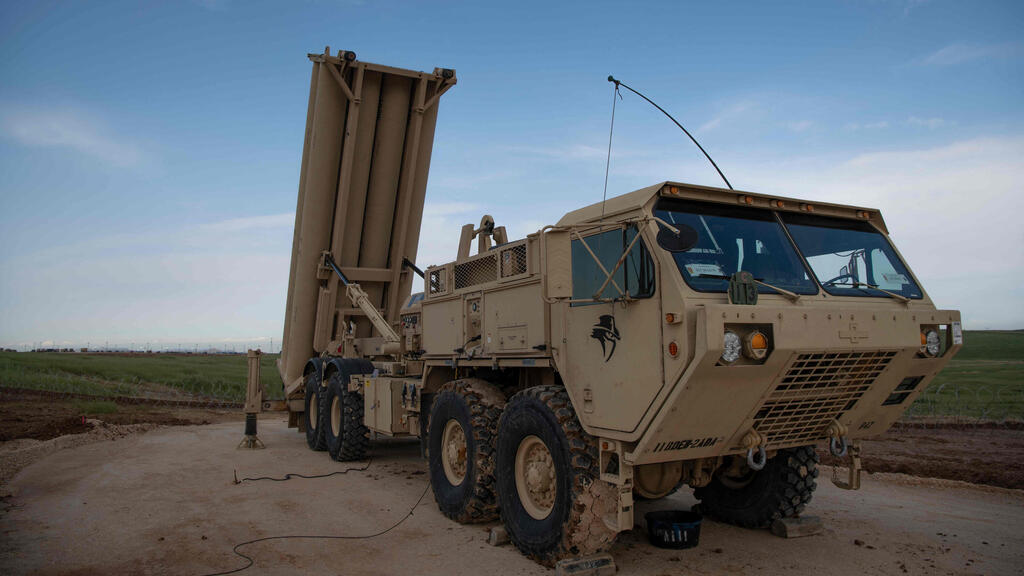
A THAAD missile defense system in Israel
(Photo: AFP/ HANDOUT / DVIDS / US ARMY / Staff Sergeant Cory D. Payne)
A missile defense expert told CNN, “The reports of significant THAAD usage are troubling. This is not something the U.S. can afford to do repeatedly. It was a major commitment to our ally Israel, but it has serious implications for our missile defense capability—THAAD is a very limited resource.”
A former senior U.S. Army officer confirmed that about a quarter of the advanced interceptors were used during the conflict. “The Defense Department is now reviewing wartime stock levels of critical munitions and trying to significantly ramp up annual production—a move that should have been initiated long ago,” he said.
Concerns about the shortfall predated the recent conflict. Four former senior U.S. defense officials described the issue as “very severe,” particularly given that the U.S. interceptor stockpile plays a key role in deterrence against China. “What I can say, without naming numbers, is that I was surprised by how low some readiness levels were,” said one former senior official who left office in the past year. “The stockpile is shrinking. We need more—and we need them faster.”
Get the Ynetnews app on your smartphone: Google Play: https://bit.ly/4eJ37pE | Apple App Store: https://bit.ly/3ZL7iNv
A former Biden administration official who dealt with the issue said: “It was concerning even then, and I’m sure it’s just as concerning to those managing it today.”
According to Lockheed Martin, the manufacturer of the THAAD missile defense system, there are currently nine active THAAD batteries worldwide. The U.S. military operates seven of them and plans to activate an eighth by the end of 2025, according to the Congressional Research Service. As of 2019, five of the U.S. batteries were based in Texas, one in Guam, and one in South Korea. By last year, the Pentagon had relocated two of these batteries to the Middle East to help defend Israel. Two additional systems were supplied to the United Arab Emirates and have been used to intercept ballistic missiles launched by the Houthis.