

Israeli civilians entered Joseph’s Tomb in Nablus on Sunday afternoon for daytime prayers, the first such civilian entry to the site since the IDF withdrew from the compound in 2000.
The visit included the afternoon Mincha prayer with a minyan, the quorum of 10 Jewish men required for certain public prayers. It was part of an initiative under which the IDF’s Central Command examined renewing a permanent Jewish presence at the tomb for the first time in over two and a half decades.
Gallery
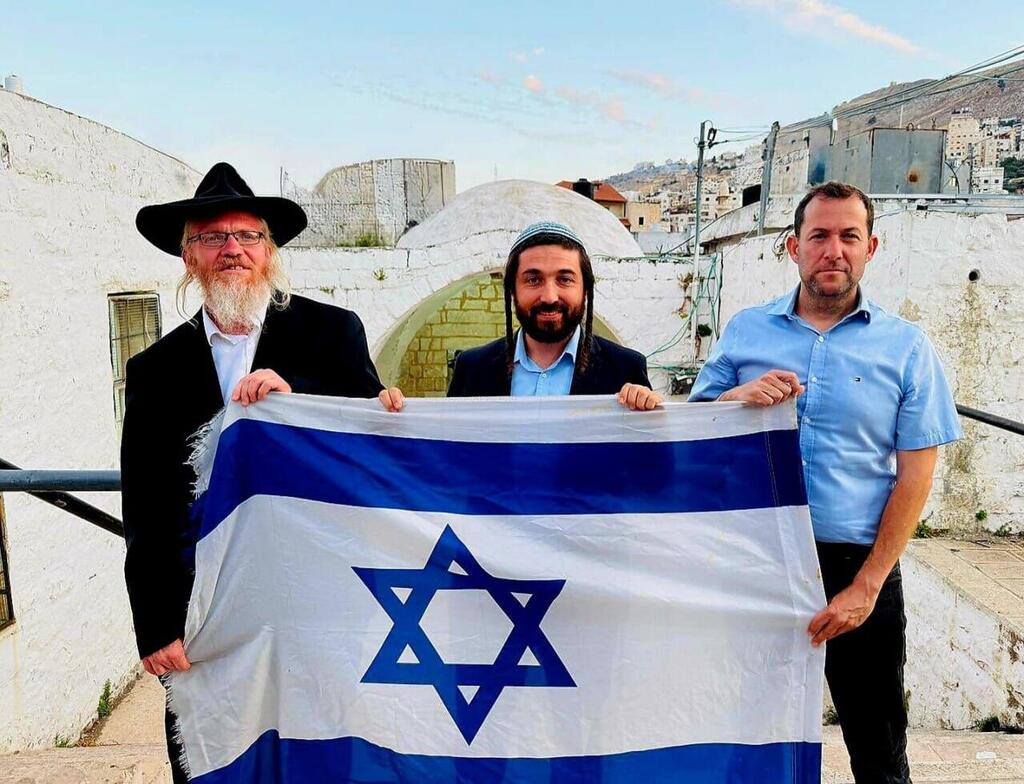
Rabbi Yossi Elitzur, lawmaker Tzvi Succot and Samaria Regional Council head Yossi Dagan and visit Joseph’s Tomb in Nablus
(Photo: Roee Hadai)
Joseph’s Tomb, located on the outskirts of Nablus, is revered by many Jews as the burial place of the biblical Joseph. The site is also significant to Muslims and Palestinians and has long been a flashpoint in the Israeli-Palestinian conflict.
Yossi Dagan, head of the Samaria Regional Council, said the goal was to restore the Od Yosef Chai yeshiva to the compound and “see the Israeli flag flying over Joseph’s Tomb.”
The visit was led by Dagan and lawmaker Tzvi Succot, who heads the Knesset caucus on Joseph’s Tomb and chairs the subcommittee for West Bank affairs in the Foreign Affairs and Defense Committee.
The entry was approved and encouraged by Defense Minister Israel Katz and Knesset Foreign Affairs and Defense Committee Chairman Boaz Bismuth, and coordinated with IDF Chief of Staff Lt. Gen. Eyal Zamir and the head of Central Command.
Dagan and Succot have been leading a campaign to restore a regular Jewish presence at the site together with Rabbi David Ben Natan, a bereaved father whose son, soldier Shuvael Ben Natan, was killed in the war against Hamas and had been active in efforts to return to Joseph’s Tomb.
The riots that led Israel to abandon the tomb
Under the Oslo Accords in the 1990s, Joseph’s Tomb remained under Israeli control even though it sits inside an area controlled by the Palestinian Authority. The IDF kept a permanent force at the site to secure it and protect worshippers.
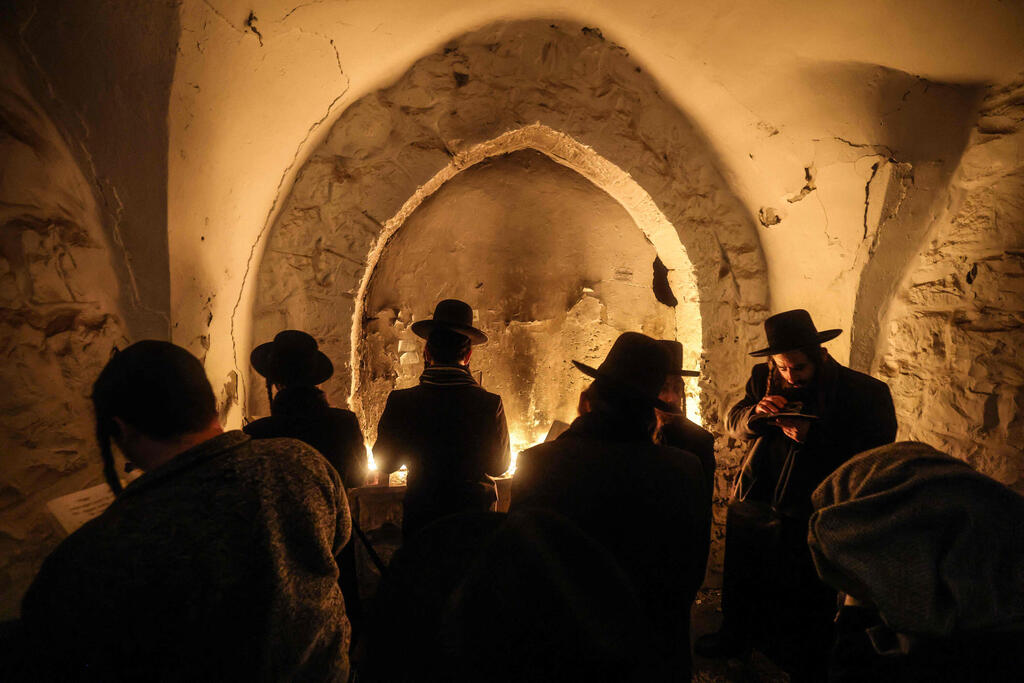
Joseph’s Tomb
(Photo: Menahem KAHANA / AFP)
In September 2000, at the start of the Second Intifada, the compound became the scene of intense clashes between Israeli security forces and Palestinian gunmen and rioters. For several days, the site came under live fire, explosive attacks and mass disturbances.
During the fighting, Border Police officer Madhat Yusuf was critically wounded and remained for hours inside the besieged compound. He was eventually evacuated to a hospital but died of his wounds. The delay in evacuating him became one of the most painful controversies of the early days of the Second Intifada.
On the night of Oct. 7, 2000, after security assessments concluded that Israel could no longer hold the site without posing a severe risk to troops, the IDF evacuated the compound and transferred responsibility to Palestinian security forces. Shortly afterward, parts of the site were set on fire, and images of the destruction sparked public and political outrage in Israel.
The Od Yosef Chai yeshiva, established near the tomb in the 1980s and associated with Jewish settlement in the Nablus area, also operated at the compound at the time. After the evacuation and worsening security situation, its students and staff left the site with the IDF, and the yeshiva moved to the settlement of Yitzhar in the northern West Bank.
Following a public campaign, Jewish visits to Joseph’s Tomb gradually resumed, first at night and later in the morning. Sunday’s afternoon entry is seen by supporters as an escalation in efforts to restore an IDF presence at the site and rebuild the Od Yosef Chai yeshiva there.
Dagan called the visit “a significant step toward historical correction and the return of full Israeli sovereignty to the holy compound of Joseph’s Tomb.”
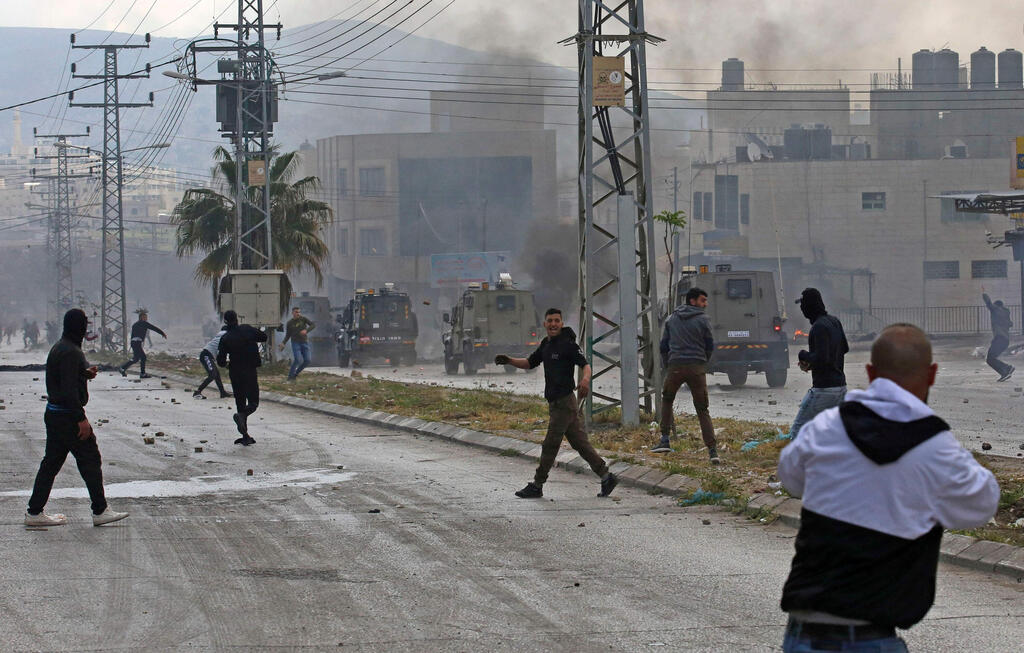
Clashes between IDF forces and Palestinians in Nablus, West Bank, April 13, 2022
(Photo: AFP)
“Sovereignty in Judea and Samaria and in our holy places is not only a legal or security matter,” he said, using the biblical name for the West Bank. “It is recognition of historical justice and our right to the land. The situation in which Jewish presence at Joseph’s Tomb is an exceptional and limited event must change.”
He thanked the defense minister, IDF commanders and Border Police officers who accompanied the visit, as well as volunteers from the Samaria Regional Council’s Joseph’s Tomb and holy sites administration.
Succot said the daytime prayer was part of a broader effort to bring about “a full Jewish return to Joseph’s Tomb.”
“This is an important and meaningful step in the process of correction, after which more steps will come until we reach the goal — a full Jewish return to Joseph’s Tomb,” he said.
Succot said the return was meant to correct what he called the injustice of Israel’s abandonment of the tomb on Oct. 7, 2000, “when the State of Israel fled from terror and for the first time abandoned its territory because terror had raised its head.”
“This is a moral and security correction of the first order,” he said, “and it must happen fully.”