

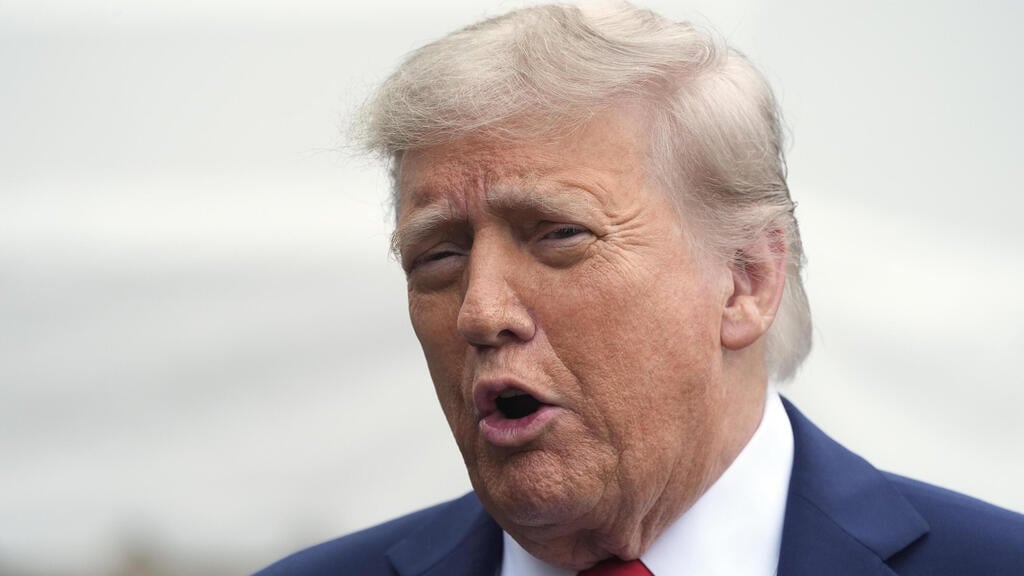
U.S. President Donald Trump shifted his position on an Israeli strike against Iran just days before it happened, ultimately endorsing it even at the cost of derailing nuclear negotiations with Tehran, NBC News reported Monday.
According to the report, Trump became convinced of the legitimacy of Israel’s growing alarm over Iran’s uranium enrichment capabilities, and—after receiving a critical briefing from Chairman of the Joint Chiefs Gen. Dan Caine—he gave tacit approval for Israel to proceed and authorized limited American support.
The briefing reportedly took place on June 8, five days before the Israeli operation began. At that time, Trump was growing increasingly frustrated with Iran’s failure to respond to Washington’s latest nuclear proposal. However, he still hoped his Middle East envoy, Steve Witkoff, might help finalize a deal.
Behind the scenes, Trump also faced pressure from longtime allies who advocate for a more isolationist U.S. foreign policy. They urged him to either prevent Israel from launching a strike or at least withhold American support for any such operation.
NBC’s reporting is based on conversations with five current U.S. officials, two Middle Eastern officials, and individuals close to Trump. According to the network, Israel became increasingly convinced in recent weeks that the Iranian threat had reached an urgent and dangerous level. While Trump ultimately opted not to stand in Israel’s way, as late as Thursday—just hours before the strikes began—he still harbored hopes that diplomacy might prevail.
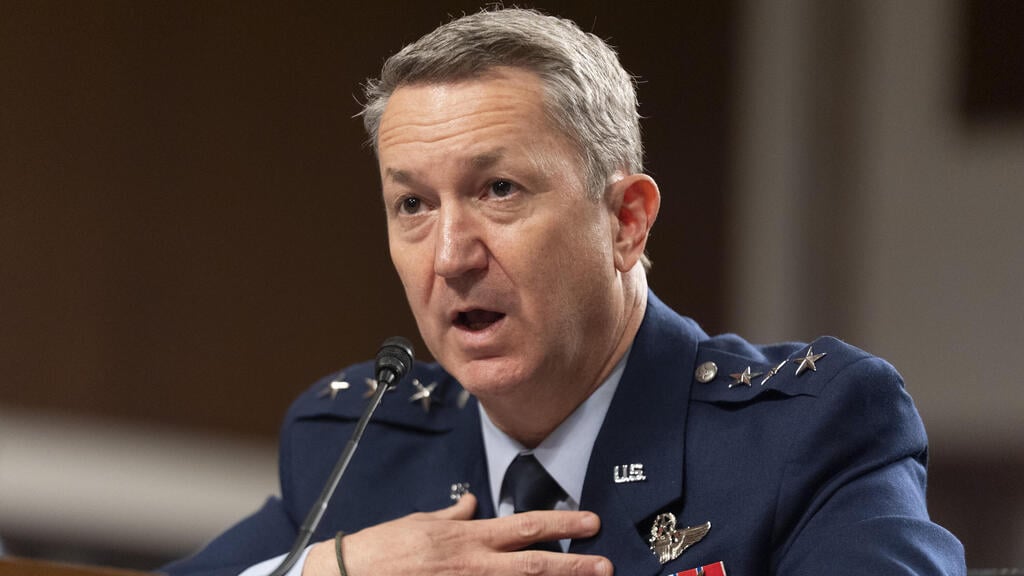
chairman of the Joint Chiefs Gen. Dan Caine
(Photo: AP Photo/Manuel Balce Ceneta)
Trump reportedly hoped it might still be possible to dissuade Prime Minister Benjamin Netanyahu from moving forward. Still, in the final week before the operation, he began accepting the reality that Israel was determined to neutralize Iran’s nuclear program. That, in turn, led him to authorize certain forms of defensive military aid and limited intelligence sharing.
Once the strikes began overnight between Thursday and Friday, the Trump administration was careful to emphasize that it had not provided direct military assistance. Secretary of State Marco Rubio—who also serves as National Security Advisor—deliberately omitted any mention of U.S. support in his official statement. Still, in subsequent public comments, senior officials left open the possibility that Washington had shared some of the intelligence Israel needed to carry out the attack.
'Not the president who let Iran go nuclear'
NBC reports that while Israel was capable of carrying out the initial wave of strikes largely based on its intelligence and capabilities, it also relied heavily on American intelligence, U.S.-supplied bunker-buster bombs delivered earlier this year, and air defense systems that had been rapidly deployed to the region in recent days.
Even so, Trump was selective in his approvals. After the strike began and Israeli intelligence reportedly identified an opportunity to eliminate Iran’s Supreme Leader Ali Khamenei, Netanyahu presented a plan to Trump to carry out the assassination. Trump firmly rejected it, making clear he would not allow U.S. involvement. According to American sources cited by NBC, Trump felt that since no Americans had been killed in the conflict, targeting a political figure like Khamenei was unjustified. He also advised Israel against carrying out the operation on its own.
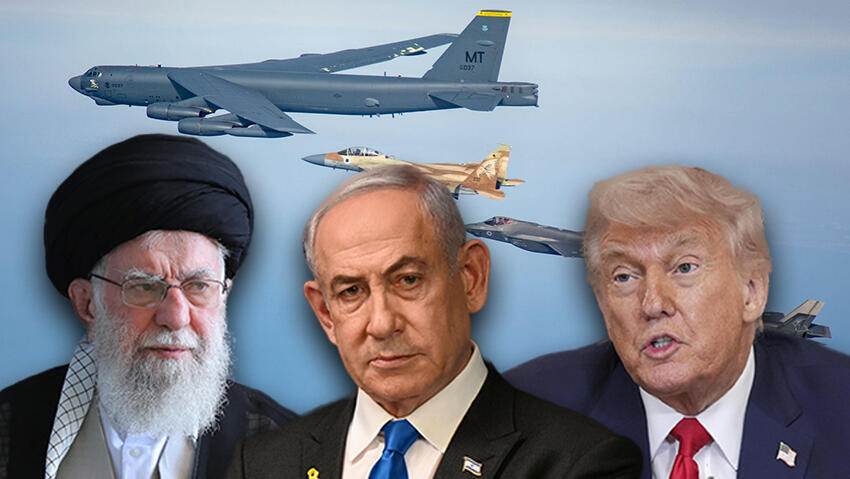
Ali Khamenei, Benjamin Netanyahu, Donald Trump
(Photo: GPO/ Reuters/Evelyn Hockstein, Iranian Leader's Press Office/ Getty Images, IDF)
NBC notes that Trump’s evolving stance began taking shape a week earlier, on Sunday, during a meeting at Camp David. At that point, senior Israeli officials had already begun sharing extensive details about the planned operation. Gen. Caine briefed Trump and his national security team on Israel’s plans and outlined America’s potential roles, including logistical support such as aerial refueling, intelligence sharing, and the use of U.S. electronic warfare systems to help Israel disable enemy weapons and communication systems.
Another option on the table was direct U.S. military participation, including sending American fighter jets to join the mission and drop munitions alongside Israeli aircraft. A third option was to take no action at all.
Get the Ynetnews app on your smartphone: Google Play: https://bit.ly/4eJ37pE | Apple App Store: https://bit.ly/3ZL7iNv
Trump’s decision to stop blocking Israeli military action reportedly came in part after a Thursday statement by the International Atomic Energy Agency (IAEA), which found that Iran was violating its nuclear oversight commitments. The report states that Trump became increasingly alarmed by assessments from Israel, the U.S., and the IAEA, all indicating dramatic Iranian advances in its nuclear program. He was determined not to go down in history as the president who let Tehran acquire nuclear weapons.
Trump and Netanyahu spoke several times last week, but by Monday, Trump had become increasingly convinced that an Israeli strike was imminent and began ramping up American support accordingly.