


The twin disruptions to maritime traffic through the Strait of Hormuz by Iran and the United States, combined with persistent threats by Yemen's Houthi rebels to close the Bab el-Mandeb Strait, are underscoring the vulnerability of global trade routes and accelerating efforts to establish overland alternatives linking Asia and Europe.
Two competing projects have emerged as potential solutions that could reshape global commerce. One envisions a land corridor connecting Saudi Arabia and Turkey through Jordan and Syria, while another — the India-Middle East-Europe Economic Corridor, or IMEC — would run through Gulf states, Jordan and Israel.
Iran posts footage of commando operators seizing a vessel in the Strait of Hormuz


This week, while Israel's plans remained largely stalled, progress was reported on the Turkish-Saudi route.
Turkish Transport and Infrastructure Minister Abdulkadir Uraloglu announced Tuesday that Ankara had signed two memorandums of understanding with Saudi Arabia covering railways and logistics.
In a post on X, Uraloglu said the agreements were signed during a meeting in Riyadh with Saudi Transport and Logistics Minister Saleh Al-Jasser.
"I hope these steps, which will contribute to connectivity, trade and the development of our region, will bring benefits to our countries as well," Uraloglu wrote.
Gallery
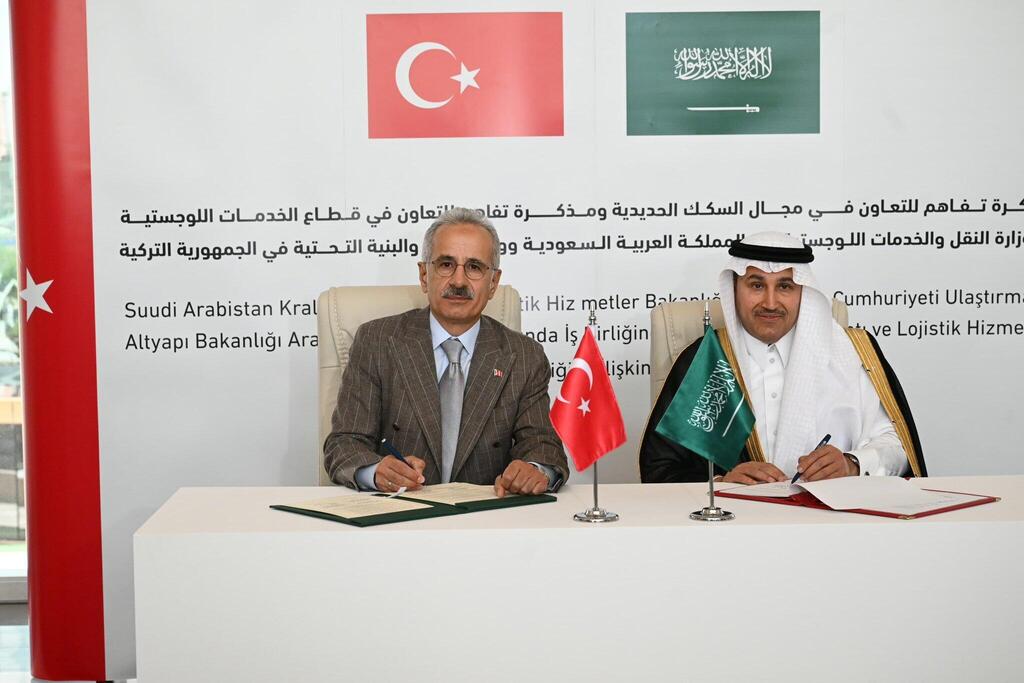
Turkish Transport and Infrastructure Minister Abdulkadir Uraloglu and Saudi Transport and Logistics Minister Saleh Al-Jasser
Al-Jasser said the two countries enjoy "cooperation, integration and coordination at a high level."
"These agreements support joint work, knowledge exchange and the preparation of studies," he said. "We have a desire to improve connectivity between the two countries, whether by air, sea, land or rail."
Revival of a 1908 railway
The crisis surrounding the closure of the Strait of Hormuz has revived interest in transportation projects dating back more than a century.
Saudi broadcaster Al Arabiya reported this week that the proposed Saudi-Turkish route would revive parts of the Hejaz Railway, which began operating in 1908 and connected Damascus with Medina in present-day Saudi Arabia. The network also branched north to Aleppo and Turkey and west toward Lebanon, particularly Beirut.
"Hormuz is closed, waterways are congested and the sea is no longer a reliable trade route," Al Arabiya said. "Old maps are returning, but with a new interpretation — from land to sea."
The railway played an important role in its early years but was heavily damaged during World War I and later fragmented into separate sections. Limited operations continued in Syria and Jordan.
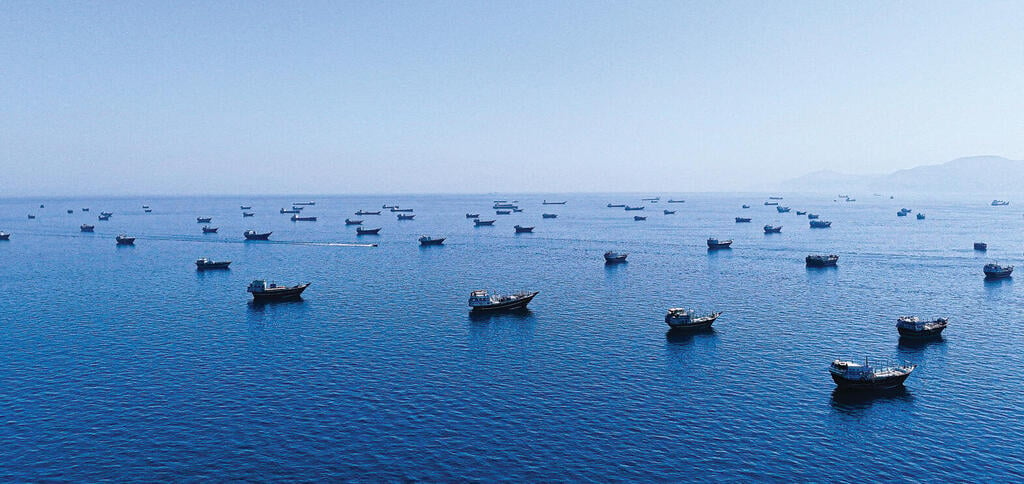
The Strait of Hormuz
(Photo: Stringer/Reuters)
"Today, the idea is being reformulated," Al Arabiya reported. "This is no longer about transporting pilgrims but goods. It is no longer about religious geography but supply chains."
According to the report, existing infrastructure and current projects could theoretically create a continuous rail connection stretching from Turkey through Syria and Jordan to Saudi Arabia and eventually the Gulf states, forming an integrated land corridor linking Asia and Europe.
Competing visions
Israel has promoted a competing vision in recent months.
Israeli officials have accelerated efforts to advance IMEC, a trade corridor intended to connect India and Europe through Gulf countries, Jordan and Israel while bypassing the Strait of Hormuz.
At the same time, Syria is pursuing its own strategy to transform the country into a logistics and energy hub connecting Gulf states with Turkey and providing access to the Mediterranean.
Syrian President Ahmad al-Sharaa said in April that Syria hopes to capitalize on its geographic position by becoming an alternative route for energy and goods.
To support that vision, Damascus and international partners are promoting the "Four Seas" project, an initiative designed to connect the Persian Gulf, Mediterranean Sea, Caspian Sea and Black Sea through an integrated transportation and energy network.
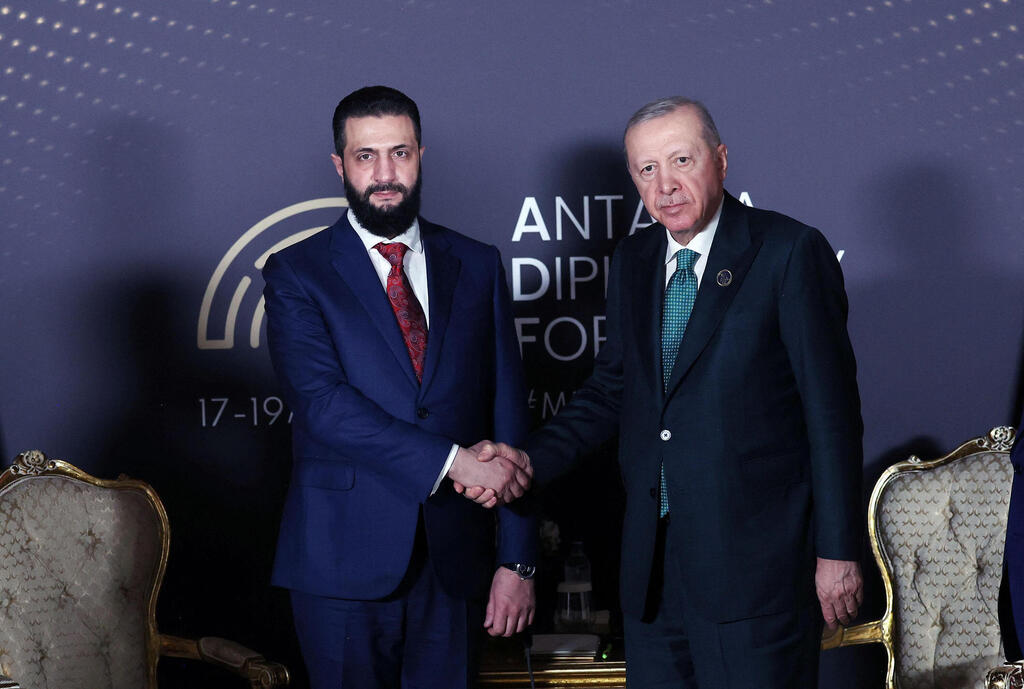
Syrian President Ahmad al-Sharaa and Turkish President Recep Tayyip Erdogan
(Photo: AFP PHOTO / TURKISH PRESIDENTIAL PRESS SERVICE / HANDOUT)
Syrian state news agency SANA reported in April that the transportation ministers of Syria, Jordan and Turkey met in Amman and signed agreements and memorandums of understanding to improve cooperation in land, air and maritime transportation, as well as railways.
According to SANA, implementation began immediately and is expected to continue over the next three years.
Oil pipelines as alternatives
In addition to rail projects, Gulf states have also expanded overland oil infrastructure designed to bypass Hormuz.
Because of their strategic importance, some of these pipelines have previously been targeted by Iran.
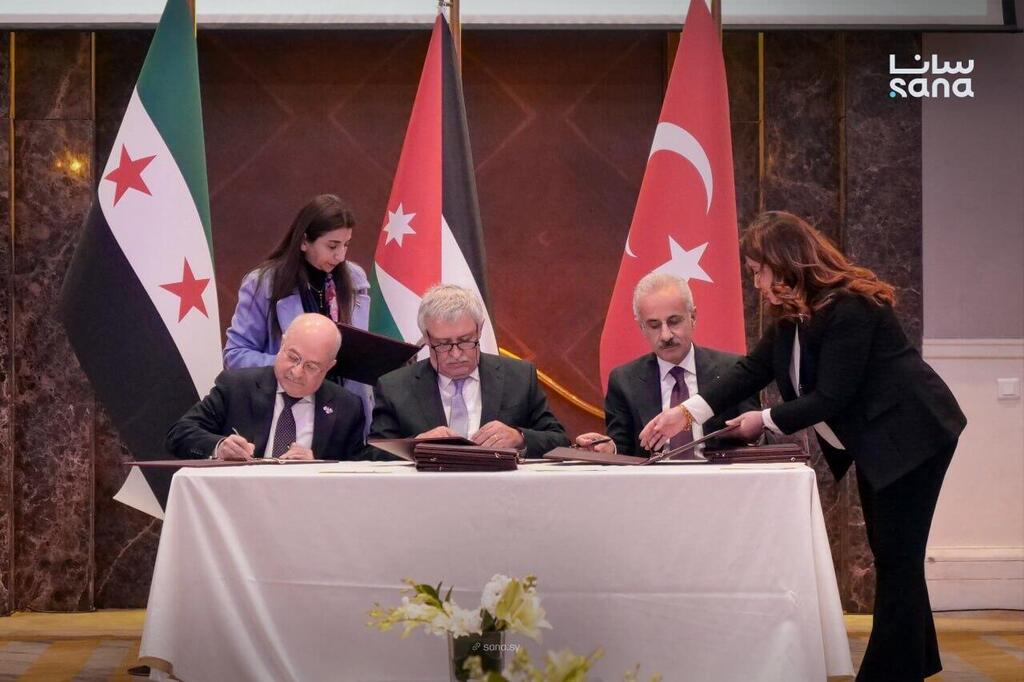
Officials from Syria, Turkey and Jordan sign cooperation agreements on land, air and maritime transportation and railway projects
On May 15, the United Arab Emirates announced it would accelerate construction of a new oil pipeline from Abu Dhabi to Fujairah intended to double the export capacity of Abu Dhabi National Oil Company, or ADNOC.
The project, which is expected to begin operations in 2027, was described by Emirati officials as another route bypassing the Strait of Hormuz, where Iranian actions have repeatedly threatened shipping.