


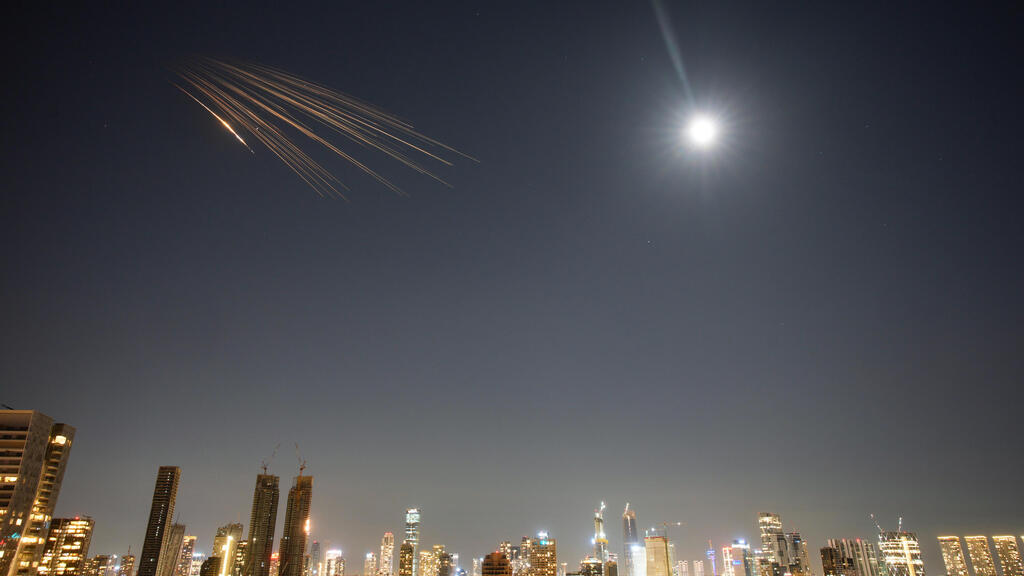
About half of the missiles launched from Iran since the start of the war have carried cluster warheads, Israeli security officials said Tuesday.
Interception of a missile with a cluster warhead


“This is a weapon that can cause significant damage,” officials said. “Following safety instructions is critical. It is not hundreds of kilograms of explosives concentrated in one place, but it spreads across an area of roughly 10 kilometers. It requires great responsibility from civilians. It kills. Interception fragments from regular missiles and from large missiles are deadly.”
Officials said Iran has continued launching missiles toward population centers throughout the day in small barrages.
“Hezbollah is also firing, both toward the depth of Israeli territory and toward residents of the north, in addition to anti-tank fire and high-trajectory fire at IDF forces on the front line,” officials said. “The strikes against Hezbollah and the operations against them are aggressive and offensive. Our forces are on the front line.”
Meanwhile, the Home Front Command said earlier Tuesday that the decision to partially reopen the economy was intended to allow “continuity of functioning.”
However, officials explained that after detecting extensive rocket fire, authorities decided to extend current restrictions until Saturday.
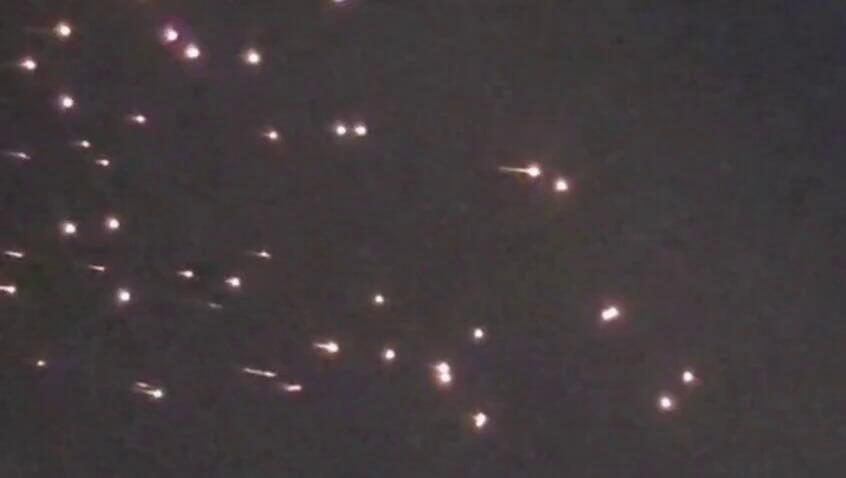
Cluster missile
“We are aware of the criticism,” Home Front Command officials said. “The decision was made after consultations with local authorities, the education minister and experts. We review ourselves every day.”
They noted that several rockets fired from Lebanon toward central Israel on Monday were intercepted unsuccessfully, resulting in two impacts without warning sirens.
“We are studying the incident. It was a localized failure,” officials said.
Home Front Command chief Maj. Gen. Shay Klepper said lessons had already been learned from the incident.
“We produced the relevant lessons and made the necessary adjustments,” he said.
Officials stressed that the threat itself is not new and that the Israeli Air Force has intercepted similar weapons in the past.
Regarding Monday’s deadly strike in Yehud, the Home Front Command said most workers at the construction site had entered a protected space.
“There was a protected area there and most of the workers were inside it,” officials said. “The two who were killed were not in the protected space, and we paid a heavy price. We are again emphasizing the importance of sheltering and following instructions.”
Israeli officials also said that for now they have not identified clear coordination between Iran and Hezbollah in their attacks.
“We do not have a definitive assessment that there is coordination,” officials said. “We are seeing difficulties on the Iranian side in synchronizing their barrages.”