


Minister of Aliyah and Integration Ofir Sofer of the Religious Zionism Party said Monday afternoon that he will vote against the draft‑exemption bill advanced by the coalition and led by Likud. According to Sofer, two other party members — lawmakers Moshe Solomon and Michal Waldiger — have joined him in declaring they will not support the bill in its current form.
“The bill submitted is a shameful law,” Sofer said in a statement given in the Knesset. “I am here to perform emergency braking.”
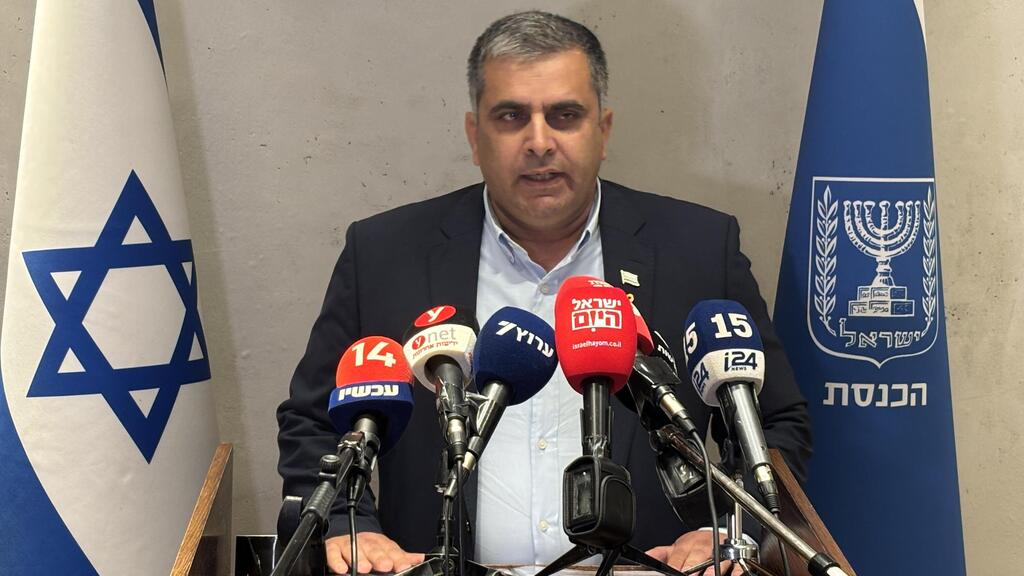
Sofer clarified that he opposes the law “even if it means the prime minister will fire me,” and added: “I will do everything in my power to persuade my friends to oppose this proposed disgrace.” In his view, “this is a shameful law devoid of any public courage, unable to look our ultra-Orthodox partners in the eye and say: it’s time to act. Over the past two years I have tried more than once to touch the hearts of Haredi leadership. I found a deep cultural gap, fear of change. Some spoke of the need for change, but unfortunately gave no practical expression to it.”
And there were also those who treated it with cynical politicking," he continued, "those who spoke of a political construct rather than a substantive solution. The easiest way — as has been done for years — is to pass a law that gives us time, that will be struck down by the High Court, or that in two years we can prove the law failed and go for a new one. This becomes meaningful when the period in which results are needed spans an election period. Because then certainly in the next coalition negotiations the bluff can be rolled forward by another two steps.”
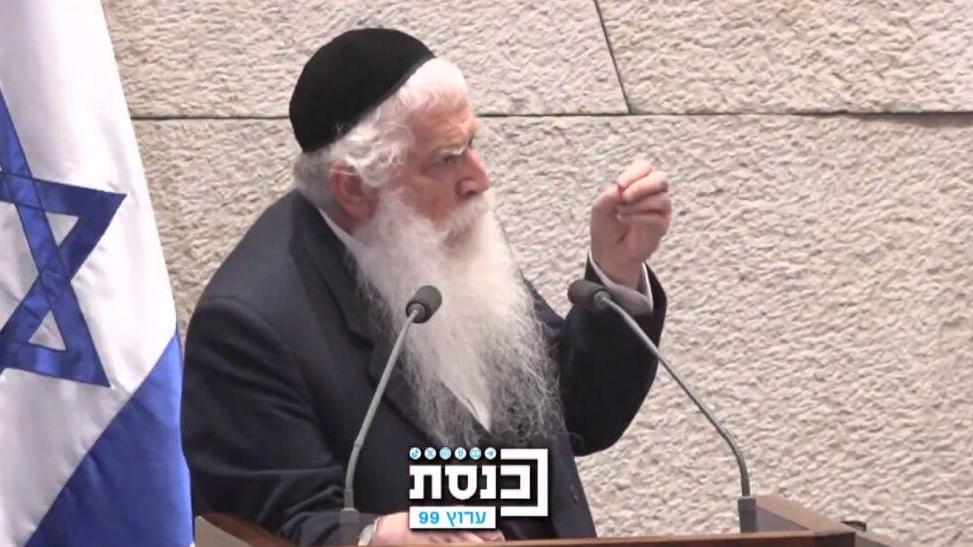
United Torah Judaism lawmaker Meir Porush also does not support the bill, meant to help his constituents
(Photo: Knesset Channel)
Even before Sofer’s remarks, Knesset lawmaker Meir Porush of the haredi United Torah Judaism party urged during the Knesset’s Foreign Affairs and Defense Committee hearing Monday morning to “tear up the law.” Solomon of Religious Zionism said he would find it difficult to vote in favor of the version drafted by committee chair Boaz Bismuth — as did Waldiger.
Other opponents include Knesset lawmakers Moshe Saada, Sharren Haskel and Dan Illouz. Additionally, Eli Raviv, Ohad Tal and David Bitan may also oppose the bill. Even within Haredi parties there are those expected to vote against it.
During the debate, committee chair Bismuth said his bill is “probably about preserving the coalition — certainly not about drafting Haredi men into the IDF.” He stated that, if the legislation passes, it would constitute a “harm to national security. The immediate need of the IDF is at least 12,000 soldiers. To meet that need at the pace proposed by the law — when the IDF is ready to absorb many more — I surely do not understand. If the objective is recruitment, the entire law must look different. Without sanctions nothing will happen.”
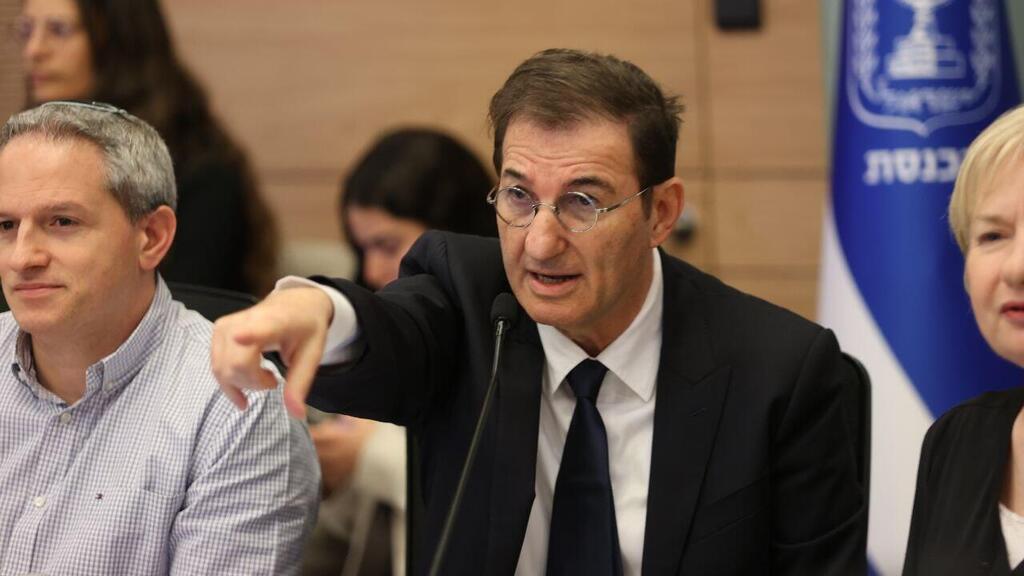
Boaz Bismuth, chairman of the Knesset’s Foreign Affairs and Defense Committee
(Photo: Alex Kolomoisky)
Bismuth opened Monday’s session stating that “this is a rare moment in the history of the nation. The generations before us and those who will come after are watching. This is a law belonging to the entire State of Israel.” He added: “Beyond the security needs, the law sends a strong message from the Knesset about the importance of Torah study. Anyone who opposes it will prove they prefer small‑tier politics over national interest.”
Bismuth further claimed: “Of course we will make changes during the deliberations. Those voting yes will vote for Israel’s future. For the first time we present a framework for stopping at quotas, which provides certainty for the IDF and the Torah world. Finally there will be order. This law is good for the country, strengthens trust and is destined to strengthen internal unity.”