



What would happen if Iran launched a missile attack against Israel on the night before the October 27 election? After three years of prolonged security emergencies, Israeli authorities are preparing for the possibility that the country's next national vote could take place under fire, with contingency plans designed to keep polling stations operating even during missile attacks and other security threats.
The Central Elections Committee is preparing for a range of scenarios ahead of the election for Israel's 26th Knesset, from rocket alerts in communities near the country's borders and terrorist attacks to a major Iranian missile barrage shortly before voting begins. A joint command center is already operating with representatives of the police, the Shin Bet domestic security agency and the military's Home Front Command to assess the various threats.
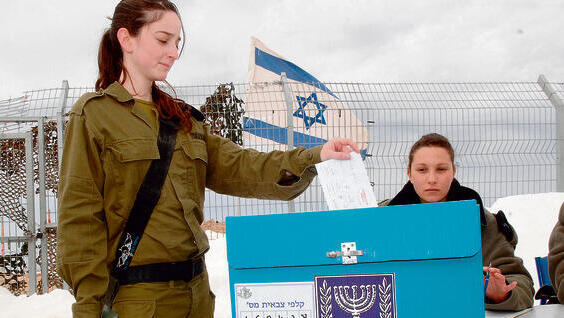
The committee's overriding directive is to hold the election as scheduled, even under emergency conditions. Officials point out that during previous Iranian missile attacks, essential workplaces continued operating and residents were still permitted to leave their homes for basic needs, including grocery shopping, even under strict civil defense restrictions. The same principle, they argue, could allow voting to proceed with adjustments to polling hours and additional security arrangements.
But what would happen if an attack made voting impossible across large parts of the country? Israeli law draws a clear distinction between postponing an entire national election and temporarily interrupting voting at individual polling stations.
When can an election be postponed?
Central Elections Committee Chairman Noam Sohlberg, deputy president of Israel's Supreme Court, and committee director general Din Livne have outlined the legal circumstances under which an election could be delayed. Their central argument is that postponement can be justified only in an emergency that makes it impossible to conduct free, equal elections accessible to all eligible voters.
Even then, postponement must be a last resort, limited in duration and supported by publicly available evidence. Under Section 9A of Basic Law: The Knesset, delaying a national election requires legislation approved by at least 80 of the Knesset's 120 members, a threshold that would ordinarily require support from both the governing coalition and the opposition.
The chairman of the Central Elections Committee does not have the authority to postpone the entire election independently. Any law authorizing a delay must also specify a new election date, and the postponement cannot last longer than the exceptional circumstances require.
Israel has postponed a Knesset election only once. On October 25, 1973, during the Yom Kippur War, lawmakers approved delaying the election originally scheduled for October 30 until December 31 of that year.
Speaking in June, Sohlberg said a "limited, supervised and reasoned" postponement could be justified, provided it was not used by those in power to extend their own tenure.
Rather than postpone elections, officials are examining alternatives that would allow as many Israelis as possible to vote safely. These include extending polling hours, introducing early voting arrangements, establishing special or mobile polling stations and making accommodations for soldiers, displaced residents and people required to remain in isolation.
What happens if a missile alert sounds at a polling station?
Israeli election law provides a separate mechanism for emergencies affecting individual polling stations. Under Section 70A of the Knesset Elections Law, the leadership of the Central Elections Committee, consisting of its chairman and deputy chairs representing major parliamentary factions, can order a polling station to open late, temporarily suspend voting, resume voting or extend its operating hours.
These powers apply when unusual circumstances arise on the eve of an election or on election day itself that prevent, or threaten to prevent, voting from proceeding normally. However, the law sets a strict limit: Voting cannot continue more than 24 hours beyond the legally prescribed closing time.
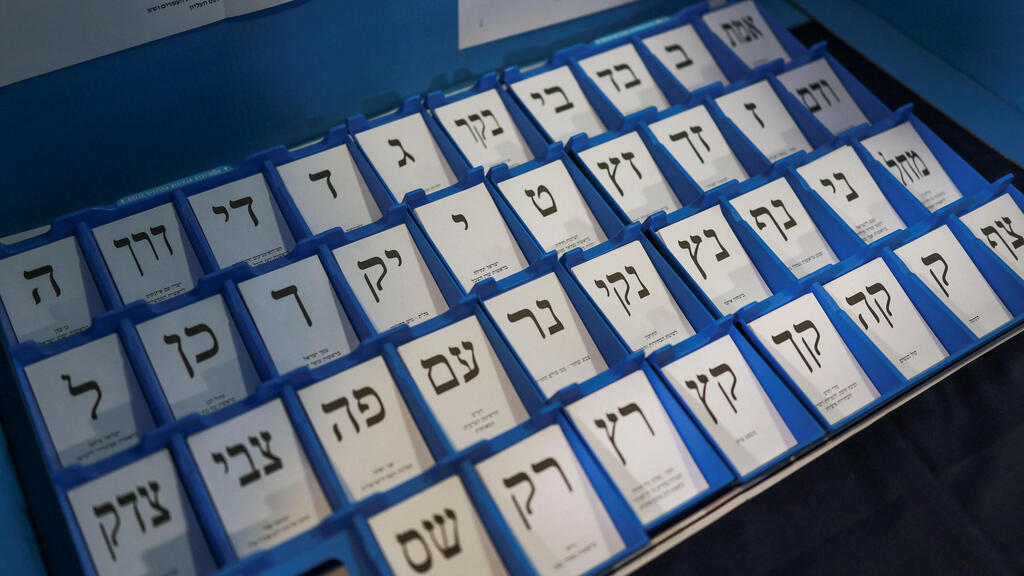
Ballot papers at an Israeli polling station. Postponing a national election requires the support of at least 80 lawmakers
(Photo: REUTERS/Ronen Zvulun)
The provision has its roots in a 1969 incident in the northern Israeli city of Kiryat Shmona, where Katyusha rocket fire disrupted elections for the Histadrut labor federation, leading to the voting being halted and invalidated. Special legislative arrangements were subsequently introduced, becoming a permanent part of election law in 1988.
For the upcoming election, the Central Elections Committee has worked to place numerous polling stations inside protected spaces. Where that was not possible, polling stations have been positioned near shelters or other designated protected areas.
If an air raid siren sounds, the polling station secretary, an official representing the Central Elections Committee, must secure the election materials. Under the emergency procedure, the secretary takes the ballot box, places the ballot papers kept behind the voting screen into a designated bag and ensures that everyone present immediately moves to a protected area.
Regulations governing Knesset elections allow the secretary to declare voting suspended when a siren sounds or enemy action begins. The official must secure the ballot box and voting materials, notify both the chairman of the Central Elections Committee and the relevant regional committee chairman, and resume voting as soon as conditions permit.
Additional powers are provided under Israel's Civil Defense Law. During a declared special home front situation or an attack, authorized senior military officers may issue instructions necessary to protect lives and property, including ordering residents to remain in shelters or other protected areas. Such instructions could effectively halt voting at polling stations in affected areas.
Special provisions have also been adopted ahead of the current election. They authorize the chairman of the Central Elections Committee, in consultation with the IDF chief of staff, to establish instructions governing polling stations and election-related activities during an emergency, while ensuring that the public can exercise its right to vote.
These arrangements do not override the authorities responsible for sounding air raid sirens or issuing immediate life-saving instructions during attacks. Protecting voters remains the first priority, even if voting must be temporarily interrupted.
The preparations reflect the authorities' determination to preserve both public safety and the democratic process. Missile attacks could force individual polling stations to close temporarily, require extended voting hours or lead to alternative arrangements. But postponing the October 27 national election would require far more than a security alert: It would require an exceptional emergency, a legally justified decision and the support of at least 80 lawmakers.