


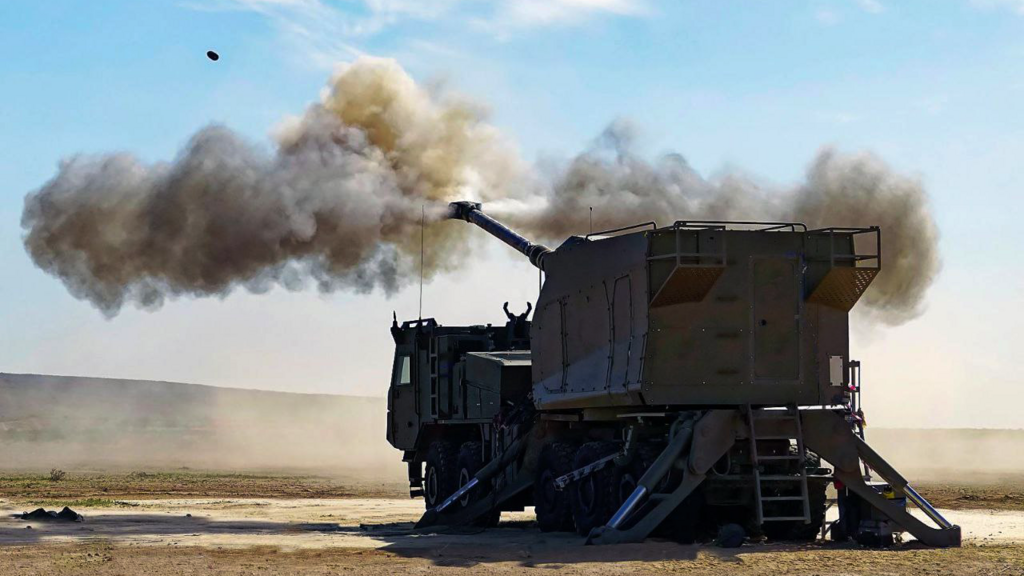
The IDF’s first advanced “Ro’em” artillery battery underwent its initial operational use this week, with officials in the Artillery Corps expressing strong satisfaction with the results. The system, developed over six years by the military and Elbit Systems, incorporates advanced technology and artificial intelligence, making it more powerful, faster and more precise than its predecessor.
The system was deployed against Hezbollah targets in Lebanon, and its performance is expected to accelerate the IDF’s plans to expand procurement, eventually replacing the older US-made “Doher” artillery systems.
8 shells per minute: the Ro’em in action
(Video: Courtesy of Elbit)


The Ro’em can fire up to eight shells per minute — four times the rate of its predecessor — and has a range of 40 kilometers, roughly double that of the Doher. It carries a magazine of 40 shells and requires a crew of just three, operating from within a control vehicle.
Its key innovation lies in its AI capabilities: the operator or commander designates a target, and the system autonomously loads the shell, aims precisely and fires. It is also connected to military data systems and can receive targets directly from intelligence sources or command centers.
“We carried out the first operational fire this week using the Ro’em, targeting Hezbollah positions that had launched attacks on our forces and the home front,” said Lt. Col. B., head of the Ro’em branch. “It was a major success. The fire we conducted significantly advances the system’s capabilities and its integration into the Artillery Corps. This is history in the making after 50 years of waiting.”
Lt. T., commander of the Ro’em battery, said the system exceeded expectations. “Despite limited familiarity, it performed excellently and delivered results. We learned a great deal about how to integrate it into operational frameworks and even developed new approaches for maneuvering forces, including firing protocols and rates tailored to operational needs.”
The military plans to convert Doher battalions to the new system, though no timeline has been provided. The transition is being carried out at the Tze’elim base, with the Ro’em branch overseeing training, doctrine development and testing in coordination with the IDF’s weapons development units and Elbit.
Asked whether the Artillery Corps would struggle to part with the Doher, Lt. T. said: “I commanded a Doher crew and know the system well. There are many things the Ro’em can do that the Doher is far behind in — both operationally and technologically. This week was a significant opportunity to learn the system, and it moved us much closer to full operational capability.”
Lt. Col. B. added that while the Doher still performs well, the Ro’em offers expanded capabilities. “It does everything the Doher does, and more — with less. It can deliver barrages with fewer guns, at higher rates, over longer distances, with greater precision and fewer personnel.” Its wheeled mobility allows it to operate across varied terrain and weather conditions while quickly moving between sectors via roads.
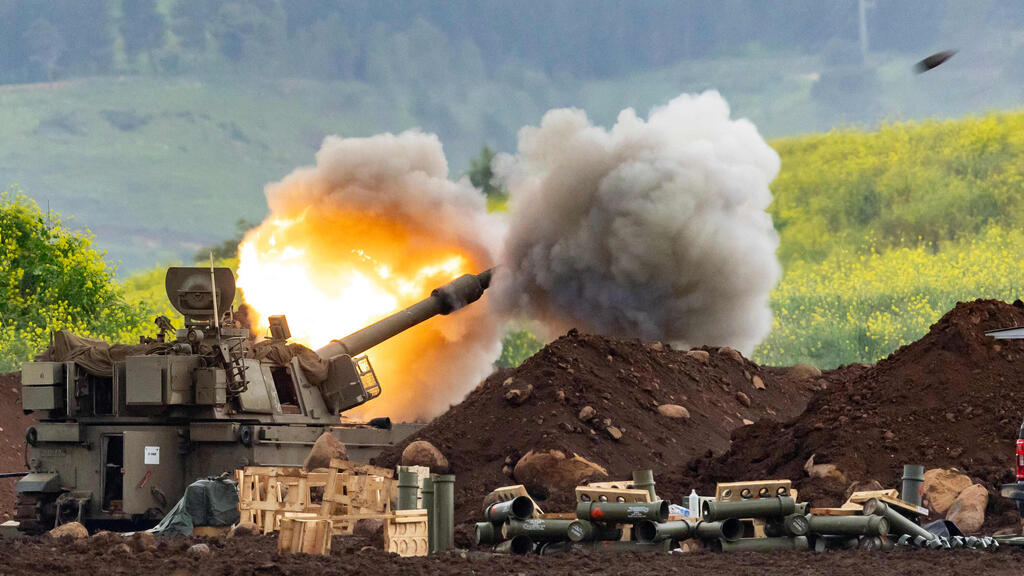
Artillery forces on the northern border during the latest campaign in Lebanon
(Photo: Odd Andersen/AFP)
Bezhalel Machlis, president and CEO of Elbit Systems, said the company was “proud to complete a significant milestone in one of its flagship projects.” He said hundreds of employees contributed not only as developers and manufacturers but also as partners with the IDF and Defense Ministry in addressing Israel’s security challenges.
“The Artillery Corps is in the midst of a groundbreaking technological transformation,” he said, adding that the defense industry plays a key role in realizing that vision.
Foreign militaries show interest
The Ro’em, commercially known as SIGMA 155, was delivered to the IDF at the end of December after six years of development, with the goal of replacing the aging Doher systems that have been in service for about 40 years. As noted, it operates on wheels rather than tracks, and its automated loading, targeting and firing reduce crew requirements by half.
In practice, the system functions almost like a robot on the battlefield. Its advanced capabilities include acquiring targets from command-and-control systems, firing at a single target from multiple trajectories, coordinating timed strikes with other units and rapidly deploying and repositioning — allowing it to relocate within about a minute after firing to avoid counterstrikes.
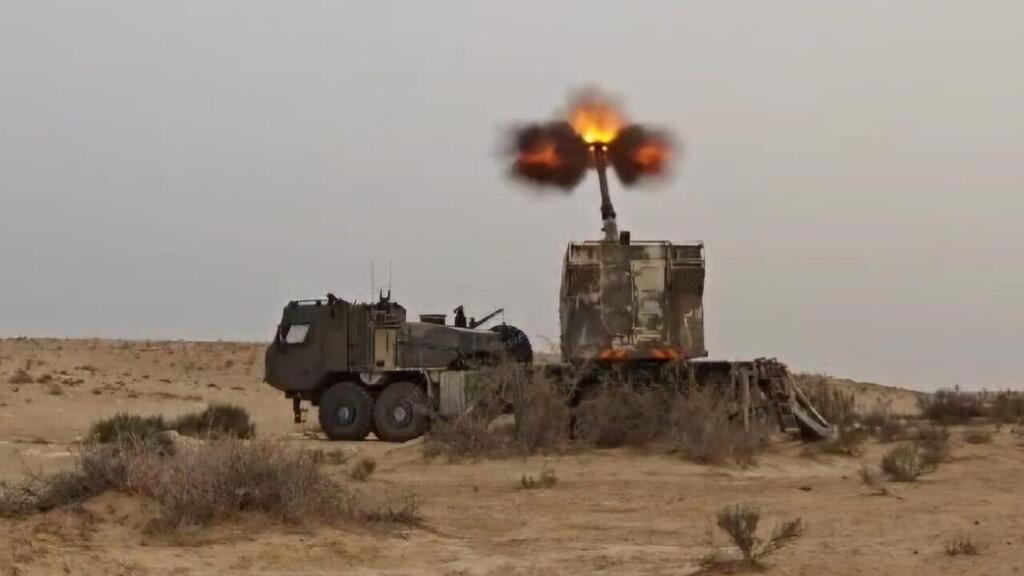
Set to eliminate the loader role: the Ro’em
Lt. T. said the ability to operate the system continuously with just three personnel from inside the vehicle “allows for significantly more sustained fire without wearing down the crew or reducing tempo. It helps overcome human limitations.”
Asked whether autonomous precision also addresses human limitations in targeting, he said: “There’s the operational side of firing and the quality of the strike. Operationally, it is far ahead of the Doher, requiring minimal interaction from the crew. In terms of accuracy, its capabilities are much higher, and thanks to its connectivity, it can adapt to achieve better results.”
The automated loading system is expected to eliminate the role of the loader in artillery crews. The system is preloaded with dozens of shells before missions, and similar to missile launchers such as those used by the Iron Dome, the ammunition is loaded quickly without manual handling.
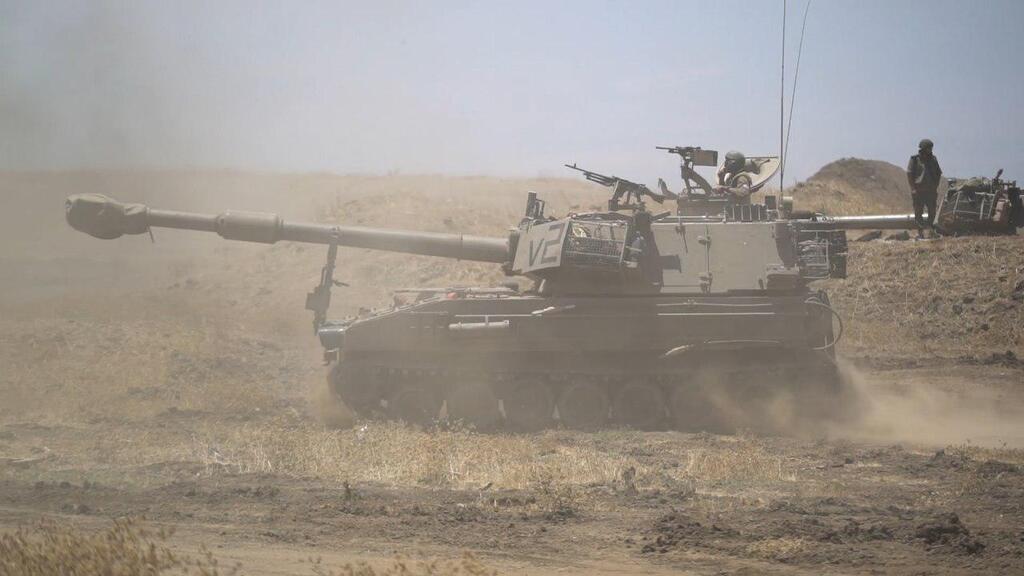
To be transferred to reserve units: the veteran Doher
(Photo: IDF Spokesperson)
The Ro’em has already drawn significant interest from foreign militaries. Elbit has established a production line in South Carolina and is competing in a major US Army tender to replace aging artillery systems by 2032. In 2021, the company announced its first export contract for the system with a country in the Asia-Pacific region, valued at about $106 million.
Elbit is also collaborating with German defense giant Rheinmetall to offer a European version of the system. Germany, the Netherlands and Hungary have expressed interest and sent military representatives to observe live-fire tests in Israel.
The first regular IDF battalion to operate the Ro’em is expected to be Battalion 405 of the 282nd Fire Brigade, with the first Ro’em-based artillery brigade slated to become operational within three years. By the end of the decade, all regular IDF artillery battalions are expected to be equipped with the system. The older Doher units are expected to be transferred to reserve units, or potentially used for spare parts, training targets or emergency deployment.