

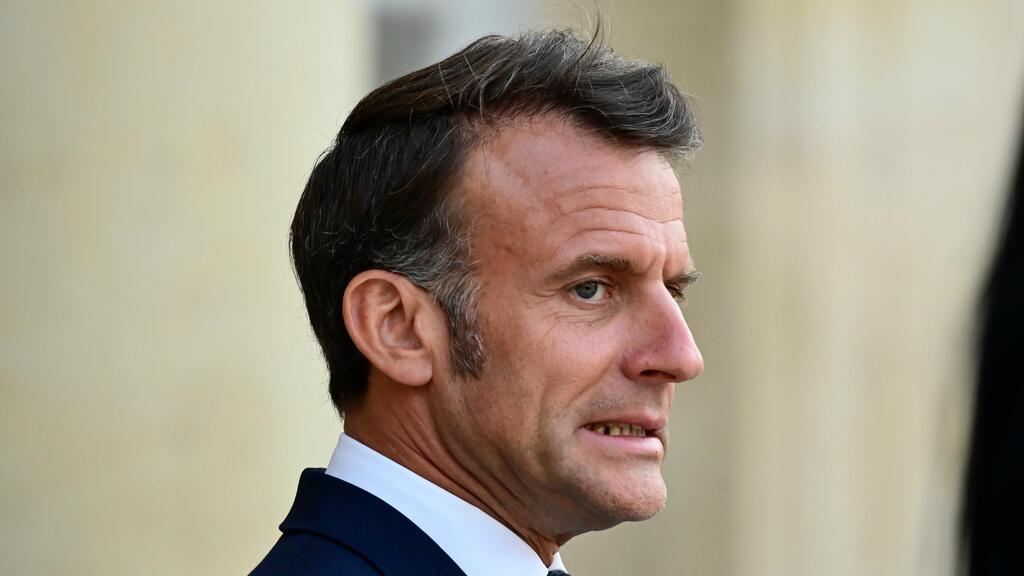
France, Britain and Germany on Friday condemned the killing of protesters in Iran and urged Iranian authorities to refrain from violence, according to a joint statement released by French President Emmanuel Macron’s office.
“The Iranian authorities have the responsibility to protect their own population and must allow freedom of expression and peaceful assembly without fear of reprisal,” the statement said.
The condemnation came as Iran was largely cut off from the outside world after authorities shut down internet access in an apparent attempt to curb growing unrest. Videos circulating online showed buildings set ablaze during anti-government protests in cities across the country.
Rights groups have documented dozens of deaths in nearly two weeks of demonstrations. Iranian state television broadcast footage of clashes and fires, while the semi-official Tasnim news agency reported that several police officers were killed overnight.
Iran protests


In a televised address on Friday, Supreme Leader Ayatollah Ali Khamenei vowed not to back down, accusing demonstrators of acting on behalf of exiled opposition groups and the United States. Tehran’s public prosecutor warned that those involved in sabotage or violent clashes with security forces could face the death penalty.
Iran’s Ministry of Information and Communications Technology said the decision to shut down the internet was taken “by the competent security authorities under the prevailing circumstances of the country.”
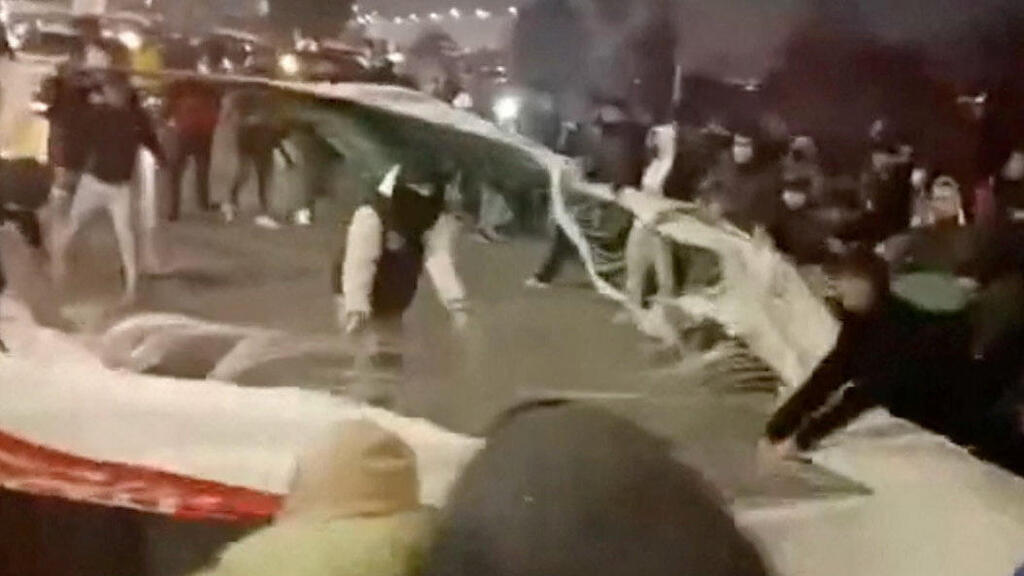
(Photo: Social Media/ Reuters)
Dozens killed in two weeks of unrest
The protests represent the most serious internal challenge in at least three years for Iran’s clerical leadership, which analysts say appears more vulnerable than during previous bouts of unrest, amid a dire economic situation and following last year’s conflict with Israel and the United States.
What began as protests over economic hardship has evolved into direct challenges to the authorities. Iran’s currency lost about half its value against the dollar last year, while inflation exceeded 40 percent in December.
Iranian rights group HRANA said at least 62 people have been killed since demonstrations began on December 28, including 48 protesters and 14 security personnel. The internet blackout has sharply reduced the flow of information out of the country, with phone calls failing to connect and flights between Iran and Dubai canceled.
State television aired images of burning buses, cars and motorcycles, as well as fires at metro stations and banks. Videos verified by Reuters showed hundreds marching in Tehran, with chants including “Death to Khamenei.” Other demonstrators voiced support for the monarchy that was overthrown in the 1979 Islamic Revolution.
Rights group Hengaw reported that a protest march in the southeastern city of Zahedan was met with gunfire, wounding several people. Another video circulating online appeared to show demonstrators in Shiraz chanting slogans calling for the overthrow of Khamenei, though Reuters could not independently verify the footage.

(Photo: Social Media/ Reuters)
Authorities have sought to draw a distinction between what they describe as legitimate economic protests and violent unrest, while deploying security forces to crack down on demonstrators.
President Masoud Pezeshkian last week urged a “kind and responsible approach,” and the government announced limited financial measures aimed at easing economic pressure. But as unrest spread and clashes intensified, Khamenei adopted a far more confrontational tone.
“The Islamic Republic came to power through the blood of hundreds of thousands of honorable people. It will not back down in the face of vandals,” he said, accusing protesters of seeking to please US President Donald Trump.
Fragmented opposition, international concern
Iran’s fragmented opposition abroad has called for continued demonstrations. Reza Pahlavi, the exiled son of the late shah, urged Iranians to take to the streets, saying “the eyes of the world are upon you.”
The level of support inside Iran for a return to monarchy or for exile opposition groups remains disputed.
Trump, who ordered strikes on Iran last summer and warned Tehran last week that the United States could come to protesters’ aid, said on Thursday that he would not meet Pahlavi and was unsure it would be appropriate to support him.
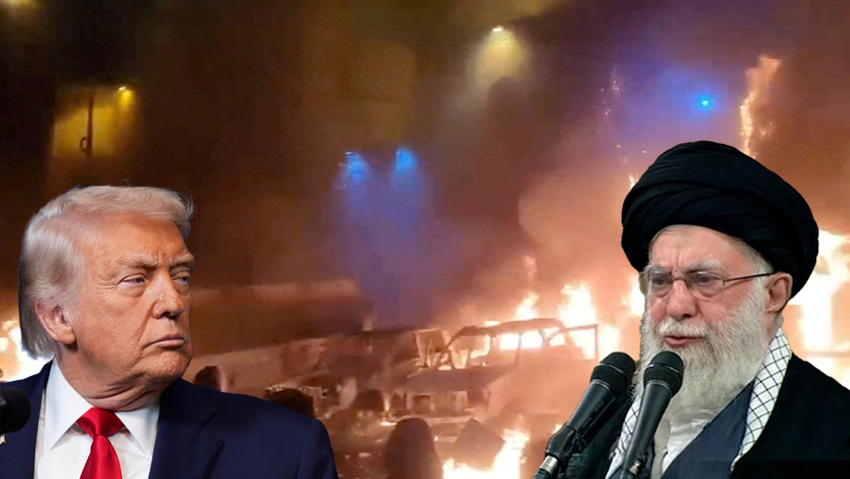
Donald Trump, Ali Khamenei
(Photo: Social Media/via Reuters, AP Photo/Alex Brandon)
Iranian Foreign Minister Abbas Araqchi said Friday that the likelihood of foreign military intervention was “very low,” adding that Oman’s foreign minister would visit Tehran this weekend.
The United Nations said it was closely monitoring the situation. “People anywhere in the world have a right to demonstrate peacefully, and governments have a responsibility to protect that right,” UN spokesman Stephane Dujarric said.
Iran has weathered repeated waves of nationwide unrest in recent decades, including protests in 1999, 2009, 2019 and the 2022 “Woman, Life, Freedom” movement, which was ultimately suppressed at significant human cost.