

In Israel's deeply divided political landscape, there are few issues capable of bringing National Security Minister Itamar Ben-Gvir and Democrats leader Yair Golan into the same conversation. But the rights of children who have lost a parent may be one of them.
Ahead of the next Knesset elections, Hamaniot, an Israeli nonprofit supporting children who have lost one or both parents, is leading a cross-party initiative calling on political leaders to commit to improving the rights and welfare of orphaned children and widowed families.
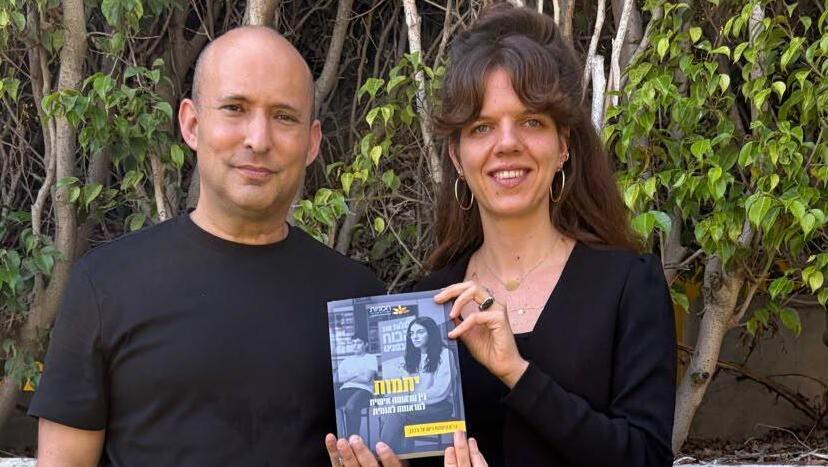
The organization has been meeting with politicians from across the political spectrum, seeking support for an election charter that would turn political commitments into legislation, government policy and dedicated budgets.
At the heart of the campaign is a troubling reality: More than 50,000 children and young adults under the age of 21 in Israel have lost one or both parents, yet the country still lacks a comprehensive national policy guaranteeing them long-term support.
For many of these children, the consequences of losing a parent extend far beyond the immediate grief. They can affect education, financial stability, emotional well-being and future opportunities.
A multidisciplinary study led by Hamaniot and published in 2021, in collaboration with Tel Aviv University, Bar-Ilan University, the Ministry of Welfare and 30 additional nonprofit organizations, identified significant risks associated with childhood parental loss when adequate support is unavailable.
According to the research, compared with their peers, orphaned children in Israel were four times more likely to be arrested, 13 times more likely to drop out of school and eight times more likely to use drugs or alcohol. Among girls, the reported rate of involvement in prostitution was 25 times higher.
The findings highlight the importance of early intervention and sustained assistance, rather than leaving families to navigate the consequences of loss on their own.
Turning grief into national responsibility
Founded in 2019, Hamaniot provides support to children and families coping with parental loss through therapeutic groups, parental guidance, assistance accessing benefits and ongoing family support.
Beyond its direct services, the organization has worked to change government policies and close gaps in legislation.
Its advocacy has contributed to new procedures within the Ministry of Education, Ministry of Welfare and National Insurance Institute, as well as three laws passed by the Knesset.
These include legislation equalizing certain financial rights for children and divorced spouses of fallen IDF soldiers and victims of terrorism with those of families in which the parents were married at the time of death; recognizing the memorial day of an immediate family member as an optional day off for families experiencing civilian bereavement; and prohibiting the dismissal of widows of fallen soldiers and terrorism victims during the first year following their loss.
Now, Hamaniot is seeking a broader reform.
Its proposed Roots Reform would establish a legally guaranteed package of basic rights and services for children who have lost a parent, supported by a coordinated government framework.
The proposal calls for clear responsibilities across government ministries, a national system to identify orphaned children and share relevant information between authorities, expanded emotional and educational support, improved financial security and stronger assistance for surviving parents.
It would also strengthen the role of local authorities and ensure that families receive guidance in accessing the benefits and services available to them.
When schools fail to recognize the lasting impact of loss
One of the most pressing gaps identified by Hamaniot concerns the education system.
A 2026 study conducted by the organization among 263 adults who lost a parent during childhood found that 78% experienced academic difficulties following their loss.
These included problems with concentration, motivation, academic achievement and school attendance.
Although updated Ministry of Education guidelines issued in March 2026 outline schools' responsibilities toward students experiencing prolonged crises, they do not provide a dedicated, funded allocation of support hours for children who have lost a parent.
According to Hamaniot, the ministry also lacks a complete picture of how many students in the education system have experienced parental loss.
As a result, a child may receive attention and emotional support immediately after a parent's death, only to find that assistance gradually disappears even as the challenges continue.
The level of support often depends on the resources available at an individual school, the training of its staff and the initiative of teachers or administrators.
Hamaniot wants to change that by establishing systematic identification of bereaved students, dedicated support hours, professional training for educational staff and continuity of care as children move between schools and educational frameworks.
The aliyah gap: when a parent's death determines a child's benefits
Another disparity affects children who immigrate to Israel after losing a parent abroad.
Under existing National Insurance eligibility rules, a child whose parent died before the family's aliyah and was not insured in Israel may be ineligible for survivor benefits.
That means two children living in Israel, both coping with the loss of a parent, may receive different levels of financial assistance simply because one parent's death occurred before immigration.
According to figures provided to Hamaniot by the Ministry of Aliyah and Integration, approximately 500 children who had lost a parent immigrated to Israel between 2018 and 2024.
In 2026, the potential gap in survivor benefits amounts to approximately NIS 10,344 per child annually, excluding additional benefits.
For a newly arrived family already facing the financial and emotional challenges of adjusting to life in Israel, the difference can be substantial.
Hamaniot is therefore promoting an amendment to the National Insurance Law that would establish a special allowance for orphaned immigrant children who do not qualify for survivor benefits under the existing system.
The estimated annual cost of the proposed arrangement, once the full eligible population is covered, is approximately NIS 5.15 million.
The organization argues that the measure would address an inequality affecting a relatively small but particularly vulnerable population.
October 7 brought new urgency, but the problem is much broader
The October 7 attacks and the subsequent war brought renewed attention to the needs of children who have lost parents, leaving hundreds more children without one or both parents.
Yet Hamaniot emphasizes that the issue extends well beyond military and terrorism-related bereavement.
Every year, thousands of children in Israel lose parents to illness, accidents, murder, suicide and other civilian circumstances.
While some bereaved families qualify for specific state benefits because of the circumstances of the death, others face a far more fragmented system of assistance.
For Hamaniot, the central principle is that a child's need for emotional, educational and financial support should not depend solely on how or where a parent died.
A rare cross-party effort ahead of the elections
To advance these changes, Hamaniot CEO and founder Hadar Kass and policy advocate Shirley Schiff have held a series of meetings with political leaders, lawmakers and prospective Knesset candidates.
Among those they met were Yair Golan and Omri Ronen of the Democrats; Itamar Ben-Gvir and Limor Son Har-Melech of Otzma Yehudit; Avigdor Liberman and Oded Forer of Yisrael Beytenu; and Michael Malkieli of Shas.
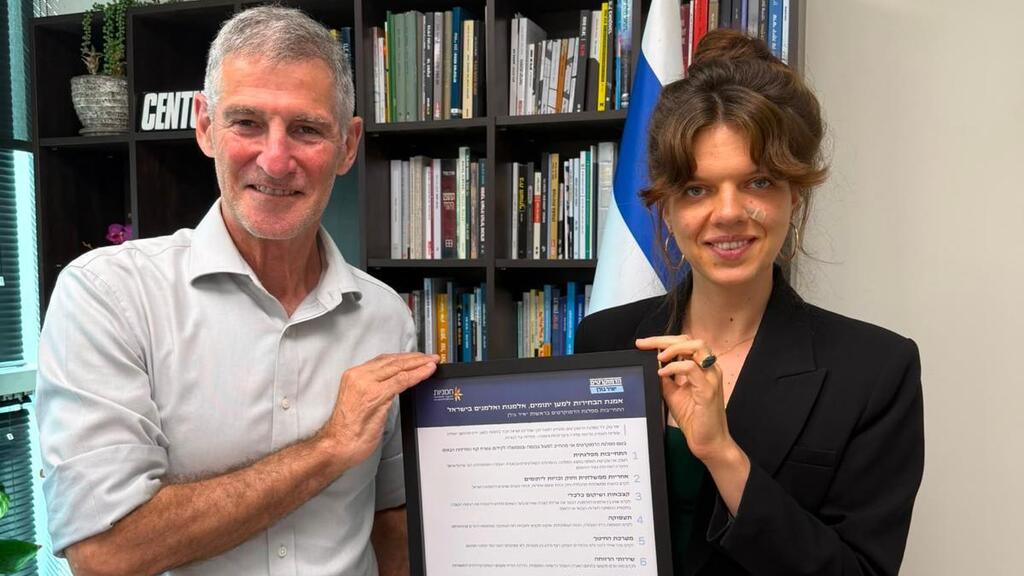
Yair Golan and Hadar Kess
Other meetings included Hili Tropper, Shira Shapira, Tair Ifergan, Orit Farkash, Oshrat Gani Gonen, Eliasaf Peretz and Alex Rif of the Yashar list; Ram Ben-Barak and Keren Turner of the Beyachad list; and Ofer Winter and Lali Deri of the Amcha Yisrael list, among others.
The initiative has placed particular emphasis on candidates who may be entering the Knesset for the first time, with the goal of establishing working relationships before the next parliamentary term begins.
The election charter calls on politicians to support legislation and government measures that would establish a clear national framework for orphaned children and widowed families.
Hamaniot intends to use the charter as the basis for cooperation with the next government, regardless of its political composition, and to monitor whether commitments are translated into legislation, budgets and binding government procedures.
The organization sees the campaign as an opportunity to move the issue beyond party politics and establish it as a shared national responsibility.
'This is not a question of right or left'
"For years, children who lost a parent have had to rely on their families' ability to find information, approach government authorities and fight for basic rights," said Hadar Kass, CEO and founder of Hamaniot.
"Our research and work on the ground show that these gaps are not simply the result of insufficient resources, but also of the absence of a clear policy and responsibilities that are scattered across government ministries."
Kass said the organization has already demonstrated that legislative change is possible, but that individual reforms are no longer enough.
"We have succeeded in bringing about changes in legislation and government procedures, but a much broader effort is needed," she said.
"We are asking every political party to commit to ensuring that the next Knesset has a real action plan for orphans and widows, with clearly defined rights, budgets and government accountability."
"This is not a question of right or left. It is the state's responsibility toward these children."
For Hamaniot, the true test will come after the elections, when campaign promises must become government action.
The organization's message is that while political disagreements may shape Israel's next government, protecting children who have lost a parent should be a commitment that crosses party lines.