

The United Arab Emirates was angered and embarrassed by the public disclosure of visits by senior Israeli officials, but the episode is not expected to damage the deepening strategic relationship between the countries, Israeli officials said.
Like Israel, the UAE maintains a policy of ambiguity — but in its case, that ambiguity concerns its ties with Israel. The relationship exists, and has grown strong enough to become strategic, but Emirati officials prefer to avoid giving it public prominence.
Gallery
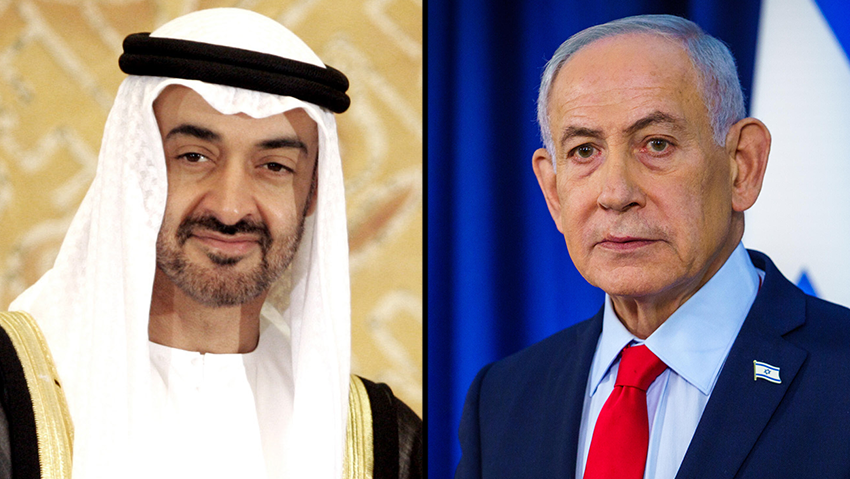
UAE President Sheikh Mohammed bin Zayed Al Nahyan, Prime Minister Benjamin Netanyahu
(Photo: AP, Shalev Shalom)
That approach was tested when reports emerged in a single day that Prime Minister Benjamin Netanyahu, Shin Bet chief David Zini and Mossad chief David Barnea had all visited the UAE. The disclosures caused major embarrassment in Abu Dhabi and led the UAE Foreign Ministry to issue an official denial that Netanyahu had visited the country.
Ziv Agmon, a former Netanyahu spokesman, quickly pushed back, saying Netanyahu not only visited the UAE but was personally driven by UAE President Sheikh Mohammed bin Zayed Al Nahyan from the airport to the palace.
A senior Israeli official said the Emiratis were “hurt by the spin that was done on them, but this is not a real crisis.”
“They know today who their real friends are, who came to their aid in a time of trouble,” the official said. “There is no need to get excited by the denial. It is in their DNA to deny. It will not affect the tightening alliance.”
The official said Israel’s help during the war, including sending an Iron Dome battery, was appreciated. But he said the UAE has other interests as well.
“They do not like angering the Arab world and being seen publicly with Netanyahu,” the official said. “Today, this is not a simple matter. There is public opinion, there are Palestinians and there are sensitivities that must be taken into account.”
Sultan Al-Ali, a media personality from Abu Dhabi, told ynet the UAE denial was meant to prevent the impression of secret military coordination.
“First, the UAE issued a statement to prevent any attempt to create the impression of secret military coordination or undeclared escalation in the region, especially at this sensitive regional junction,” he said. “Second, the statement did not deny the relationship with Israel, but confirmed that these are declared and known relations within the framework of the Abraham Accords. This is a critical point.”
He said the UAE’s message was clear: “The UAE does not operate in the shadows and does not need vague arrangements.”
Al-Ali said the Foreign Ministry’s official statement showed that the UAE believed the report was beginning to turn into “political and media material” that could affect public opinion or be used in incitement campaigns. He said the UAE is trying to maintain its image as a stable country that manages foreign relations according to its national interests and sovereignty, “not according to leaks, online campaigns or attempts to distort.”
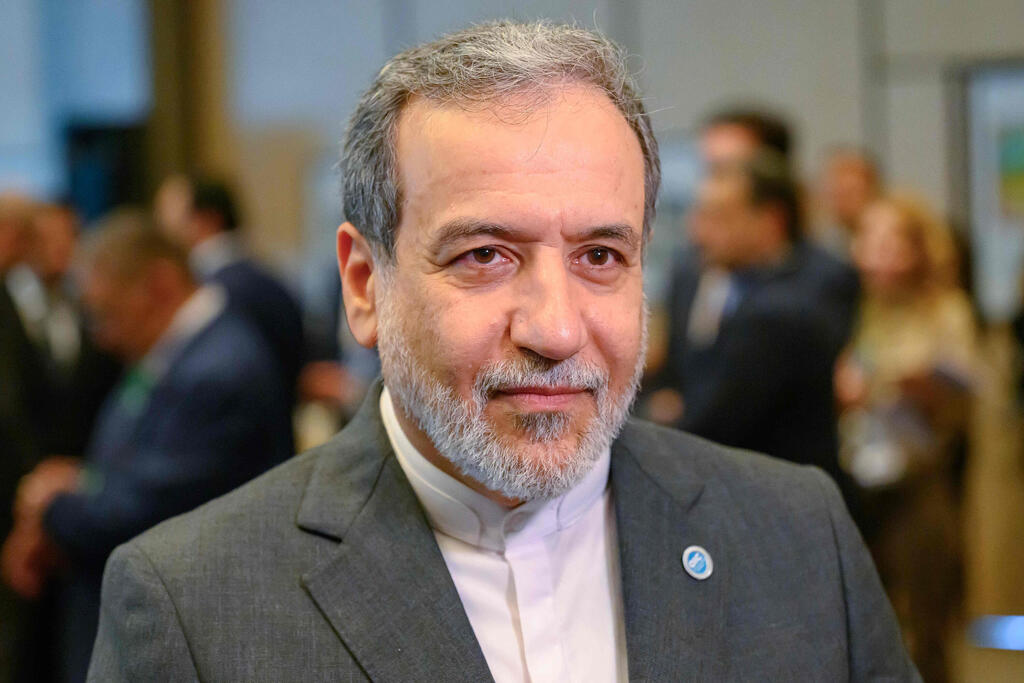
Iranian Foreign Minister Abbas Araghchi
(Photo: AP Photo/Mehmet Guzel)
Iranian Foreign Minister Abbas Araghchi attacked the UAE over Netanyahu’s reported visit and the partnership between the countries.
At a BRICS summit, Araghchi said, “It was revealed that Netanyahu visited Abu Dhabi during the war, and it turned out that they participated in the strikes and may even have acted directly against us. The UAE is an active partner in aggression against Iran. There is no doubt about it.”
He said the UAE should reconsider its policy toward Iran.
“I didn’t name the UAE in my statement for the sake of unity. But the truth is that the UAE was directly involved in the aggression against my country. When the attacks started, they didn’t even issue a condemnation,” he said.
On X, Araghchi wrote that Netanyahu had now publicly revealed what Iranian security services had already told the country’s leadership long ago.
“Enmity with the Great People of Iran is a foolish gamble,” he wrote. “Collusion with Israel in doing so: unforgivable.”
He also appeared to threaten the UAE, saying those who cooperate with Israel “to s ow division will be held to account.”
The Prime Minister’s Office said Wednesday that Netanyahu secretly visited the UAE during the war with Iran and met with the Emirati leader. A source familiar with the meeting, cited by Reuters, said it took place March 26 and lasted several hours in Al Ain, a city near the UAE’s border with Oman about 250 kilometers, or 150 miles, from Iran’s coast.
That same day, the commander of the Iranian Revolutionary Guards’ navy was killed.
The Prime Minister’s Office said the visit led to “a historic breakthrough” in relations between Israel and the UAE. No photo of the visit or meeting was released.
Hours after the announcement, the UAE Foreign Ministry issued a denial.
“The United Arab Emirates denies reports circulating regarding an alleged visit by Israeli Prime Minister Benjamin Netanyahu to the UAE, or receiving any Israeli military delegation in the country,” the ministry said.
It added that the UAE’s relations with Israel are open relations established under the Abraham Accords and “are not based on non-transparent or unofficial arrangements.”
“Accordingly, any claims regarding unannounced visits or undisclosed arrangements are entirely unfounded unless officially announced by the relevant authorities in the UAE,” the ministry said.
Abu Dhabi also urged media outlets to be accurate and not spread unverified information or use it to create political narratives.
The UAE denial may reflect anger over the public announcement by Netanyahu’s office, particularly during a tense security period and amid a fragile ceasefire in the war with Iran.
Agmon, Netanyahu’s former chief of staff, wrote that he had accompanied the prime minister on what had been a highly secret historic trip.
“I can say that the prime minister was received in Abu Dhabi with royal honors,” Agmon wrote. “The sheikh greatly honored the prime minister and personally drove the prime minister in his own car from the plane to the palace. The things the prime minister secured on this amazing visit will be discussed for generations to come.”