

Nearly 80 years after the King David Hotel bombing, the last known surviving Irgun fighter involved in the operation has recalled how he transported seven milk churns without realizing they would later be used to conceal explosives.
Haim Eitani, now over 98, told ynet and Yedioth Ahronoth that secrecy was so strict within the underground organization that fighters carried out assignments without asking about their ultimate purpose.
“When we collected the churns from Tnuva, we did not know they were intended for the bombing of the King David Hotel,” Eitani said. “There were many things we did not want to know. Everything was secret. We simply knew that underground fighters did not ask questions. Only after the hotel was bombed did I understand that the churns I had transported had been used for that purpose.”
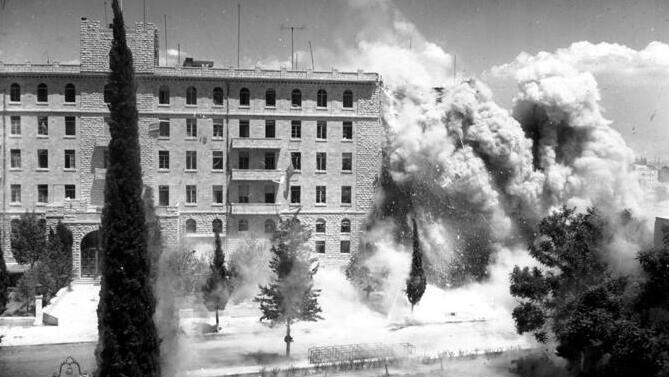
The bombing on July 22, 1946, destroyed the southern wing of the Jerusalem hotel, which housed the administrative and military headquarters of the British Mandate authorities.
Ninety-one people were killed, most of them British and Arab, along with 17 Jews. Another 45 people were taken to hospitals with injuries.
The operation remains one of the most controversial and consequential attacks carried out by the Irgun, the pre-state Jewish underground organization also known by its Hebrew acronym Etzel.
Eitani said he was instructed to move seven churns from a Tnuva facility on Herzl Street in Tel Aviv to an Egged bus station near Givat Herzl.
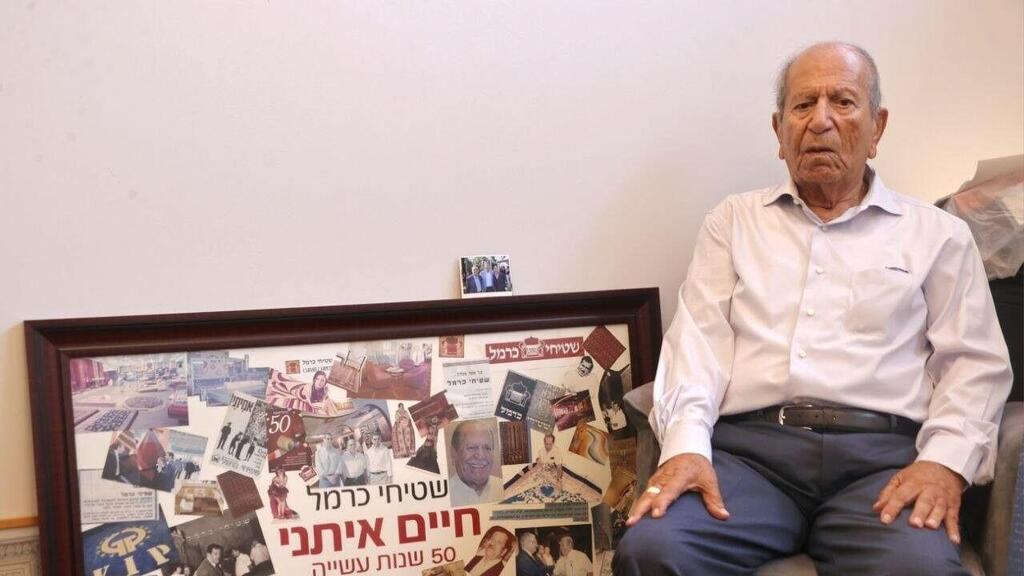
Haim Eitani, the last surviving Irgun fighter
(Photo: Moti Kimchi)
“I remember that the churns were extremely heavy,” he said. “They told me to transport the seven churns. It was a journey of more than an hour.”
He enlisted the help of an elderly Yemenite man who earned a living moving goods with a bicycle and cart.
“We offered to pay him to ride to the loading platform and take the churns,” Eitani said. “He looked at me and said, ‘Why are you making fun of an old man?’ We explained that he would be paid and that we were not mocking him.”
The churns were loaded onto the cart and transported toward the Moshavot Square area. Near Peretz Street, a van was waiting, and another Irgun fighter took the containers onward to Jerusalem.
“I did not understand the purpose at all,” Eitani said.
Explosives were later placed inside the churns before the containers were taken into the hotel.
Disguised as Arab workers
In a biography of Eitani written by researcher and historian Moshe Keshi, the operation is described as beginning with two Irgun squads entering the King David Hotel disguised as Arab workers.
“On July 22, 1946, two Irgun units disguised as Arabs set out for the King David Hotel in Jerusalem,” Keshi wrote. “They carried the seven milk churns loaded with explosives into the hotel restaurant, where they were placed beside the building’s support columns.”
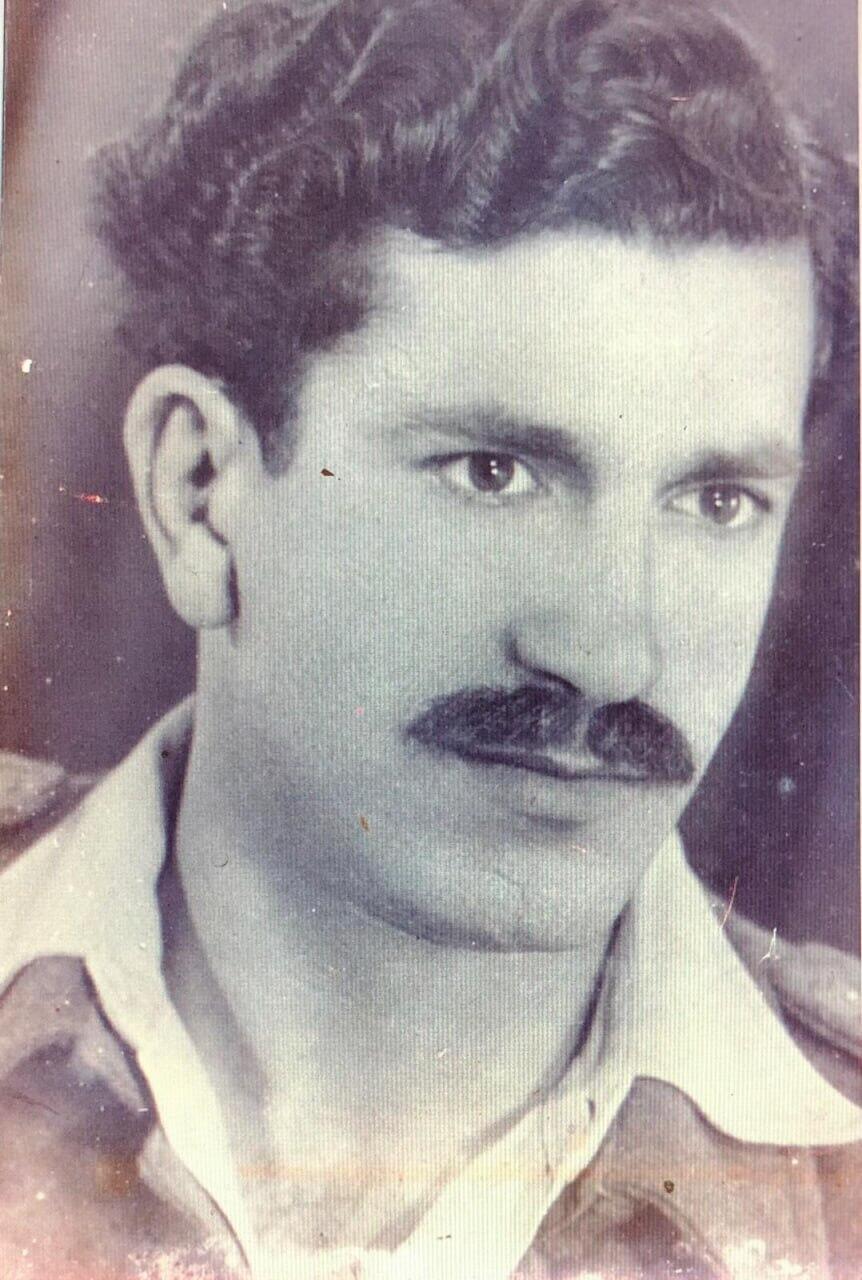
Haim Eitani
One of the Irgun fighters activated delayed fuses set to detonate approximately 30 minutes later.
At the same time, another Irgun unit issued warnings that explosives had been planted and demanded that the building be evacuated.
About 25 minutes after the telephone warnings were delivered, the explosives detonated.
“A tremendous explosion shook Jerusalem, and its echoes were heard from far away,” Keshi wrote. “The entire seven-story southern wing of the hotel was completely destroyed.”
Warnings were reportedly delivered to the hotel, the Palestine Post newspaper and the nearby French Consulate. Disputes over whether the warnings were received, understood or acted upon became central to the historical controversy surrounding the attack.
‘The heart of the British Mandate was struck’
Keshi, a researcher of the history of the Land of Israel and a member of the IDF’s combat heritage officer network, said Eitani was, to the best of his knowledge, the last surviving fighter who took part in the operation.
“The heart of the British Mandate institutions was struck,” he said. “Hundreds of intelligence documents seized by the British during Black Sabbath were destroyed in the explosion.”
Black Sabbath was the name given to the British crackdown of June 29, 1946, during which thousands of troops searched Jewish communities, arrested members of the Jewish leadership and seized documents connected to underground activity.
Following the King David Hotel bombing, British authorities intensified their campaign against the Irgun, arresting dozens of its members and sentencing several underground fighters to death.
The operation became one of the defining episodes of the final years of the British Mandate. Supporters viewed it as a strike against the central administrative and intelligence headquarters of British rule. Critics condemned the attack because of its heavy civilian death toll.
Eitani said he still does not regret either the operation or his own limited role in preparing it.
Even eight decades later, he remembers the secrecy surrounding the mission and the realization that came only after the explosion.
“Underground fighters did not ask questions,” he said. “Only afterward did I understand.”