

The world is watching the White House as U.S. President Donald Trump prepares to make a critical decision on the future of negotiations with Iran.
Prime Minister Benjamin Netanyahu is expected to meet with Trump on Wednesday to present Israel’s key demands regarding any potential deal between Washington and Tehran, including a call to preserve Israel’s military freedom of action against the Islamic Republic even in the event of an agreement.
Trump on Iran negotiations
(Video: Fox Business)


But pressure on Trump isn’t coming solely from Israel. Iran and its Gulf neighbors are also pushing hard — albeit in the opposite direction — advocating for a diplomatic resolution over a military confrontation.
Ali Larijani, secretary of Iran’s Supreme National Security Council, visited Oman on Tuesday. Oman hosted the latest round of U.S.-Iranian negotiations last weekend. “The Americans must not allow Netanyahu to suggest, before his visit, that he intends to dictate the framework for nuclear negotiations,” Larijani wrote on X (formerly Twitter) after meeting with Omani Foreign Minister Badr Albusaidi, who mediated the talks.
According to Iranian sources, that round included a direct meeting between U.S. envoys Steve Witkoff and Jared Kushner and Iranian Foreign Minister Abbas Araghchi.
Gallery
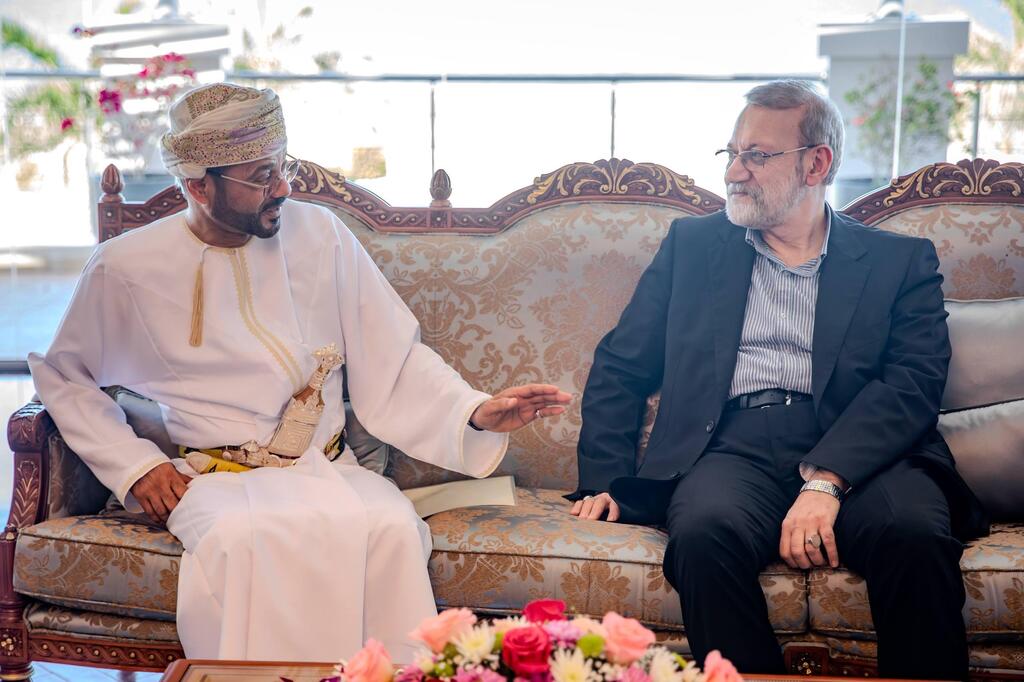
Omani Foreign Minister Badr Albusaidi and secretary of Iran’s Supreme National Security Council Ali Larijani
While Israel is pressing the U.S. to expand the scope of any deal to include Iran’s ballistic missile program and its regional proxy network, including Hezbollah in Lebanon and the Houthis in Yemen, Iran insists the talks focus solely on the nuclear file and has so far refused to compromise on its right to enrich uranium on its own soil.
“The negotiations are focused exclusively on the nuclear issue,” Larijani said in a televised interview in Oman. “There have been no talks on other matters. The American side has concluded that discussions should remain limited to the nuclear topic.”
He added that Iran has “always believed war is not the solution to the conflict between the two countries, and that regional issues must be addressed through dialogue. Introducing additional demands will only lead to the collapse of negotiations. Netanyahu’s visit to the U.S. and his statements about setting a deadline for Iran could trigger a crisis.”
Netanyahu arrives in Washignton
According to reports from Oman, Larijani also met with Omani Sultan Haitham bin Tariq to discuss “the latest developments in the Iran-U.S. talks and ways to reach a fair and balanced agreement.” The sultan reportedly emphasized the need to return to the negotiating table in order to “bridge gaps, resolve disputes peacefully,and promote regional and global stability.”
“We discussed the latest developments. Regional peace and security remain our top priority. We call for restraint and wise solutions,” Foreign Minister Albusaidi added.
Another key Gulf actor reportedly involved in the talks is Qatar, home to Al Udeid Air Base — the largest American military base in the Middle East. According to Qatari media, Emir Tamim bin Hamad Al Thani spoke by phone with President Trump on Wednesday morning to discuss bilateral relations and “regional and international developments,” with both leaders reportedly stressing the importance of diplomacy and dialogue to resolve crises.
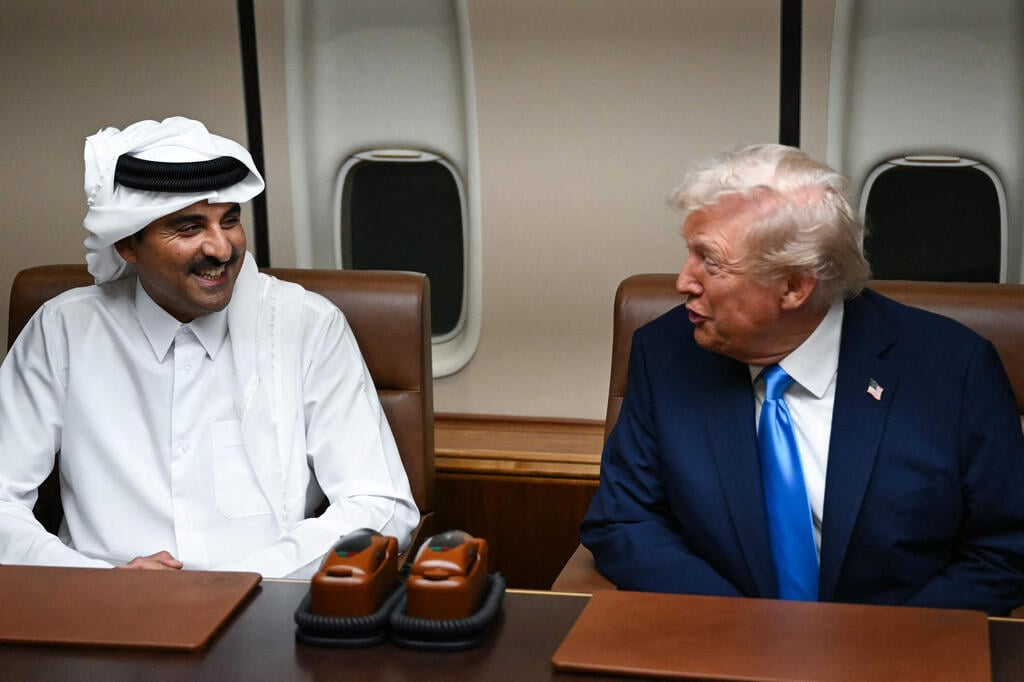
Qatari Emir Tamim bin Hamad Al Thani and US President Donald Trump
(Photo: ANDREW CABALLERO-REYNOLDS / AFP)
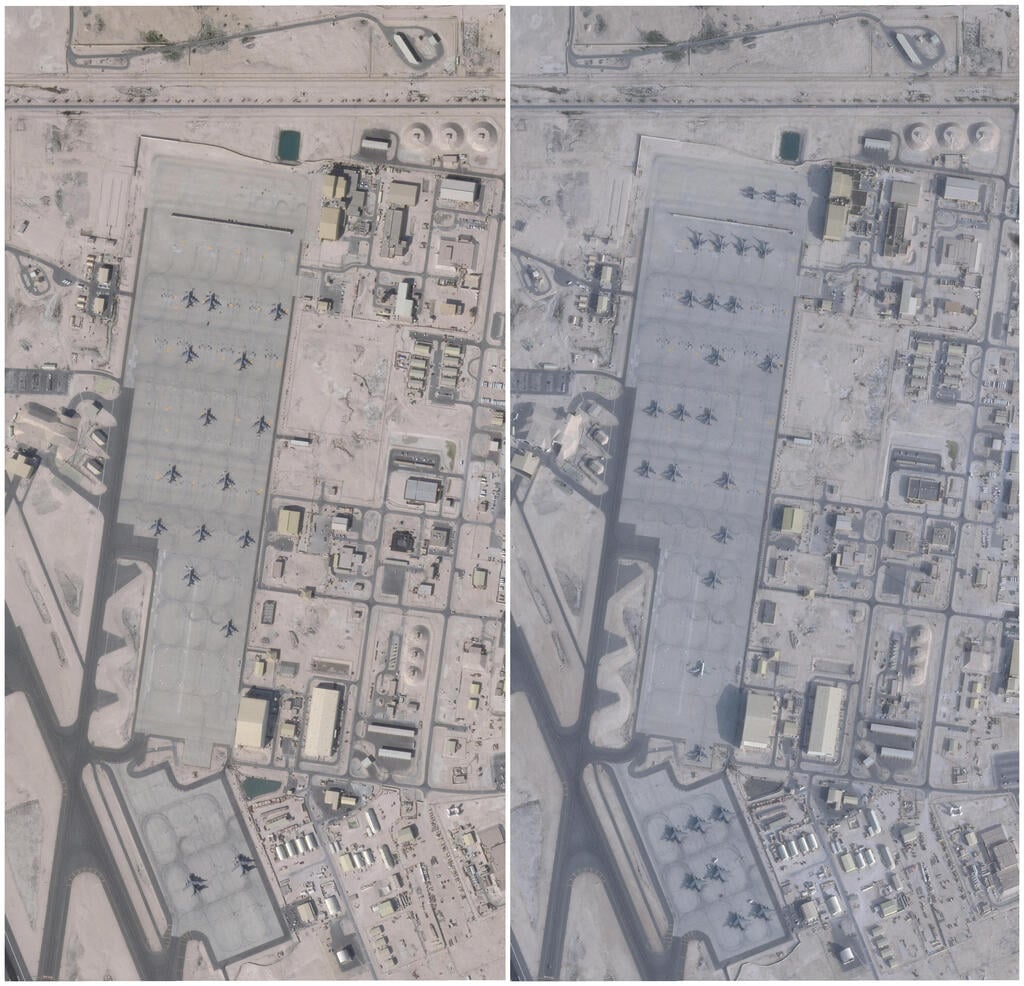
Al Udeid Air Base in Qatar
(Photo: 2026 PLANET LABS PBC/Handout via REUTERS)
The timing of the call — just ahead of the Netanyahu-Trump meeting — was no coincidence. Qatar also hosted a separate official meeting between its prime minister and foreign minister, Mohammed bin Abdulrahman Al Thani, and Larijani.
A statement from Qatar’s Foreign Ministry said the two “discussed ongoing efforts to de-escalate tensions in the region and the outcomes of the Muscat negotiations between Iran and the U.S.” The Qatari prime minister reaffirmed Doha’s support for “all efforts aimed at reducing tensions and finding peaceful solutions.”
While in Doha, Larijani also met with Mohammed Darwish, chairman of Hamas’ Shura Council and a member of the terror group’s top leadership.
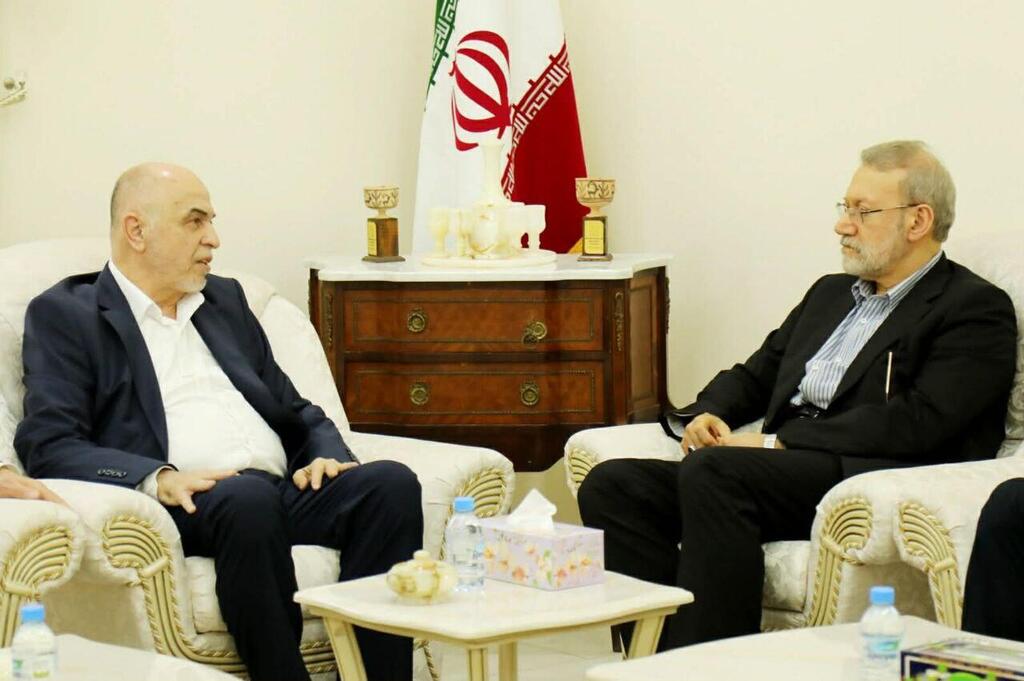
Hamas Shura Council Chairman Mohammed Darwish and Larijani
(Photo: from social media)
Iranian Foreign Ministry spokesman Ismail Baghaei later told Qatar’s Al Araby TV that “there is a growing sense of American understanding regarding the need to continue talks.” Qatari Foreign Ministry spokesman Majid al-Ansari told The New Arab that Larijani’s visit was “part of the ongoing dialogue between Tehran and Washington.”
Turkey is also playing a role in mediation efforts. Last week, Araghchi visited Ankara, where he met with his Turkish counterpart Hakan Fidan and President Recep Tayyip Erdoğan.
“The region cannot afford another war,” Fidan said Tuesday, noting that Erdoğan is personally involved in efforts to prevent a U.S. strike on Iran. “Our president is highly sensitive to this issue, which is why we are working through every channel to prevent a possible war.” Fidan said tensions could be “immediately” reduced and added, “At the moment, there appears to be no immediate threat of war.”
Struggle between blocs
Danny Citrinowicz, a research fellow in the Iran Program at the Institute for National Security Studies (INSS) and former head of the Iran desk in IDF Military Intelligence, told ynet that the current moment reflects a clear power struggle between two regional blocs vying to shape U.S. policy.
“There’s a battle between the camps,” he said. “On one side, you have the Oman-Qatar axis, whose goal is to signal to Trump that there’s still a chance for a diplomatic agreement — that he shouldn’t turn to the military option or make overly aggressive demands. On the other side, there’s Netanyahu’s camp. The idea, ultimately, is to provide Trump with a ladder to climb down. That’s the story. Larijani’s visit was also intended to send a message: that with the right moves, a deal is still possible, there’s no need to escalate to kinetic measures.”
According to Citrinowicz, the key goal for regional actors is to provide Trump with a political horizon — a pathway that keeps him from resorting to military action, even if he insists on maximalist demands. “The hope is that he’ll still let his team conduct a phased negotiation. I believe people like Witkoff and Kushner are genuinely interested in reaching an agreement,” he said. “From Netanyahu’s perspective, the worst-case scenario is a narrow deal, and that’s exactly what Qatar is pushing for.”
When asked whether a solution is even possible under such complex conditions, Citrinowicz responded: “If the demands are focused on issues like Iran’s missile program, then no — there’s no viable deal, and military action might follow, even if it doesn’t solve the problem. But there are other options. For example, negotiations could begin with the nuclear issue alone — just enough to prevent a strike — and other topics could follow later.”
Even within the nuclear file, he said, there are potential openings: “You could have preliminary steps, like trading enriched material for limited sanctions relief or access to frozen funds. Any of these could create even the appearance of meaningful negotiations, which would give Trump a way to climb down.”
Citrinowicz added that regional players — including Turkey, Saudi Arabia and Oman — largely share a common interest in avoiding war. “They understand that once the military phase begins, it becomes exponentially harder to put the genie back in the bottle,” he said. “And they also know Trump hasn’t fully made up his mind.”
He noted that Iran, for its part, won’t reject a deal that aligns with its basic conditions. “For the Iranians, not losing is winning,” he said.
Asked whether Iran’s show of force earlier in the day — marking the 47th anniversary of the Islamic Revolution with flag burnings and chants of "Death to America" and "Death to Israel" — might affect decision-making, Citrinowicz dismissed the symbolism: “In the end, everything aligns with interests.”