


Newly released documents are shedding light on the secret 1993 meeting between Shimon Peres and Jordan’s King Hussein that produced an early blueprint for the historic peace treaty Israel and Jordan signed the following year.
The Peres Center for Peace and Innovation released the documents and previously unpublished quotations from the meeting to mark the 10th anniversary of Peres's death, who served as Israel’s eighth prime minister and ninth president. At the time of the talks, he was foreign minister.
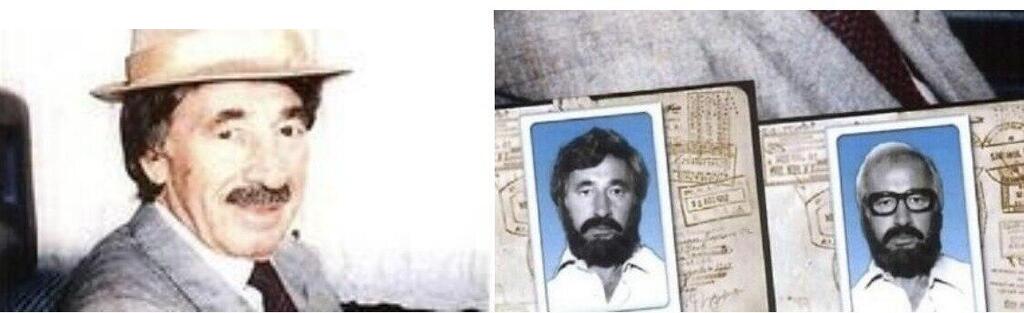
The meeting took place at King Hussein’s palace in Amman in November 1993 under such secrecy that Peres altered his appearance before traveling there, according to the documents.
The contacts had begun about a week earlier. On October 26, 1993, a message arrived from the Jordanian royal court stating that Hussein wanted to meet Peres, whom the king regarded as a creative thinker, and that he was willing to hold a clandestine meeting as part of the tentative contacts between the two countries. Those discussions would eventually lead to the Israel-Jordan peace treaty signed in October 1994.
During the meeting, Peres presented his vision for regional economic cooperation, including modern networks of airports, seaports and roads that he believed could provide an economic foundation for a future agreement.
“We have many dreams and hopes for the future,” Hussein replied. “I share the commitment that there should be change, and that the younger generations should have an opportunity to live with a sense of security, which is peace.”
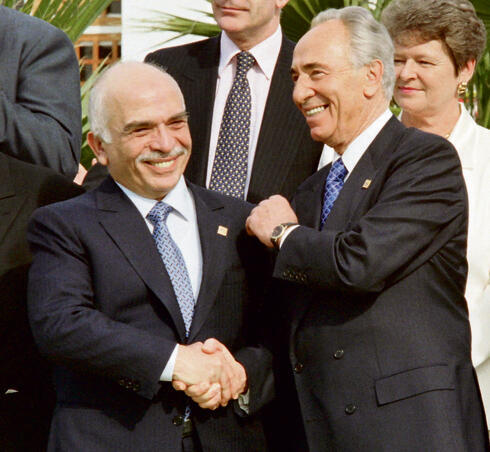
Shimon Peres and King Hussein in 1996
(Photo: GERARD FOUET, AFP)
One of the most striking passages in the transcript reveals Hussein’s sense that time was running out. “In 1951 there was a tragic event, the murder of my father,” Hussein said, according to the transcript. “I want to leave for the future, for my brother Hassan and for the entire government, the best possible legacy. Maybe I have only a year or two left. I will put everything on the line.”
Peres, for his part, told Hussein that public attitudes were increasingly favorable toward ending the region’s conflicts. “There is tremendous public support today for a peace agreement,” Peres said. “Young people are sick of wars, poverty and the lack of freedom.”
That same night, Hussein and Peres initialed a memorandum of understanding that would help form the basis of the eventual peace agreement. Less than a year later, in October 1994, Israel and Jordan formally signed their peace treaty.
Hemi Peres, chairman of the Peres Center for Peace and Innovation, said, “It is difficult not to be moved when reading the documents from that historic meeting.” Efrat Duvdevani, the center’s director general, added: “It is a great privilege and a moral obligation to listen to the peace testament of great leaders,” she said.