


Tens of thousands of Yemenis have fled Taiz province and surrounding areas since Thursday following the Houthi capture of the strategic Red Sea port city of Mokha and their advance around the Bab al-Mandab Strait.
“We couldn’t take anything with us, and even water is expensive,” Omar Abd al-Aziz al-Himyari, a resident of the province, told The New York Times. Al-Himyari said his family fled with virtually nothing. “We took only the clothes we were wearing, what we had on us. We couldn’t take anything with us because of the difficult terrain. We left all our property behind,” he said.
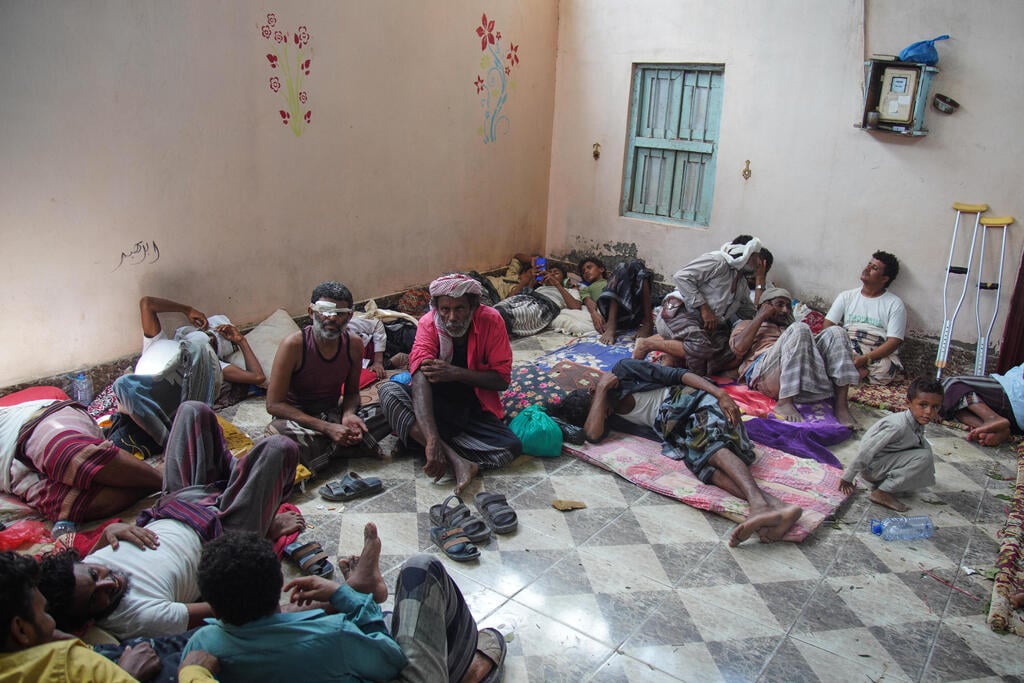
“I don’t know how we’re going to pay for food. The prices of flour and rice in the market have soared. Water is expensive too and can only be obtained from tanks.”
Al-Himyari moved into his brother-in-law’s home, leaving behind the fields he cultivated and his family’s livestock.
The Houthis, meanwhile, have portrayed their advance as the “liberation” of territory from Saudi control. Saudi Arabia supports Yemen’s internationally recognized government in its conflict with the rebels.
“The presidential amnesty will apply to everyone who lays down their weapons and stops following the orders of the Saudi regime,” the Houthis said after entering the province.
“We call on residents of the ‘liberated areas’ to cooperate and report any suspicious movement to the security forces. We will restore conditions to normal and address the problems created by the actions of the Saudi regime’s mercenaries.”
The escalation has also spilled across Yemen’s border. Alerts were activated in Saudi Arabia Saturday evening after a Houthi projectile struck Jizan, the capital of Jazan province, injuring two people. Saudi civil defense authorities said a mosque was hit and several vehicles were damaged.
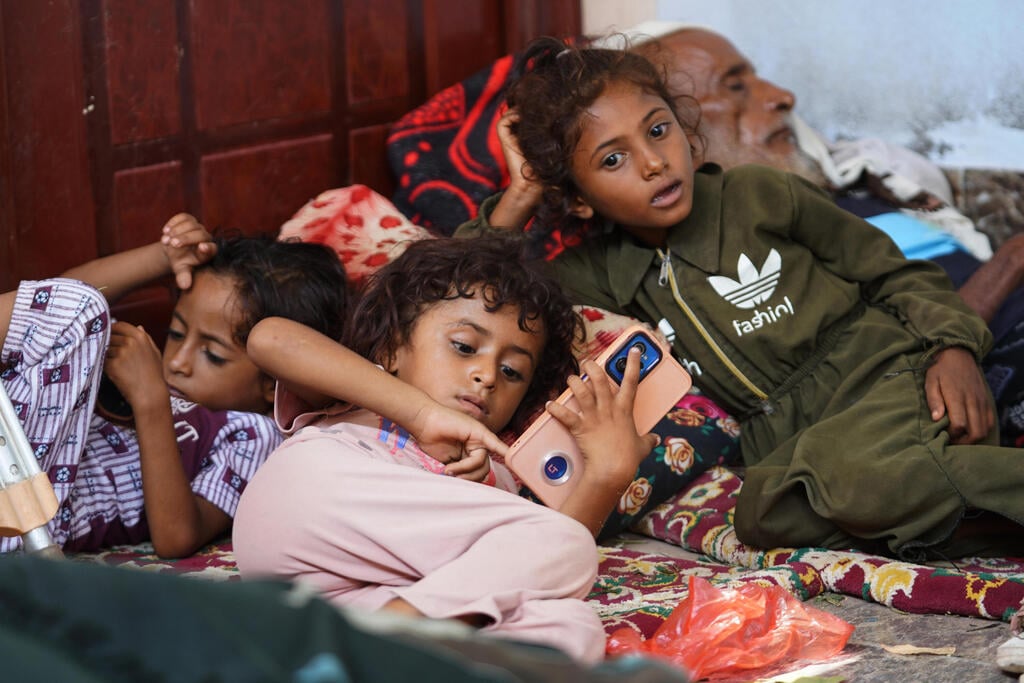
(Photo: AP Photo/Abdulnasser Alseddik)
‘Thirty-four of us crammed into a truck’
The Houthis have sought to portray Saudi Arabia as an enemy of the Yemeni people and blame Riyadh for the blockade imposed on Yemen.
But areas described by the group as “liberated” are suffering from extreme poverty, disease, forced recruitment of children and adults, and arbitrary arrests. Remaining resources are being diverted toward Houthi fighters and leaders rather than residents displaced by the fighting.
A Yemeni security official told Ynet that conditions were extremely difficult. “There are many casualties. The rebels are acting against innocent people,” the official said.
Yemen’s Foreign Ministry called on the international community to act urgently over the humanitarian consequences of the Houthi escalation, warning that the expansion of the threat toward the strait was increasing the danger to civilians.
Abd al-Jabbar Ali Hadi, a resident of al-Wazi’iyah in Taiz province, is among more than 45,000 people who have fled their homes in recent days. “No one fully understood what was happening,” he told Saudi newspaper Asharq Al-Awsat. “Chaos and panic broke out. Everyone wanted to escape. Some tried to save their children, others had only their sheep and cattle. Women were crying. Everyone was looking for a way out.”
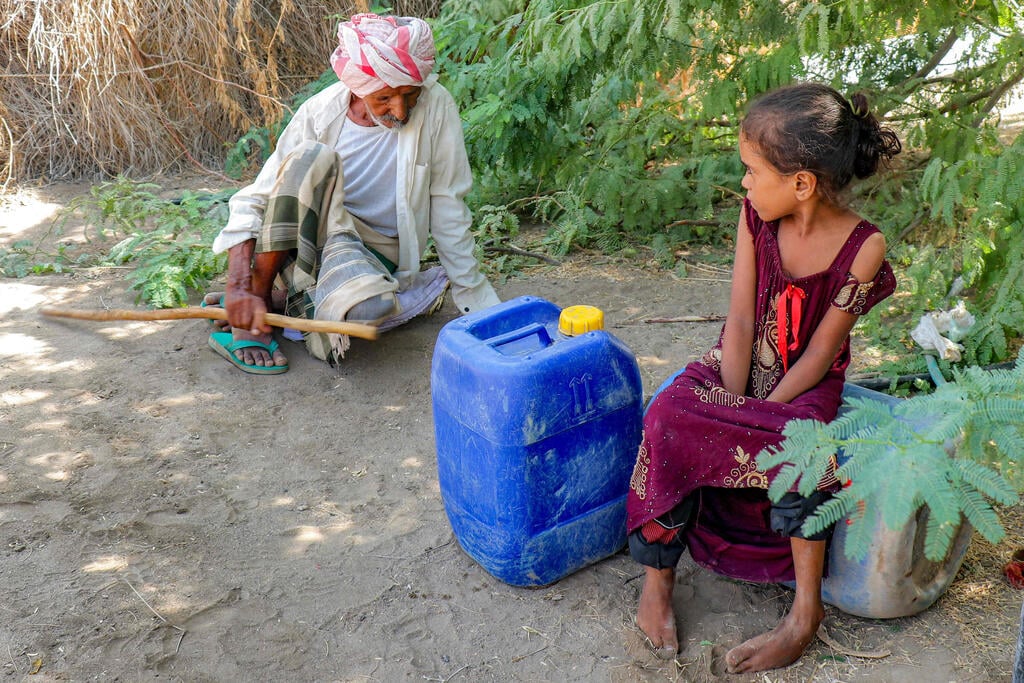
(Photo: Khaled ZIAD / AFP)
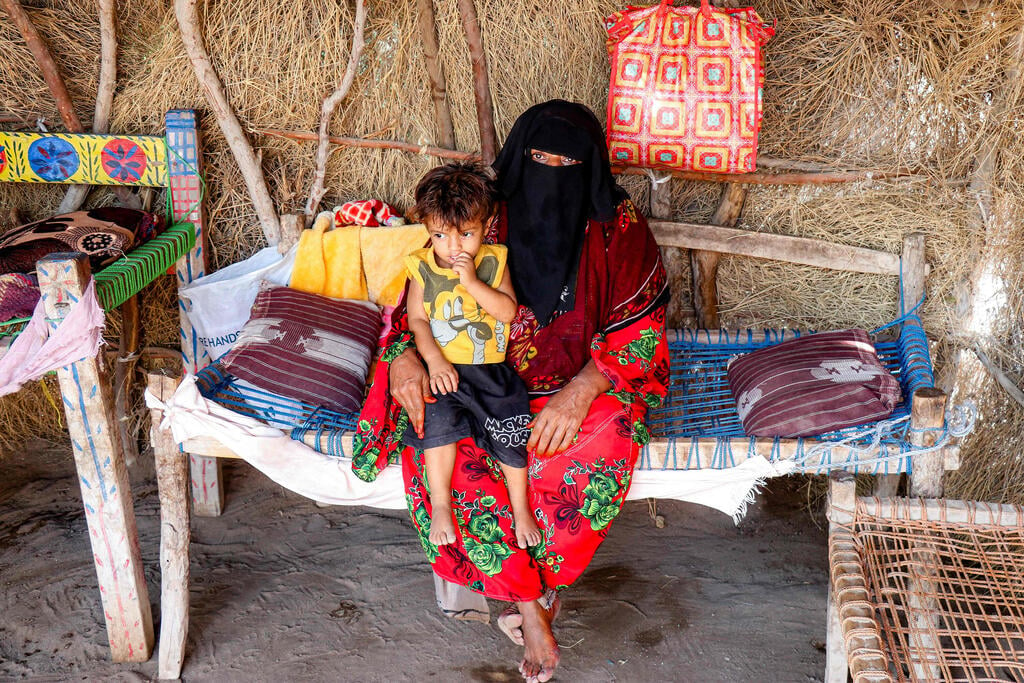
(Photo: Khaled ZIAD / AFP)
Al-Miqdad Hashem, who escaped with his family, described the desperate conditions of their flight after shells landed near their home and wounded his nephew. “It was difficult to take anything with us. We want the war to end so people can return to their homes,” he said. “The only way to the hospital was in a truck used to transport construction materials. Thirty-four of us crammed inside. We took one small bag.”
Asharq Al-Awsat reported long columns of displaced people traveling by cars and motorcycles, while thousands more fled on foot, some accompanied by livestock.
For many families, the displacement was not planned but a sudden flight driven by fear. Those unable to leave found themselves trapped under Houthi control and facing the threat of raids and arrests.
Reports from the area also described widespread looting and theft. According to the Saudi newspaper, Houthi forces took entire families hostage in some cases in an effort to pressure relatives who had fought alongside Saudi-backed forces to surrender.
Mohammed, a resident of the port city of Mokha who fled with his family in the middle of the night, described the scene to AFP. “The city was apocalyptic. Gangs looted us as we fled,” he said.
Another resident, Mohammed Khudairi, told The Guardian: “The attacks are continuing. It’s a disaster. We managed to get out, but others are trapped.”
No funding, no aid
The New York Times noted that the UN World Food Programme’s operations in Yemen have been suspended because of a lack of funding.
Carl Skau, the WFP’s acting executive director, told the newspaper that he had visited Yemen only a week earlier and toured several camps for displaced people. “Children are not going to school. People are selling family possessions for food,” he said.
Outside clinics, he said, mothers wait in long lines with malnourished children and struggle to afford even one meal a day.
Yemen’s crisis is being driven by more than fighting. Extreme weather has further damaged already limited domestic food production, while disruptions to shipping routes have pushed prices higher. Droughts and floods have also devastated agriculture.
Even before the latest escalation, around 4.5 million Yemenis had already been displaced by years of fighting with the Houthis.
Nearly half of the country’s health facilities are out of service, while repeated attacks on aid workers, including UN personnel, have forced humanitarian organizations to withdraw from some areas.