

Despite statements by the IDF and the political leadership declaring a hermetic cordon and full closure on the West Bank town of Qabatiya — measures reminiscent of the Second Intifada, the Palestinian uprising of the early 2000s — following Friday’s deadly terrorist attack in northern Israel, heavy traffic of Palestinian vehicles was visible on Saturday in the town in northern Samaria, the biblical term used by Israel for the northern West Bank.
In the past year, dozens of attackers and terror cells have emerged from Qabatiya, after the IDF seized what it described as the region’s main terror stronghold, the Jenin refugee camp.
Israeli forces arrest father of northern Israel terrorist in Qabatiya, West Bank
(Video: IDF)


Israeli military convoy rolls into Qabatiya following northern Israel terrorist attack
In an unusual step, IDF forces on Saturday fired mortars at open areas, and Apache attack helicopters flew at low altitude to deter locals. But the larger problem lies elsewhere, and is more significant than short-lived military activity against a town following an attack that began and ended with the apprehension of an assailant believed to have acted alone.
The goal of imposing a sweeping lockdown on Qabatiya — where the IDF conducted a major operation only days earlier — is not to crack the investigation of the attack. The attacker was shot and arrested, and the weapons used to murder his two victims — a car and a knife — are readily available at any time to any Palestinian.
Gallery
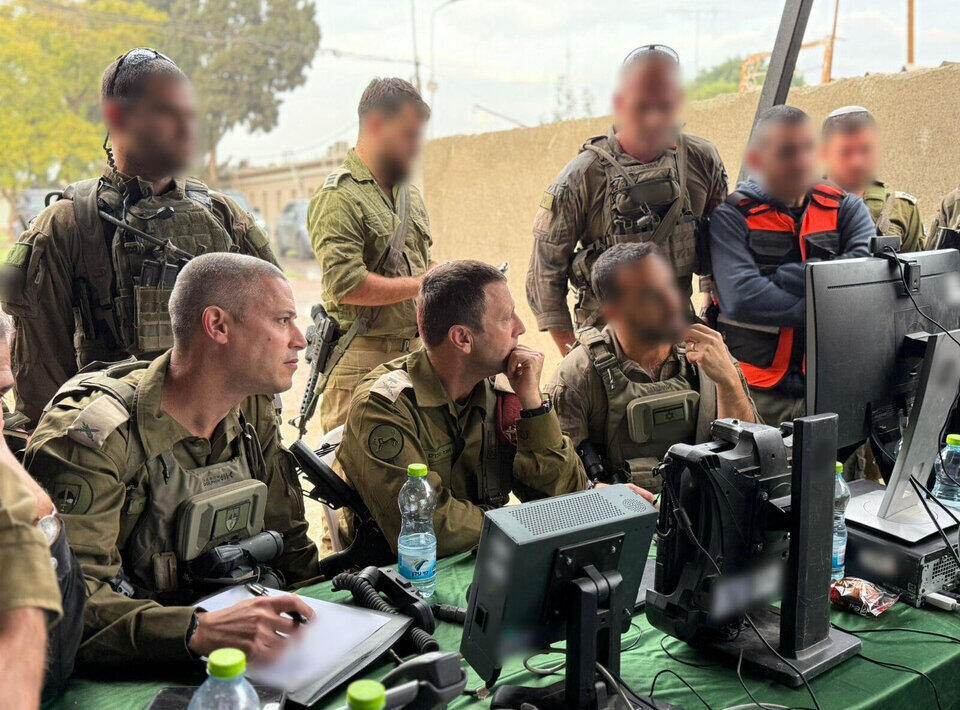
An operational assessment led by the commander of the West Bank Division following Friday’s attack
(Photo: IDF)
Rather, the broad operation is intended to prevent copycat attackers inspired by the terrorist, identified as Ahmad Abu al-Rub. 34. His relatives were detained for questioning to determine whether they were aware of his intentions, and several additional potential suspects were arrested over concerns they might follow in his footsteps.
Turning a blind eye
The deeper problem lies in government policy that began about two decades ago, with the end of the Second Intifada and the completion of the security barrier along the so-called “seam line” surrounding Judea and Samaria, the Israeli term for the West Bank. The policy, still in place, is one of turning a blind eye as an orderly government practice, carried out over the years by hundreds of regional brigade commanders, commanders of the West Bank Division, heads of Central Command and successive chiefs of staff.
The purpose of this concept is to allow tens of thousands of Palestinians to enter Israel illegally to earn a living without work permits. While average monthly wages in areas under Palestinian Authority control range from about 1,200 to 1,500 shekels, workers in Israel can earn six or seven times that amount. Once every year or two, following waves of attacks by terrorists who exploited the many breaches in the barrier, the military launches highly publicized operations in which soldiers pursue and detain Palestinians crossing illegally, most of them laborers seeking work.
Palestinians cross the West Bank security barrier illegally near Jerusalem
(Video: Liran Tamari)
In 2022, a somewhat more encouraging change took place, with funding secured to seal breaches along about 90 kilometers (56 miles) of the seam line, mainly opposite the Sharon and Gilboa regions, and to a lesser extent around Mount Hebron.
“Any fence or wall can be bypassed, especially when the goal is to put food on the table,” a Central Command officer said. “There are currently 23 battalions in the West Bank, dedicated forces along the seam line and reinforced Border Police for this mission, but in the end, you can’t place a company at every breach. There is a standing decision to continue with the current situation for two reasons: industrial peace thanks to the income tens of thousands of illegal workers bring home instead of engaging in terrorism, and the Israeli economy’s dependence on them.”
There is also a blunt calculation that no official acknowledges publicly: as long as attackers who enter Israel illegally kill roughly five to 10 Israelis a year, that toll is deemed acceptable compared with the alternative of a far wider eruption of violence in the West Bank.
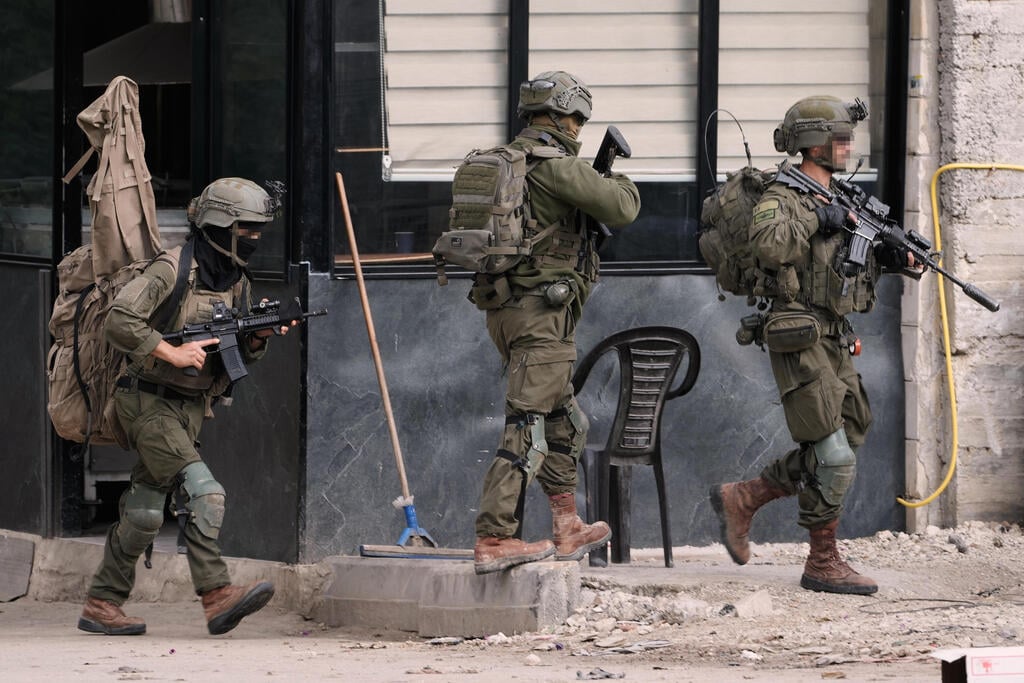
Israeli forces operate in Qabatiya
(Photo: AP Photo/Majdi Mohammed)
A routine closure was imposed on some 100,000 Palestinian workers who legally entered Israel from the West Bank at the start of the 2023 High Holiday season. Following the Oct. 7 massacre, which occurred on the final day of those holidays, the government decided to halt their entry entirely. A small number have since been allowed in periodically, mainly for essential jobs such as hospital cleaning staff or for construction work in Israeli settlements.
Both the IDF and the Shin Bet security agency pressed the government to renew approval for legal Palestinian workers to enter Israel, and business leaders, especially in construction, also pleaded for the move. The security establishment said that at least those 100,000 to 120,000 workers could be monitored and screened at crossings. The political leadership was partially persuaded and agreed to a pilot program upgrading inspection capabilities at the crossings.
In practice, the plan has not advanced at all. Under cover of the prolonged war in Gaza, diverted attention and stretched forces, tens of thousands of Palestinians have entered Israel illegally, sometimes even those who obtained permits, since crossing through breaches is faster. Current estimates put the number of Palestinians staying in Israel at around 50,000.
520 kilometers of border
In addition, progress in sealing the barrier on the western side of the seam line — which runs parallel to Highway 6, Israel’s main north-south toll road — has produced additional effects. An increasing number of Palestinians entering Israel illegally, including the attacker from the weekend, are funneled to crossing points relatively far from their homes or from their workplaces in Israel, such as around the Jerusalem perimeter.
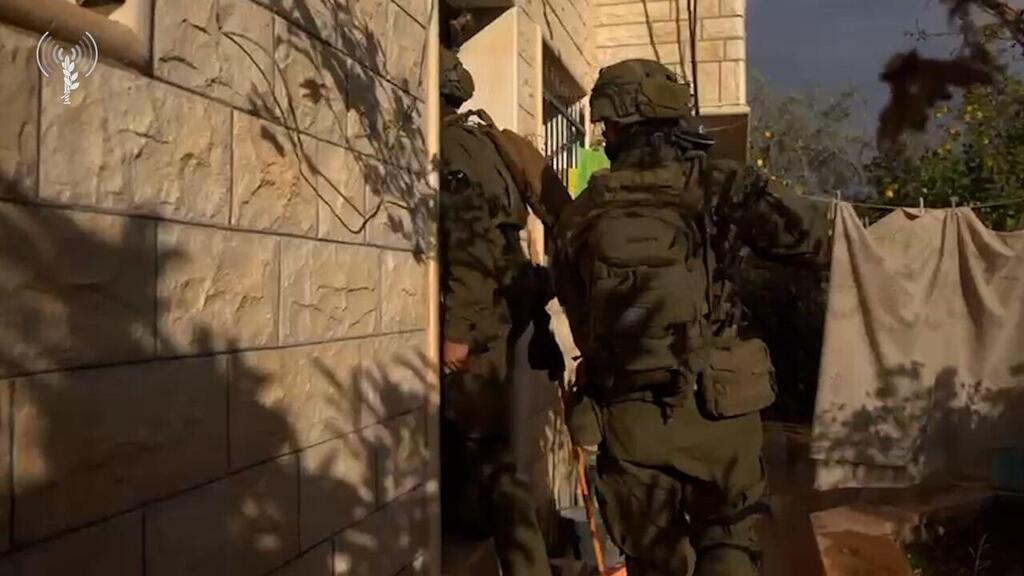
Israeli forces operate in Qabatiya
(Photo: IDF)
To make up for that distance, they simply remain inside Israel for longer periods, sometimes a month or two at a time. Other breaches are exploited on the eastern side of the West Bank — along the central mountain ridge and in the Jordan Valley — a project that was almost completely open until recent years and is now in the process of being sealed.
According to the military, the total stretch in question runs about 520 kilometers (323 miles), from the Jordan Valley barrier in the north to Mount Hulda in the southern Judean Desert. Of that route, about 145 kilometers (90 miles) surround Jerusalem.
Here too, the prevailing concept remains intact: roughly 60 kilometers (37 miles) of the eastern seam line are deliberately left completely open, for various reasons — ranging from environmental protection to steep mountainous terrain, but primarily due to political decisions. Budgetary considerations and priorities have also played a role, leaving the area largely exposed. Upgrading just 40 kilometers (25 miles) of barrier, for example, costs taxpayers about 400 million shekels (roughly $125 million).
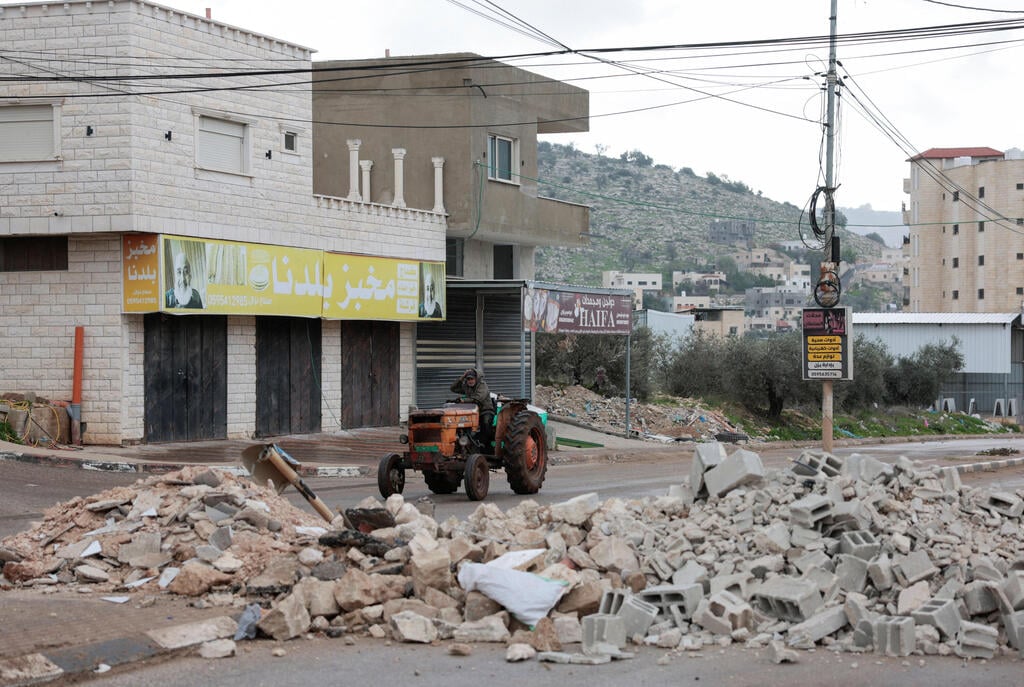
Aftermath of Israeli raid on Qabatiya
(Photo: REUTERS/Mohamad Torokman)
“Over the past two years, more than 100 kilometers in northern Samaria and near Tulkarm and Qalqilya have been upgraded, replacing old fencing with new barriers, walls and technological systems to improve early-warning capabilities,” the IDF said Sunday. It noted that rules of engagement were eased in 2022, allowing IDF troops to fire at the legs of people crossing illegally during the act of crossing, even if they are unarmed and pose no immediate threat.
The military added that each week it thwarts dozens of illegal entry attempts through ambushes and patrols along the fence. “Despite the extensive activity,” the IDF said, “estimates indicate that thousands of undocumented entrants still cross into Israel every week.”
The nightmare scenario
The issue of undocumented entrants is compounded by another, more strategic scenario that has increasingly preoccupied the IDF over the past year: the possibility of a violent, simultaneous and parallel eruption of violence involving tens of thousands of terrorists across the West Bank, a situation not seen for nearly a quarter-century.
In one scenario discussed, commanders likened such an outbreak to the deadly infiltration into Israel’s western Negev in October 2023. The first wave would involve dozens of armed cells infiltrating Israeli communities or spraying Israeli vehicles with gunfire on both sides of the Green Line, the pre-1967 armistice boundary. A second wave would follow, consisting of an enraged mass of tens of thousands of Palestinians, some armed with knives or clubs, crossing into Israel through the same breach routes used by undocumented entrants.