


A Home Front Command official said Saturday evening that the cluster munition missiles fired by Iran “must not be underestimated,” even if the initial impression is that the damage they cause is less severe than that of direct ballistic missile strikes.
According to the official, “there are varied impact sites, some with no casualties, but at times there are also fatalities. This munition arrives at a 90-degree angle, not in an arc but on a direct trajectory. It will penetrate at least one ceiling for certain. We cannot say it will not breach a safe room,” referring to Israel’s reinforced residential safe rooms. “I say this cautiously. These missiles can cause extensive damage over a wide area.”
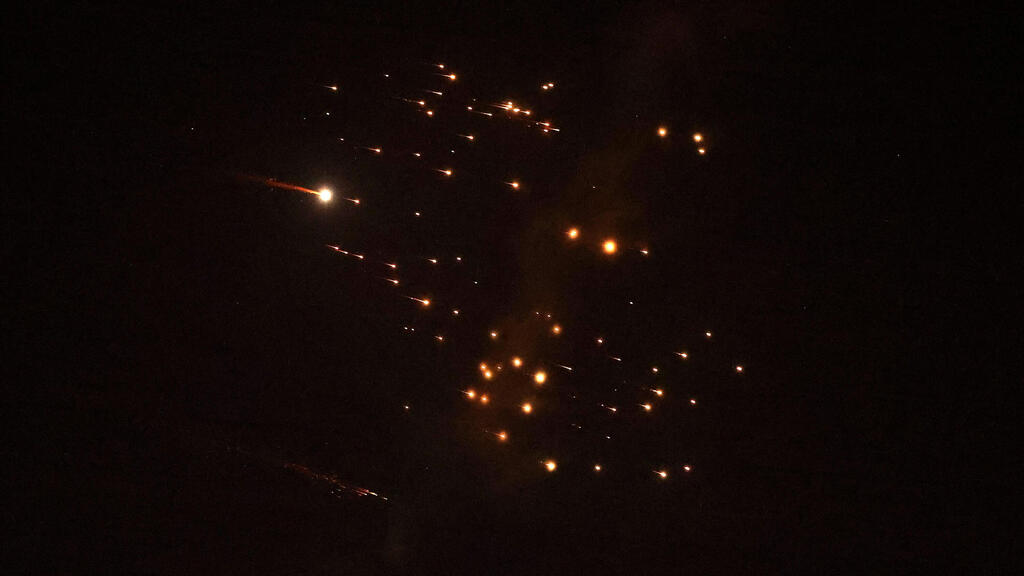
Iranian Cluster munition
(Photo: Jack Guez/AFP)
The official added that the IDF, is reexamining its warning policy, under which each area of the country is assigned a fixed time to reach shelter regardless of the launch location. For example, when sirens sounded in communities near the Gaza border due to fire from Lebanon, residents were given only 15 seconds to take cover, even though the launch had been known minutes earlier.
According to the Home Front Command official, the alert system needs to change given the reality of a multi-front conflict, and an update is likely in the coming days. In the meantime, he said, the number of people receiving early warnings has been reduced from 2.5 million to 900,000 following a redivision of alert zones. “There were isolated cases of sirens without prior warning — we are examining this and addressing it,” he added.
The official said no further easing of restrictions is expected in the coming week. He also said that in the coming years, construction of safe rooms adjacent to apartments should be encouraged. “At present, 70% of people have immediate access to protected spaces, and we are conducting assessments to ensure there is a solution for everyone,” he said.