


Representatives from Iran and Gulf states were scheduled to meet Monday in Oman in an effort to advance a framework for restoring regular tanker traffic through the Strait of Hormuz. But shortly before the talks, Omani Foreign Minister Badr Albusaidi announced that the planned meeting had been postponed “in the interests of consensus.”
Oman’s Foreign Ministry said “the decision is intended to ensure appropriate conditions for constructive dialogue that advances stable understandings.”
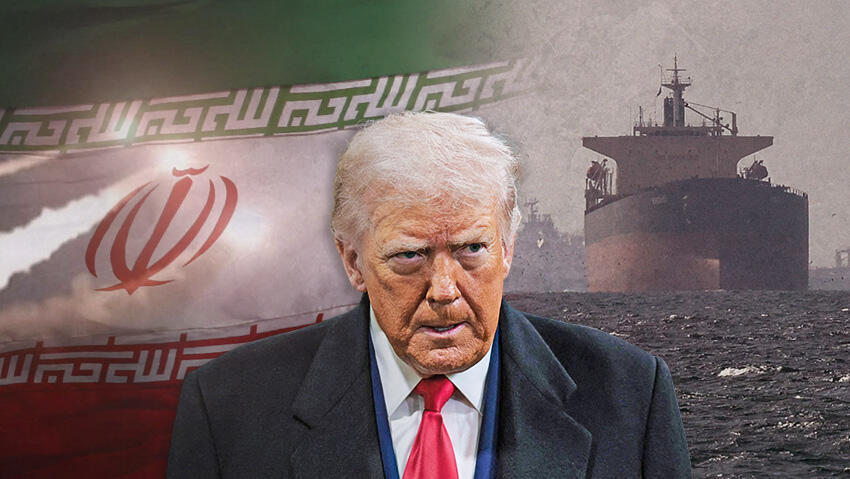
Al Jazeera quoted a senior Iranian Foreign Ministry official as saying that “the postponement of the meeting came at the request of certain countries in the region and was a joint decision by Tehran and Oman.”
In any case, one player critical to almost any future arrangement in the region was not expected to be at the table: the United States. President Donald Trump’s administration has made clear for now that it does not want the future of the strait to become part of negotiations with Tehran, preferring to focus any future talks on Iran’s nuclear program.
For months, quiet discussions have been underway over a complex legal framework that could restore commercial traffic through the strait, which remains significantly below prewar levels. Oman has led the effort, while Gulf states have also worked to expand alternative export routes that would allow them to bypass Hormuz. Still, countries in the region are unwilling to accept limited traffic through the strait as the “new normal.”
According to CNN, the meeting was expected to focus in part on efforts to reach agreements on maps and shipping lanes that tankers and commercial vessels could use. Oman’s proposal also includes the possibility of voluntary payments in exchange for navigational safety and environmental protection services, a potential compromise over Iran’s demand to collect payments from vessels transiting the strait.
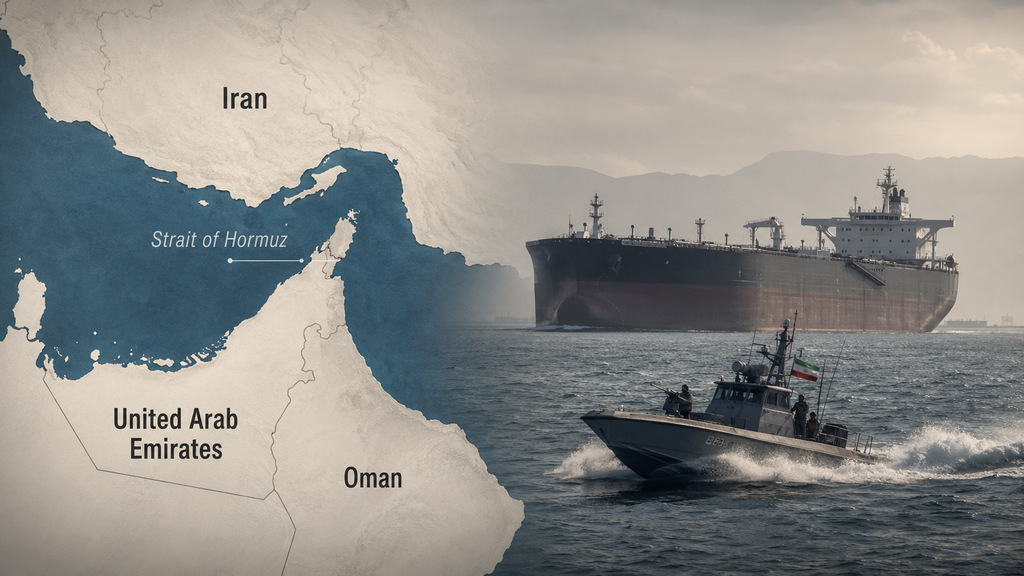
Strait of Hormuz
The demand for a mandatory toll continues to face broad opposition. Before the war, commercial ships were not required to pay for passage, and at the start of the conflict the United States and regional countries made clear that they would not accept an arrangement that created a new source of revenue for Iran.
But after months of disruptions and soaring energy prices, that firm position has softened. “We won’t accept something that didn’t exist before,” a European diplomat briefed on the proposal told CNN, adding that it might be possible to agree on “symbolic new rules” that would allow both sides to save face.
A regional official stressed that no one expects an immediate breakthrough. “Resolving the strait issue is the most urgent matter, so we have to start somewhere,” the official said.
Tehran had also sought to lower expectations even before the meeting was postponed. Oman initiated the talks after months of mediation, but the dispute over charging vessels for passage remains unresolved. Iran has also made clear that its understandings with Oman do not provide for the immediate reopening of the strait and that, from Tehran’s perspective, such a move depends on the United States meeting conditions it has set.
According to Reuters, countries involved in the discussions include Saudi Arabia, the United Arab Emirates, Qatar, Kuwait and Iraq. Bahrain, by contrast, said even before the postponement that it would not participate until diplomatic relations with Iran were restored.
US stays out — but a deal may be impossible without it
Hovering over all the discussions is the question of the United States. Trump administration officials have told representatives of Gulf states in private conversations that Washington wants future negotiations with Tehran to focus on Iran’s nuclear program, not on how to reopen the Strait of Hormuz.
“We don’t want to talk about the strait,” a U.S. official told CNN. “We will only talk to you if you want to talk about the nuclear file.”
Iran has presented the opposite order of priorities. According to regional officials, Tehran has signaled that it would be willing to reopen discussions on its nuclear program only after a solution is found for the strait, including the lifting of the U.S. blockade.
In other words, Hormuz has become not only a military and economic battleground but also a bargaining chip that could determine whether and when negotiations between Iran and the United States resume.
Washington, however, is not entirely disconnected from efforts to reach an agreement. According to CNN, Trump administration officials have reviewed Oman’s proposals in recent months but have not publicly endorsed them. Meanwhile, U.S. and regional officials acknowledge privately that efforts to establish an agreed framework for reopening the strait are necessary and that the chances of Iran and the Gulf states reaching a comprehensive agreement without eventual U.S. involvement are considered extremely low.
In public, however, Washington is sending a different message. Vice President JD Vance said at a White House briefing earlier this month that “we’re the only country in the world that can guarantee, as you’ve heard the president say, control of the Strait of Hormuz.”
Trump was asked Sunday about the planned meeting between Iran and the Gulf states, before its postponement was announced.
“I don’t care. It’s up to them. We'll ultimately get out,” Trump said. He immediately added: “Unless we decide to stay and keep the oil, like Venezuela.”
Trump’s comments again raised the possibility of the United States maintaining a presence in Iran to control its oil. He also claimed that Washington’s revenues from its arrangement in Venezuela had already repaid the cost of the war there many times over.
The current U.S. position follows what CNN reported was Washington’s early miscalculation of Iran’s willingness to close the Strait of Hormuz in response to U.S. and IDF action. U.S. officials now view that assessment as a strategic mistake: Tehran was able to exploit its ability to threaten commercial shipping, pressure the global economy and prolong the conflict.
The U.S. military now says the balance of power in the strait has shifted and that Washington holds the military advantage. The U.S. Navy is escorting tankers and commercial vessels and, on busy days, has been able to guide as many as about 40 ships safely through the waterway. The number of tankers crossing Hormuz has risen significantly in recent weeks because of the military escorts.
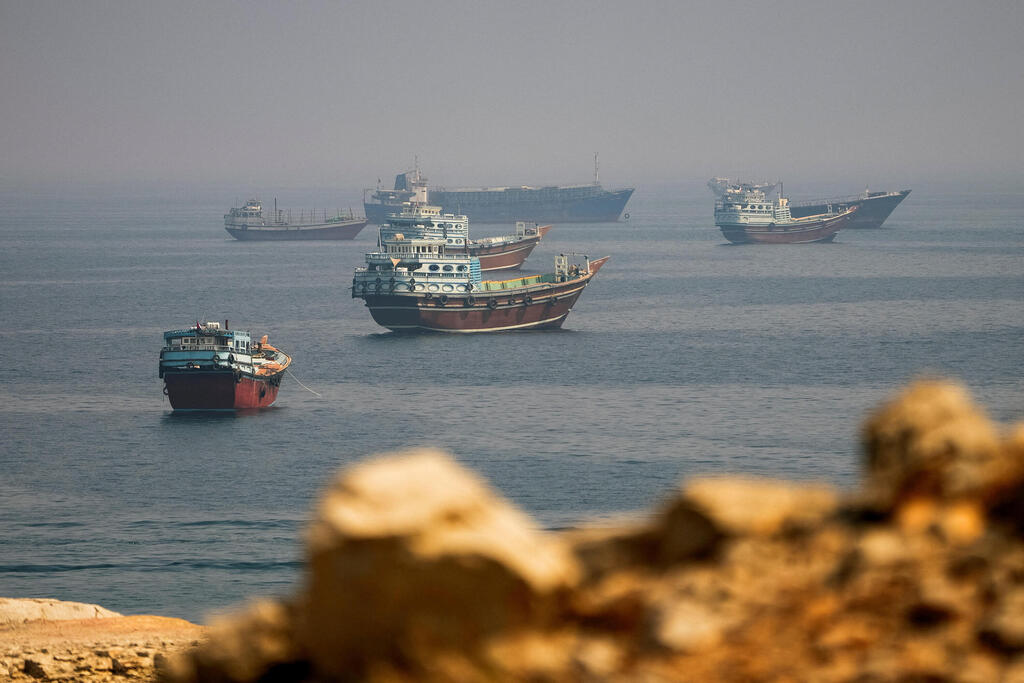
The Strait of Hormuz
(Photo: REUTERS/Stringer)
But the mission remains far from simple. Commercial ships continue to come under attack while attempting to cross the strait, and the scale of the resources, vessels and military personnel required for the escort operations has raised questions about how long the United States can sustain them.
The challenges also underscore that, despite Washington’s claimed military superiority, Iran continues to pose a real threat both to commercial vessels and to the U.S. military personnel deployed to protect them.
The danger is not theoretical. A vessel was hit Sunday while passing through the Strait of Hormuz, sparking a fire and forcing the crew to evacuate. Tehran separately reported one person killed and four wounded in an attack on an Iranian commercial vessel.
Pressure on Hormuz is now being compounded by threats to the principal alternative route. The Houthis have seized Perim Island in the Bab el-Mandab Strait at the entrance to the Red Sea, while Saudi Arabia’s East-West oil pipeline, which allows Riyadh to move millions of barrels a day to the port of Yanbu without passing through Hormuz, has been badly damaged.
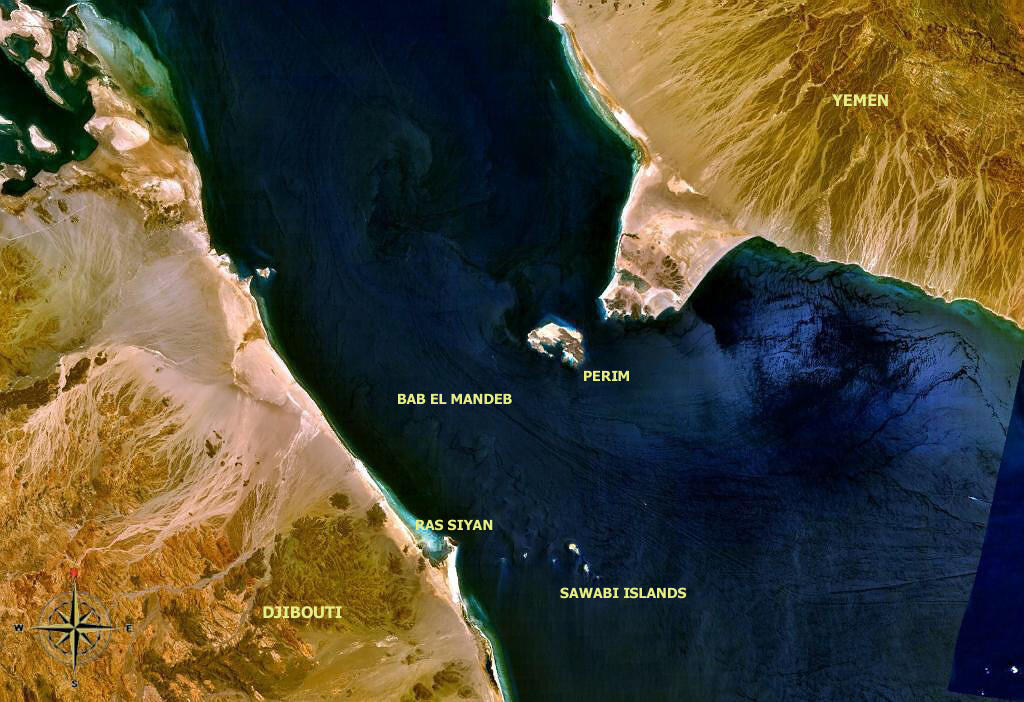
Bab al-Mandab Strait
According to Reuters, a prolonged shutdown of the pipeline could affect supplies equivalent to about 4% of global oil consumption.
Those developments are adding to the incentive for Gulf states to reach a direct arrangement with Iran. If both Hormuz and export routes through the Red Sea are under threat, relying on alternative routes becomes more difficult as a long-term strategy.
Some in the Trump administration have nevertheless sought to play down the strait’s future importance. Treasury Secretary Scott Bessent recently argued that within two years Hormuz would become “like a worthless piece of water” as regional countries expand alternative export routes.
But both U.S. officials and Gulf states believe the alternatives do not eliminate the need for a permanent solution for the strait, according to CNN. Before the war, about 20% of the world’s oil passed through Hormuz. Despite the recent increase in tanker traffic under U.S. Navy escort, shipping has yet to return to normal, and the latest developments in Bab el-Mandab have underscored just how difficult it is to find a secure substitute for the vital waterway.