

Two merchant ships were struck by drones Tuesday in the Black Sea off Bulgaria, sinking one vessel and leaving 11 sailors missing, as the NATO member suggested Russia could be responsible but stopped short of directly accusing Moscow.
The attacks came exactly one week after another cargo ship was sunk by drones off the Bulgarian coast, raising concerns about the growing threat to commercial shipping near NATO territory. They also coincided with fresh diplomatic tensions over President Donald Trump's efforts to bring Russian President Vladimir Putin back to peace negotiations, including a controversial agreement allowing Russian diesel exports.
Gallery
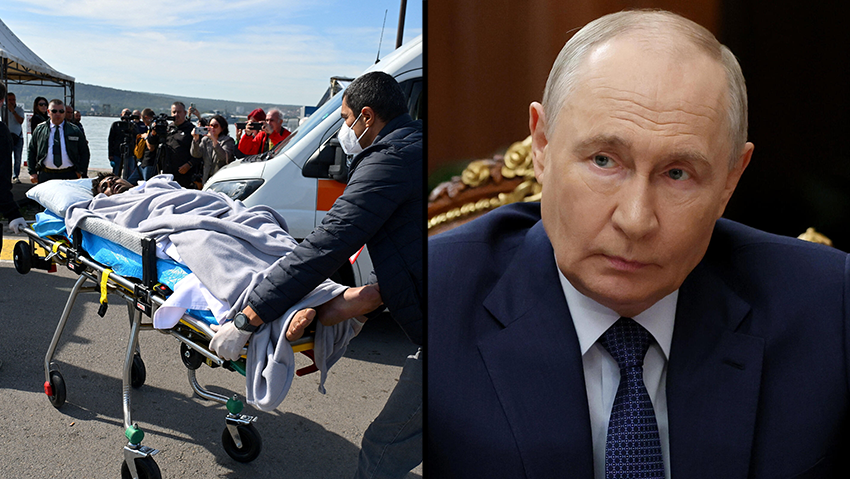
Putin and the evacuation of crew members from the ship attacked last week, also off the coast of Bulgaria
(Photo: Petko Momchilov/Reuters, Vyacheslav Prokofyev, Sputnik, Kremlin Pool Photo via AP)
Bulgarian officials said the two vessels were attacked roughly 30 kilometers (19 miles) from the country's coast. The ship that sank, the Guinea-Bissau-flagged HS Dignity, went down off the village of Krapets. Five crew members were rescued, while 11 remained missing.
The second vessel, the Maltese-flagged Chelsea 3, was struck by three drones overnight. All 15 crew members, seven Ukrainians and eight Azerbaijanis, were rescued, with five suffering minor injuries.
Bulgarian Prime Minister Rumen Radev convened an emergency security meeting Tuesday morning and described the attacks, which occurred close to his country's territorial waters, as "absolutely unacceptable."
Radev said Bulgaria was seeking greater assistance from NATO and the European Union to strengthen maritime and airspace surveillance. Although he did not directly accuse Russia, he suggested Moscow stood to benefit from the attacks.
"We have no clear evidence to accuse any of the parties," he said, adding that logic suggested the outcome served Russia's interests.
Bulgaria subsequently summoned Russian Ambassador Eleonora Mitrofanova, who said after meeting Radev that she had received no information from the Russian Defense Ministry about the attacks. She also suggested they could have been a provocation by a third party. Moscow did not immediately comment on the incidents. Ukraine, however, explicitly blamed Russia.
"Russia's latest attack on commercial vessels near Bulgaria's territorial waters, which injured Ukrainian and Azerbaijani citizens, once again demonstrates Moscow's deliberate disregard for civilian lives and maritime security in the Black Sea," Ukrainian Foreign Minister Andrii Sybiha said.
Sybiha urged Ukraine's international partners to increase pressure on Moscow, accusing Russia of attempting to disrupt global food supplies by targeting commercial vessels in one of the world's most important grain-export corridors.
European Commission President Ursula von der Leyen also condemned the attacks, saying the Black Sea had become another front of escalation in Russia's war against Ukraine.
Tuesday's attacks followed a series of similar incidents that have heightened concerns about the security of shipping routes near Bulgaria and Romania, both NATO members.
On October 6, two cargo vessels came under drone attack off Bulgaria. The Togo-flagged Alfa Watan sustained catastrophic damage and sank, leaving its 10 crew members, nine Syrians and one Egyptian, missing. Bulgarian authorities subsequently suspended the search without establishing their fate.
The second vessel, the Palau-flagged Able, caught fire following the attack. All 18 crew members were rescued, including two who suffered serious injuries. Both vessels were operated by Turkish companies.
A day earlier, the Turkish-owned cargo ship Royad Mammadov, which was carrying grain, was struck off Romania's coast and later sank. Romanian authorities reported two deaths and 11 survivors. Ukraine accused Russia of launching the drone attack.

Bulgarian Prime Minister Rumen Radev
(Photo: AP Photo/Valentina Petrova)
Russia and Ukraine are among the world's largest grain exporters, and the war has repeatedly threatened international food supplies by disrupting Black Sea shipping.
Russia has intensified its bombardment of Ukrainian Black Sea ports, forcing Kyiv to rely increasingly on Danube River facilities and shipping routes running close to the Bulgarian and Romanian coasts. Ukraine, meanwhile, has stepped up attacks on Russian vessels involved in grain exports elsewhere in the Black Sea and in the Sea of Azov, near the mouth of the Don River.
The maritime escalation has added another dimension to the economic confrontation between Moscow and Kyiv, with both countries seeking to disrupt the other's trade and sources of revenue. The latest attacks unfolded as Trump sought to revive stalled negotiations aimed at ending the war, while increasing pressure on Ukrainian President Volodymyr Zelensky to halt drone strikes against Russian oil refineries.
Trump has blamed Ukraine's attacks on Russian energy infrastructure for contributing to rising global diesel prices, although energy experts say the war involving Iran has been the principal driver of the increases. On Sunday, Trump unexpectedly announced what he described as an energy ceasefire under which Russia and Ukraine would stop attacking each other's energy facilities.
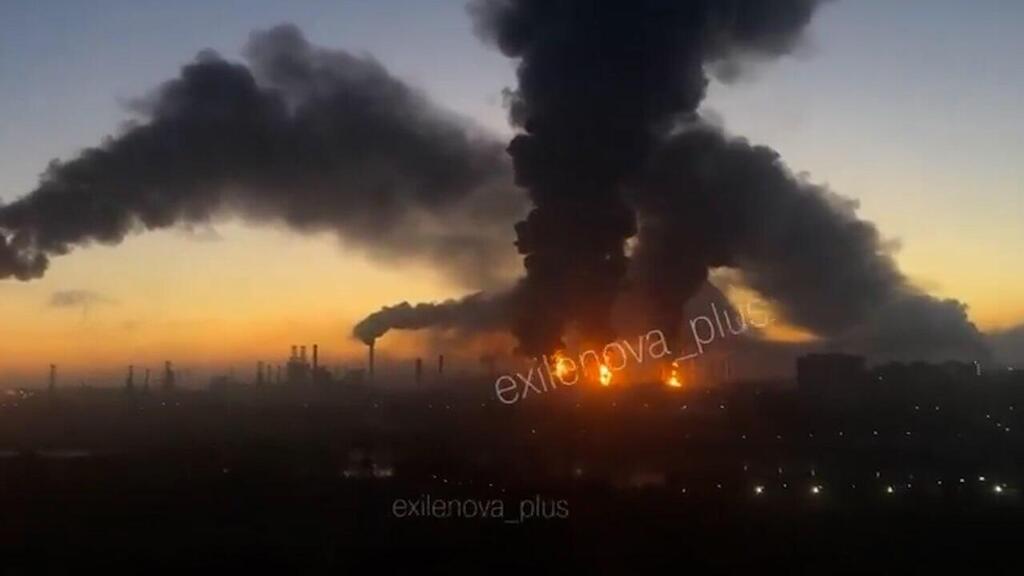
Oil refineries in Moscow targeted in attacks last month
Neither Moscow nor Kyiv confirmed that a formal agreement had been reached, and Ukraine subsequently accused Russia of continuing its attacks.
On Tuesday, Zelensky said Ukraine had refrained from striking Russian refineries and other energy facilities for the two days following Trump's announcement, but Moscow had not reciprocated.
"Ukraine has not carried out strikes on Russian oil refineries or the energy sector in general for the two days since the American president announced an energy ceasefire," Zelensky said. "However, Russia did not heed the American president," he added, accusing Moscow of attacking Ukrainian energy facilities and critical infrastructure. He said 19 Ukrainian regions had come under attack during the two-day period.
Zelensky said the strikes demonstrated that Moscow had no intention of exercising similar restraint. He insisted Ukraine remained prepared to take reciprocal steps toward de-escalation, but argued that meaningful progress required stronger international pressure on Russia. "Wars end when the aggressor realizes that it cannot prolong the war," he said.
Zelensky also warned that easing pressure on Moscow, delaying military assistance to Ukraine or making it harder to defend civilians against ballistic missiles would not advance peace.
His comments came amid reports that Washington was threatening to suspend the mechanism through which European countries purchase American weapons for delivery to Ukraine unless Kyiv stopped targeting Russian refineries.
The dispute has intensified following Trump's agreement with Putin to permit Russian diesel exports to international markets despite existing sanctions. The arrangement, intended to ease fuel shortages and slow rising diesel prices, has drawn sharp criticism from Ukraine and several European countries, which fear it will provide Moscow with additional revenue to finance its war.
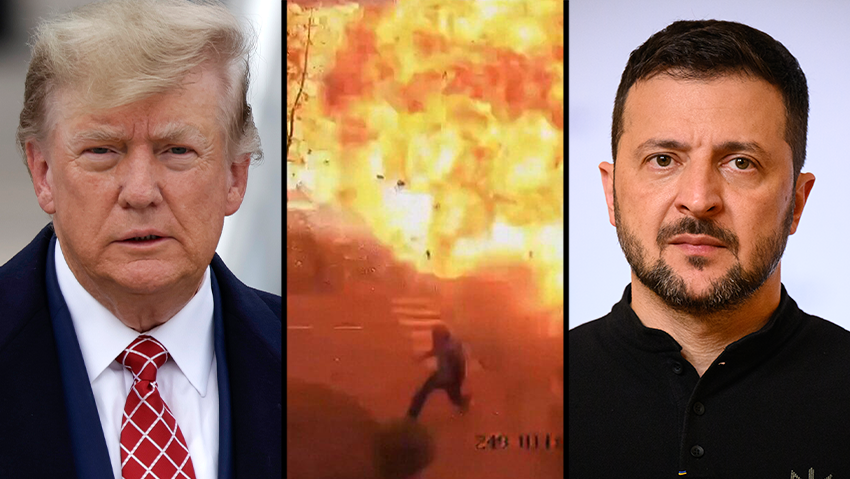
(Photo: Reuters, Leon Neal/Getty Images, Jeff J Mitchell/Getty Images)
Zelensky previously described the agreement as "a weak decision by strong partners." The deal would release more than 2.25 million barrels of Russian diesel onto U.S. and international markets. Some energy experts have questioned whether the relatively limited volume would have a meaningful effect on global prices.
According to a Reuters report, the diesel agreement was not merely intended to address fuel prices but was also part of an American attempt to persuade Putin to resume negotiations over ending the war.
Three people familiar with discussions between American and Ukrainian officials said Trump's envoys, Steve Witkoff and Jared Kushner, explained the strategy during a meeting in Miami on Friday.
Two of the sources said Witkoff and Kushner told Ukrainian representatives that Putin was currently unwilling to negotiate an end to the war and that the diesel deal could help restart three-way talks involving Washington, Moscow and Kyiv.
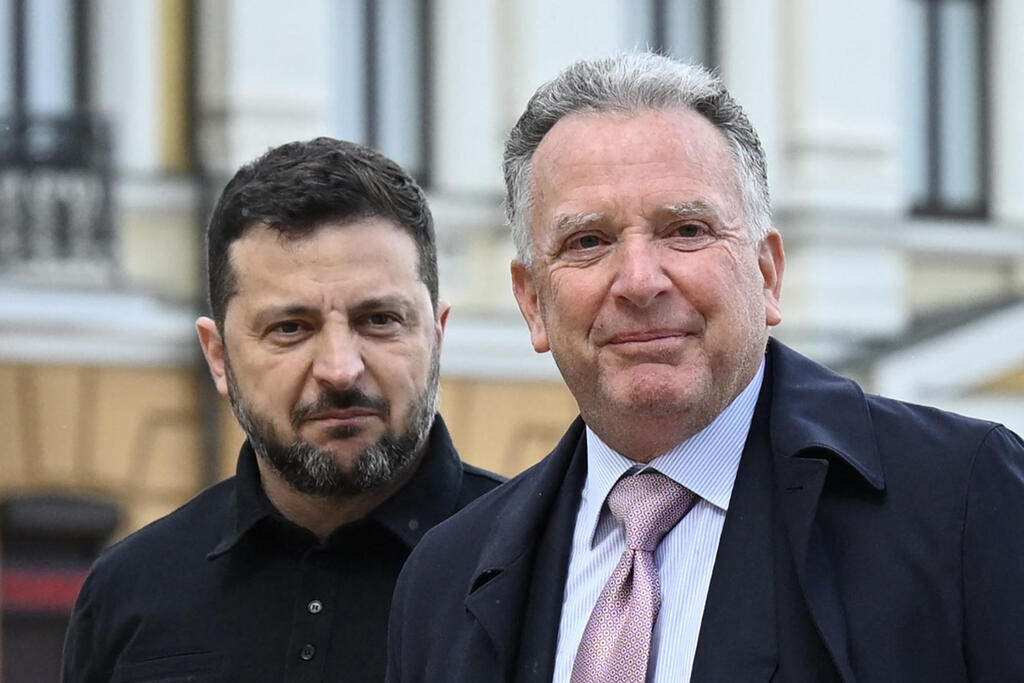
Zelensky and Witkoff
(Photo: Genya Savilov / AFP)
A third source said the United States believed the agreement could help "soften" Moscow's position by signaling Trump's willingness to pursue cooperation with Russia.
The strategy was intended to demonstrate that Washington was prepared to offer Moscow economic incentives while encouraging Kyiv to suspend its attacks on Russian energy infrastructure, potentially creating conditions for renewed negotiations.
The Ukrainian delegation left the Miami meeting without formally agreeing to the proposals, according to Reuters, although officials indicated they were open to an energy ceasefire if Russia also observed it.
Kremlin spokesman Dmitry Peskov did not explicitly deny the Reuters report Tuesday but said he saw no "direct connection" between the diesel agreement and Moscow's willingness to participate in peace negotiations.
He described the arrangement as mutually beneficial cooperation between Russia and the United States that served the interests of both countries and international energy markets.
Against this backdrop, Ukrainian Foreign Minister Sybiha delivered a pointed remark about Washington's changing demands on Kyiv during a security conference in Warsaw on Tuesday. "In less than two years, we have gone from 'You don't have the cards' to 'Don't play your cards.' This is an achievement," he said.
The remark referred to Trump's confrontation with Zelensky in the Oval Office in February 2025, when the American president told his Ukrainian counterpart that he lacked leverage in negotiations with Russia.
Now, as Washington urges Ukraine to stop attacking Russian oil infrastructure, Sybiha suggested the administration was effectively acknowledging that Kyiv possessed strategic leverage, but was asking it not to use it.