

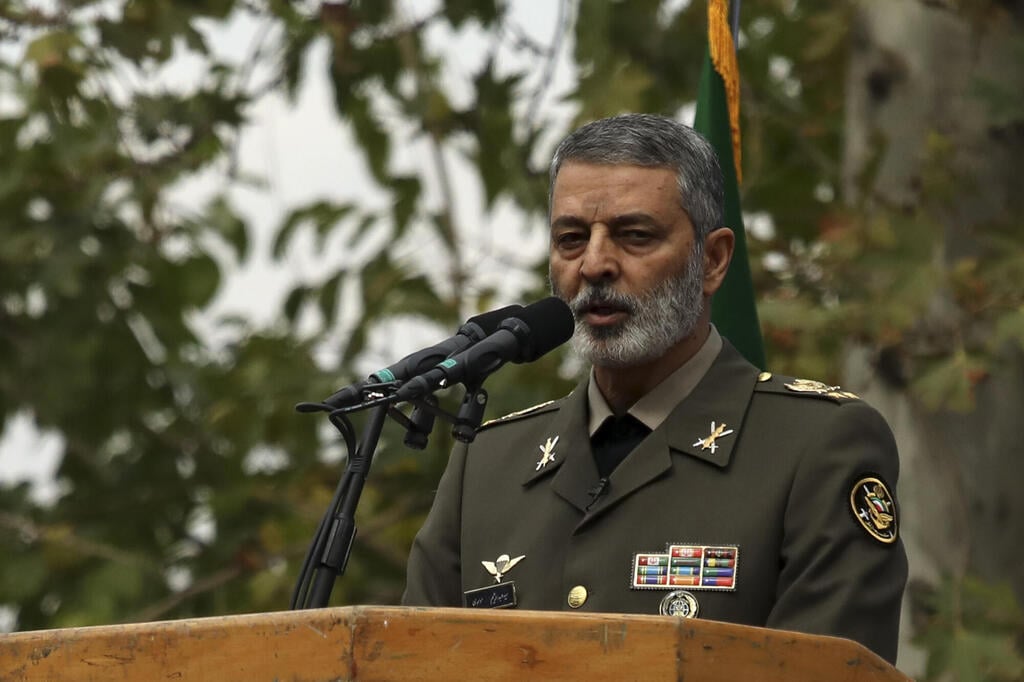
A day after the latest round of nuclear talks with the United States in Oman ended, Iranian Chief of Staff Abdolrahim Mousavi spoke Saturday at an event marking “Iranian Air Force Day,” issuing another warning amid rising tensions over a possible strike. “Any military action against Iran will exact a heavy and irreversible price from the enemies,” he said. “They know well that any aggression will end in their strategic defeat and expand the war in the region. Our forces are at the highest level of readiness, fully coordinated and prepared to respond.”
U.S.–Iran talks mediated by Oman’s foreign ministe
(צילום: סוכנות הידיעות של עומאן)


Meanwhile, according to sources who spoke with CNN, U.S. envoys Steve Witkoff and Jared Kushner visited the aircraft carrier USS Abraham Lincoln the morning after the talks concluded, as the American military buildup in the region continues — including what was described as a “large armada” with eight destroyers.
Iranian Foreign Minister Abbas Araghchi addressed the possibility of a U.S. strike in an interview with Al Jazeera, warning the consequences could resemble those of the recent 12-day war. “We will not be able to strike U.S. territory. We will not attack neighboring countries, but we will target American bases stationed in them. There is a big difference between the two,” he said.
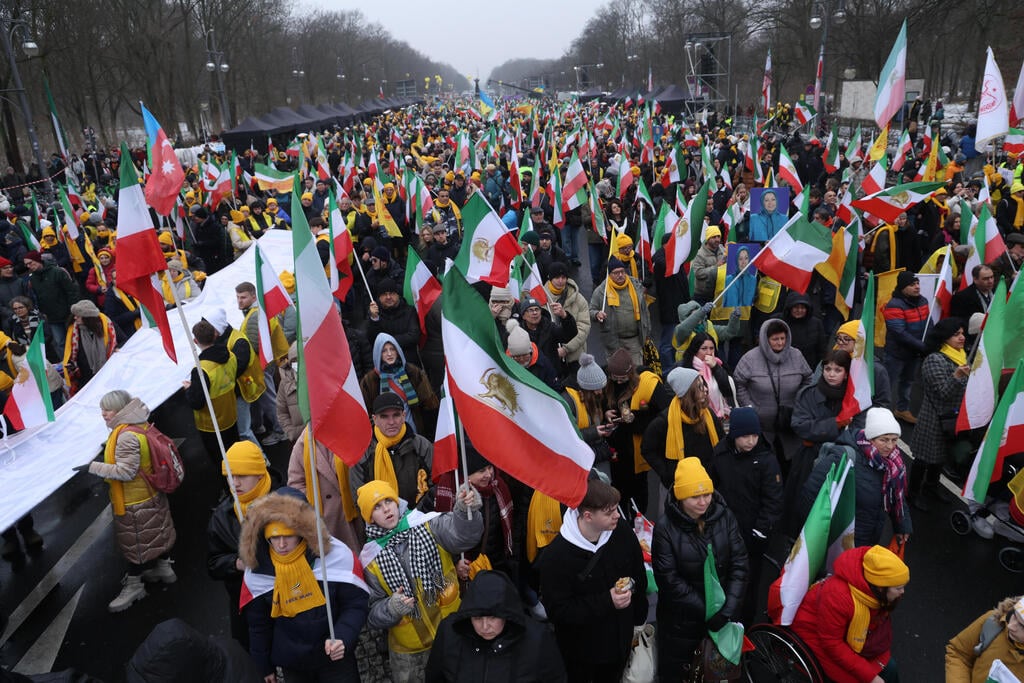
The demonstration in support of the Iranian people in Berlin, today
(Photo: Sean Gallup/Getty Images)
Regarding the talks held Friday in Muscat, Araghchi said, “There is still no exact date for a second round, but we believe they should take place soon.” He added they might be held in a different location. “Iran’s nuclear issue can only be resolved through negotiations,” he said, noting Tehran is prepared for an agreement ensuring transparency and limits on uranium enrichment by reducing its pace. However, he stressed Iran rejects transferring uranium out of the country and added, “The missile issue is not subject to negotiation, as it is a matter of national security.”
He reiterated: “We do not want a regional war, and neither do the countries of the region — but any American attack will change that.” He described the latest talks as “a good start,” though “the path to building trust is still long.”
Thousands rally for Iran in Berlin: “We don’t want another dictatorship”
Meanwhile, thousands of people demonstrated Saturday in Berlin in support of the ongoing protest movement in Iran, ahead of the 47th anniversary of the 1979 Islamic Revolution later this week.
Police estimated about 8,000 demonstrators gathered at the Brandenburg Gate, while organizers said 20,000 had registered in advance. Shahin Gobadi of the National Council of Resistance of Iran (NCRI) claimed attendance reached 100,000, adding many were unable to arrive due to weather-related flight cancellations.
Organizers said the rally was backed by 344 organizations and political figures, including labor unions, civil society groups across Europe, and 312 associations of Iranian expatriates. Similar demonstrations took place in London, Malmö, Bucharest and Sydney.
Maryam Rajavi, president of the NCRI, told the crowd in Berlin: “The message of the Iranian people and the resistance remains the same: no appeasement, no war, no foreign intervention — but regime change and a republic of the people, by the people, through organized resistance.”
One demonstrator, Samin Sabet, 40, who works at a hotel in Heidelberg and has lived in Germany since infancy, called for free elections in Iran: “We don’t want another dictatorship, and we don’t want monarchy.”
Iraj Abedini, a 61-year-old psychologist from Gothenburg, Sweden, said he joined the protest to “support the Iranian people,” after losing two nephews in protests in Isfahan last month. “The talks between Iran and the United States in Oman will lead nowhere,” he said. “The Iranian regime uses negotiations to stay in power, and the U.S. administration — which has other plans — does not support the Iranian people.”
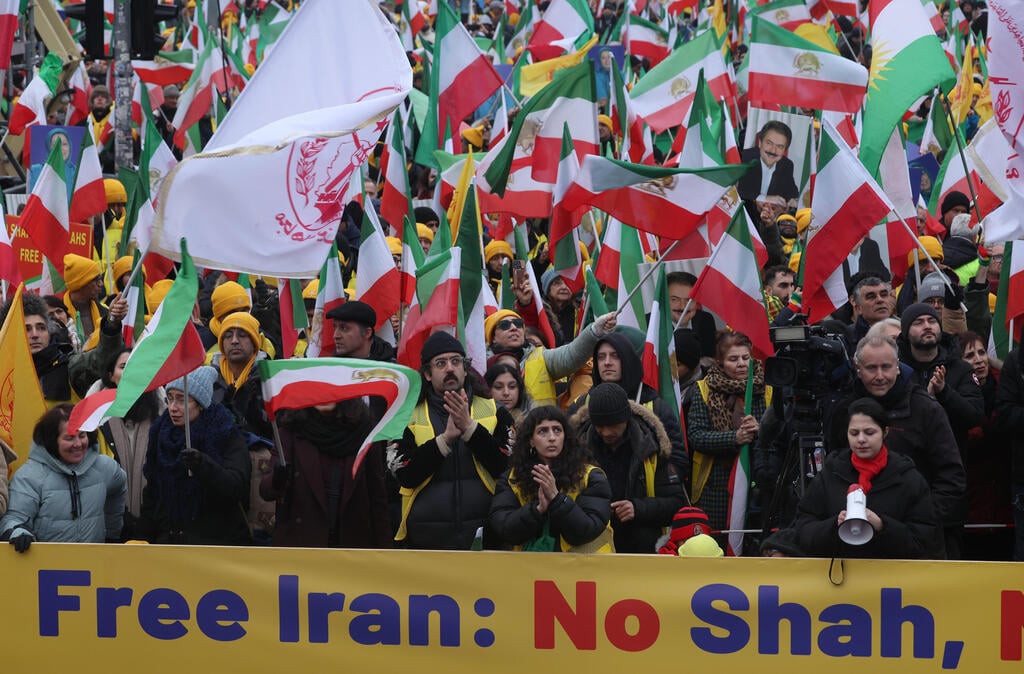
Berlin
(Photo: Sean Gallup/Getty Images)
U.S. President Donald Trump commented for the first time overnight, saying, “It seems the Iranians very much want a deal.” He reiterated that Tehran will not obtain nuclear weapons, despite reports uranium enrichment remains a “red line” for Iran. Trump said another round of talks will take place next week, without specifying when or where, adding that “there is still a long way to a deal.”
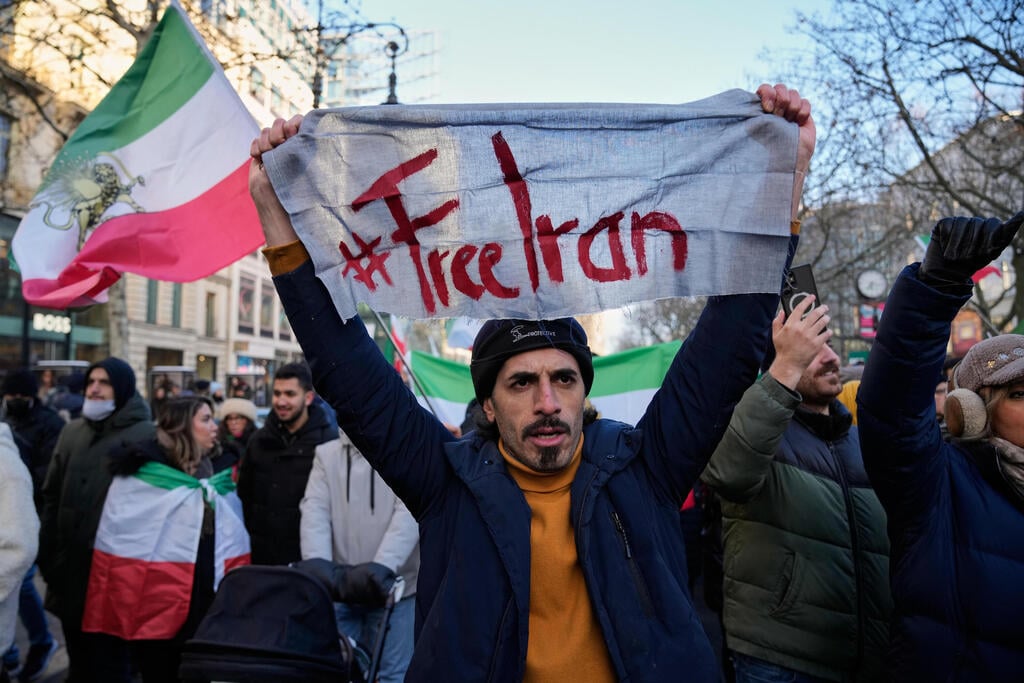
Demonstration by supporters of protesters in Iran, Berlin
(Photo: AP Photo/Ebrahim Noroozi)
However, Iranian parliamentary national security spokesman Ebrahim Rezaei criticized Trump on X, writing, “Trump is a liar.” He added that Iran “has not and will not retreat from its red lines,” and claimed the United States, after failing with other options — military, economic, and terrorist — has no choice but to accept “the frameworks and rights of the Iranian people.”
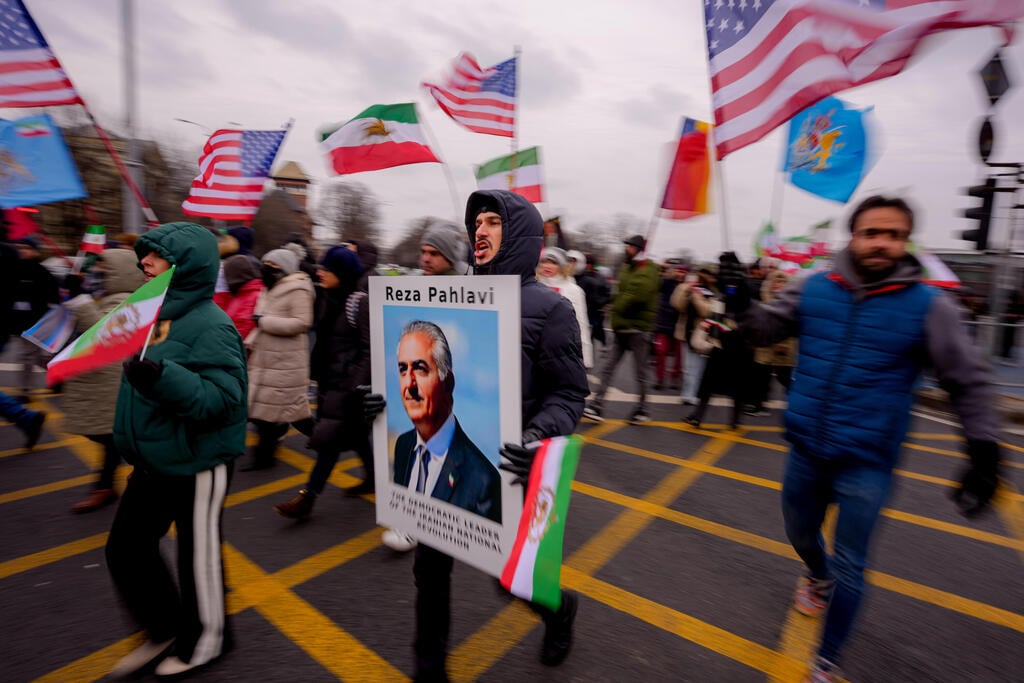
Protesters in Bucharest
(Photo: AP Photo/Andreea Alexandru)
Meanwhile, the U.S. Treasury announced sanctions on 15 Iranian entities and 14 vessels from Iran’s “shadow fleet” involved in what it called illegal oil trade. The sanctions were announced just hours after Iranian officials described the talks as “positive” and after Iranian media reported Tehran’s main demand in negotiations was the lifting of economic sanctions. The White House also announced 25% tariffs on countries importing goods — directly or indirectly — from Iran.