


Pakistani Air Force fighter jets have already been used in attacks against the Houthis, a senior Pakistani military official Thursday morning anonymously told the New York Times on Thursday. Pakistan’s Information Ministry issued a denial of that claim later in the day.
The report came hours before several loud explosions were heard Thursday afternoon in Riyadh, the capital of Saudi Arabia, and reports said the kingdom’s main international airport, King Khalid International Airport, was struck again in an attack launched by Yemen’s Houthi rebels.
Gallery
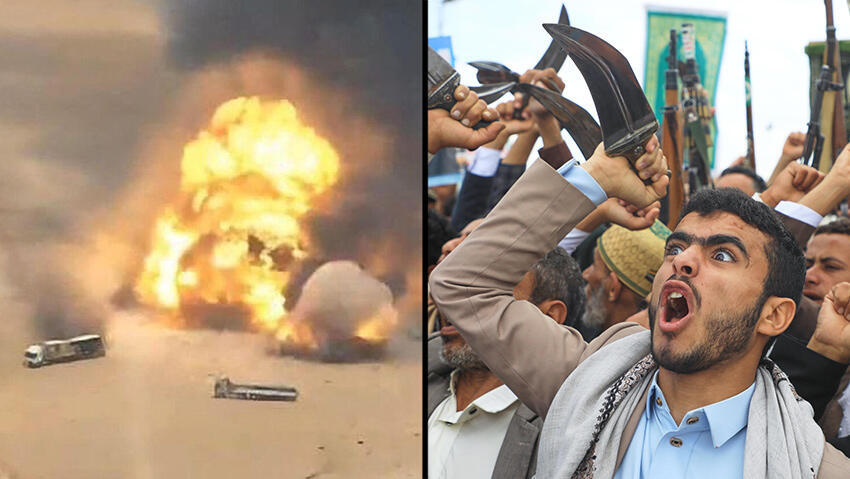
Houthi supporters in Sanaa, right;footage released by Houthis from an attack on pro-Saudi Yemeni government forces
(Photos: Osamah Abdulrahman/AP, ANSARULLAH MEDIA CENTRE/AFP)
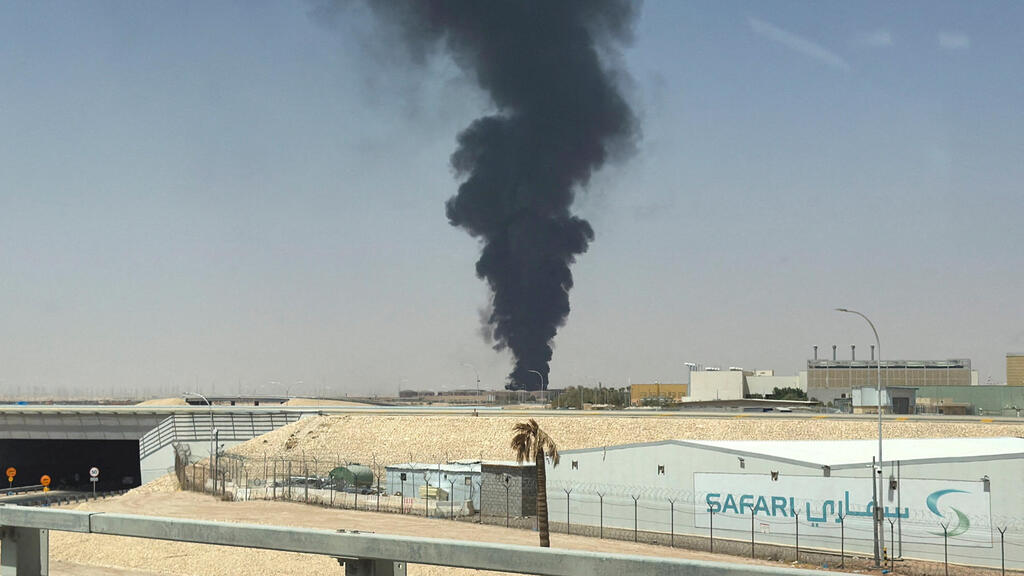
Smoke rises from the Riyadh airport area, in a previous attack last month
(Photo: Reuters/Stringer)
Pakistan confirmed Wednesday night that it had sent military forces to Saudi Arabia. According to the Times report, experts tracking Pakistani assistance estimate that around 8,000 Pakistani troops are already deployed in the kingdom.
Another Pakistani official told the newspaper that Islamabad’s assistance would focus on air defense against the Houthi missile and drone threat, rather than offensive operations inside Yemen.
Reuters also reported that Pakistan had sent military equipment to pro-Saudi forces in the southern Yemeni city of Aden, where the government fighting the Houthis is currently based.
Reuters, citing eyewitnesses and several sources familiar with the details, reported that one aircraft was hit and caught fire Thursday afternoon at the international airport in Riyadh. The sources said the plane was apparently empty and was struck while parked at the airport.
On the Beach, and at the airport: Advance of pro-Saudi forces in Yemen


Saudi Arabia has not yet confirmed that report, but said it intercepted two ballistic missiles fired by the Houthis at Riyadh and another missile launched toward Khamis Mushait in the south of the kingdom. It said debris from the interception of one of the missiles over Riyadh damaged a kindergarten and a medical center.
The Houthi attacks on Saudi cities, which have intensified in recent days, have largely focused on airports as part of an effort to disrupt the kingdom’s aviation sector and “close its skies” in retaliation for extensive Saudi airstrikes against the rebels. Riyadh has been carrying out the attacks in an effort to support Yemeni government forces fighting the Houthis on the ground.
Saudi Arabia acknowledged Wednesday that three people had been killed in earlier attacks this week on airports in Riyadh and the city of Abha.
Severe disruptions were reported at Riyadh airport Thursday afternoon following the strike, and according to flight-tracking site Flightradar24, the airport was effectively closed. An eyewitness told The Associated Press that fire crews and ambulances were dispatched to the scene and smoke was rising from the area. Passengers were told to leave behind luggage they had already checked in and evacuate the airport, he said.
Houthi military spokesman Yahya Saree confirmed that the group had again attacked Riyadh airport Thursday and claimed that the missile “hit its target, caused damage and disrupted air traffic at the airport.”
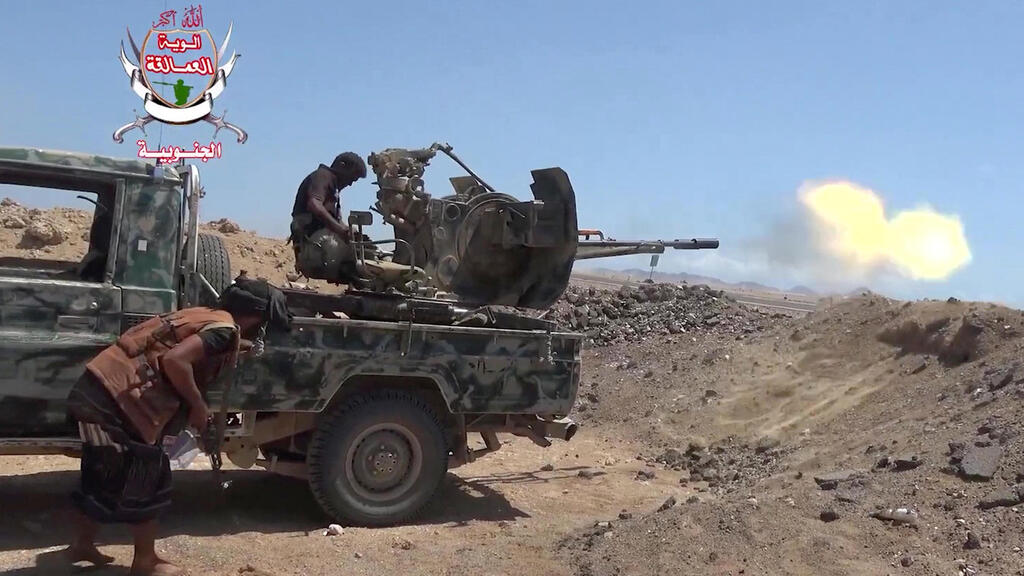
Pro-Saudi government forces in Yemen in fighting in the Taiz region
(Photo: YEMEN SOUTHERN GIANTS BRIGADES MEDIA CENTRE/AFP)

(Photo: YEMEN GIANTS BRIGADES MEDIA CENTRE / AFP)
He also renewed a warning issued by the rebels in recent days to international airlines against operating in Saudi airspace, claiming it had now become an “arena” for Houthi attacks and saying the group would not be responsible for the consequences if airlines ignored the warning.
In his remarks Thursday, Saree called it a “final warning” to airlines. He also threatened that the Houthis would continue attacking oil facilities in the kingdom and urged workers in the sector to stay away from those sites “so as not to endanger their lives.”
At the same time, the Houthis reported additional Saudi strikes that they claimed had killed civilians. The Houthi-affiliated Saba news agency reported that several civilians were killed and wounded in the al-Shamayatayn area in southern Taiz province after two Saudi airstrikes allegedly hit a passenger bus.
Earlier, Houthi leader Abdul-Malik Badr al-Din al-Houthi sought to portray Saudi Arabia as acting in partnership with Israel.
“The Saudi enemy, in partnership with the United States and Israel, is deliberately committing crimes against the Yemeni people,” he said. “All Islamic peoples should view it as a criminal regime. It does not represent Islam, but rather the Zionist approach.”
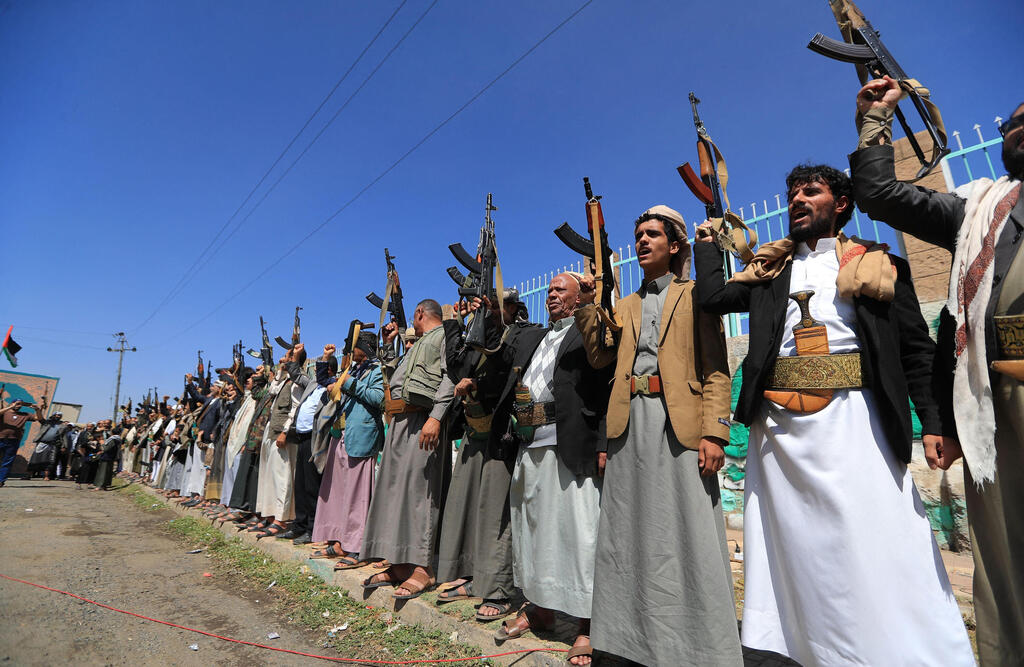
Houthi fighters in Sana'a, Yemen
(Photo: Mohammed Huwais / AFP)
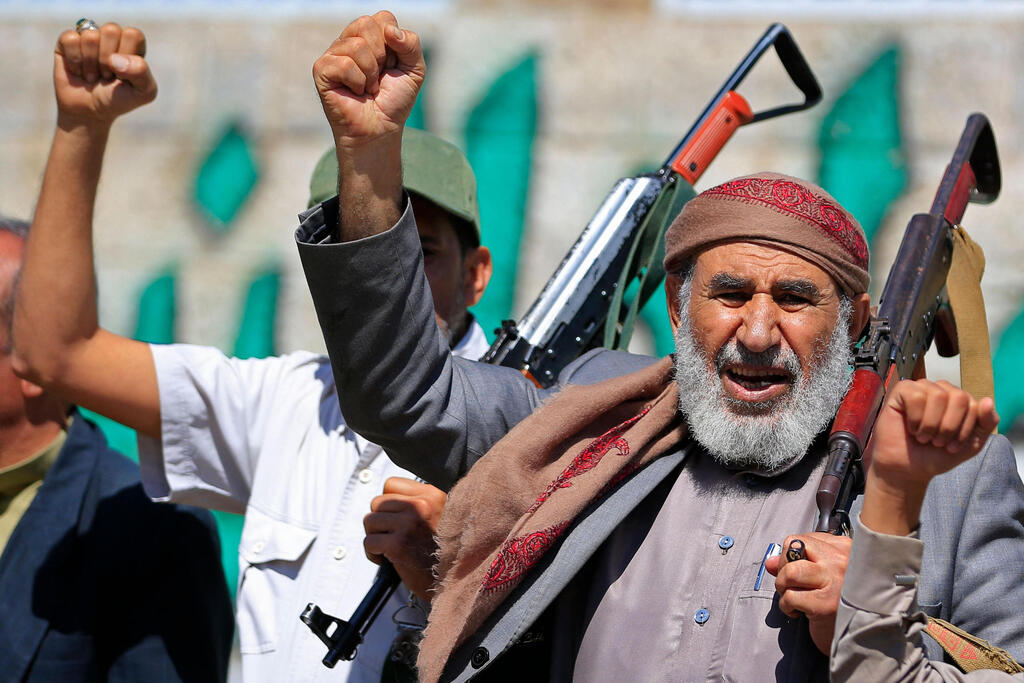
(Photo: Mohammed Huwais / AFP)
The escalation between the Houthis and Saudi Arabia began in July, ending four years of relative calm in Yemen’s civil war, which erupted in 2014 and in which Riyadh supports forces loyal to the internationally recognized Yemeni government.
The renewed escalation began after a Houthi attempt to break the Saudi-imposed air blockade on the rebels, alongside an escalation at the time in the war with Iran, a Houthi ally.
Last month, the Houthis launched a rapid offensive in which they seized strategic coastal areas in southwestern Yemen overlooking the Bab al-Mandab Strait.
Even before taking that territory, the Houthis were able to attack ships from a distance using drones and missiles, but capturing the area gave them tighter control over traffic through the strategic waterway, which connects Europe and Asia via the Red Sea and Suez Canal and carries about 12% of global trade.
The importance of the strait, particularly for Saudi Arabia, rose sharply after the Strait of Hormuz on the other side of the Arabian Peninsula was blocked during the war with Iran.
At the beginning of this week, Yemeni forces loyal to Riyadh launched a major ground offensive, which they call “Dawn of Yemen,” in an attempt to drive the Houthis out of the newly captured areas and seize control of Bab al-Mandab.
Saudi Arabia is providing extensive air support for the operation with heavy bombardment. Reports say pro-Saudi forces have indeed advanced in the area around the strait, although the extent of those gains remains unclear.
The Houthis, for their part, denied claims by the Yemeni government that it had already retaken Bab al-Mandab.
Houthi Foreign Minister Abdul-Wahid Abu Ras warned Thursday that fighting in the strait area “could negatively affect maritime traffic,” which the Houthis have so far largely avoided deliberately targeting during the escalation, aside from attacks on Saudi oil tankers.
“We have many cards that will be revealed in the coming period if the Saudi regime continues with these steps,” he threatened.
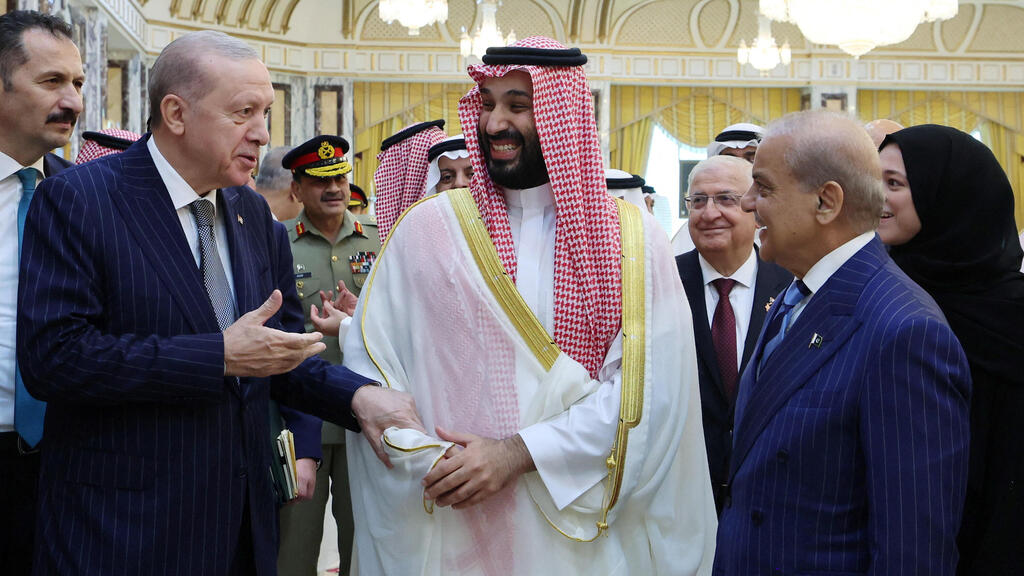
Pakistani Prime Minister Shahbaz Sharif and Turkish President Erdogan with Saudi Crown Prince Mohammed bin Salman Mecca Pact signing
(Photo: Murat Cetinmuhurdar/Turkish Presidential Press Office/Handout via REUTERS)
The Houthis also scored an important gain this week by imposing a siege on the city of Taiz, Yemen’s third-largest city and a major strategic stronghold of government forces.
The renewed fighting has revived the severe humanitarian crisis that engulfed Yemen at the height of the civil war. According to reports, at least 200,000 residents have so far been displaced.
As the fighting intensifies, questions are also growing internationally over possible Pakistani and Turkish involvement on Riyadh’s side as part of the “Mecca Alliance” they signed with Saudi Arabia just two months ago.
The agreement states that an attack on one member constitutes an attack on all. So far, Islamabad and Ankara have officially limited themselves to condemning Houthi attacks.
Turkey, meanwhile, said Thursday afternoon that it would not join active combat against the Houthis.
Turkish Foreign Minister Hakan Fidan said the “Mecca Alliance” was “primarily a defensive alliance, not an offensive one.”
He said Turkey and Pakistan were still examining how to support Saudi Arabia in the face of Houthi attacks, but stressed: “We will not send military forces into the territory of another country to carry out an attack there. We are studying how to provide Saudi Arabia with military assistance, air defense and electronic warfare capabilities within the framework of the alliance.”
His remarks came two days after senior Houthi official Mohammed al-Bukhaiti threatened that the rebels would respond to any foreign involvement in the Yemen war.
“We do not expect Turkey and Pakistan to become directly involved in the fighting inside Yemen,” he said. “The involvement of Turkey and Pakistan in the war, even indirectly, means partnership in the oppression of the Yemeni people. We will not stand idly by in the face of any country’s involvement in the war in Yemen.”