

Slovakia is facing a deepening demographic crisis, with births falling to a historic low of just over 42,000 in 2025, while the population aged 65 and older reached 1.03 million, accounting for 19% of residents. According to Slovak news outlet Pravda, the trend is placing growing pressure on public finances and essential services, raising concerns about the country's ability to support an increasingly elderly population.
Despite the alarming figures, Slovakia remains relatively young by European standards. The average share of residents aged 65 and older across Europe is 22%, and only four European Union countries have younger populations than Slovakia. Italy leads the continent, with 24.7% of its population aged 65 or older, followed by Portugal at 24.3%, Bulgaria at 24%, Greece at 23.7% and Finland at 23.6%. Germany, Europe's largest economy, stands at 22.7%.
But projections suggest Slovakia is rapidly catching up. The number of elderly residents already exceeds the number of children under 15, and the share of people aged 65 and older could reach 30% by 2050 and stabilize at around 33% between 2060 and 2080. Meanwhile, annual births are projected to fall below 35,000 by 2060 and remain between 32,000 and 33,000 through 2080.
The financial consequences are already becoming apparent. The report cites projected annual pension spending of 13.7 billion euros, alongside a planned 3.5% increase in benefits from January. The average monthly old-age pension was estimated at 703 euros at the end of 2025. Slovakia's fiscal watchdog has warned that age-related spending could gradually increase by the equivalent of 3.8% of GDP by 2060, while domestic and European Union assessments have identified significant risks to the pension system's long-term sustainability.
A year's salary buys barely enough space for a bathroom
The demographic crisis is closely intertwined with Slovakia's increasingly unaffordable housing market. The country's average annual gross salary of 23,500 euros is enough to purchase just 8.1 square meters of residential property. In the capital, Bratislava, where average annual gross earnings reach 30,000 euros, an entire year's salary buys only 6.8 square meters, roughly the size of a bathroom. Only 16 Slovak cities offer more than 14 square meters for the equivalent of one year's salary, most of them in the Nitra and Banská Bystrica regions.
Financial pressures are also keeping older Slovaks in the workforce. According to data from Eurostat, the European Union's statistical agency, 24.7% of Slovak retirees continue working or earn supplementary income, nearly twice the EU average. Of those, 18.3% continue working without changing their schedules, while 6.4% switch to adjusted working hours.
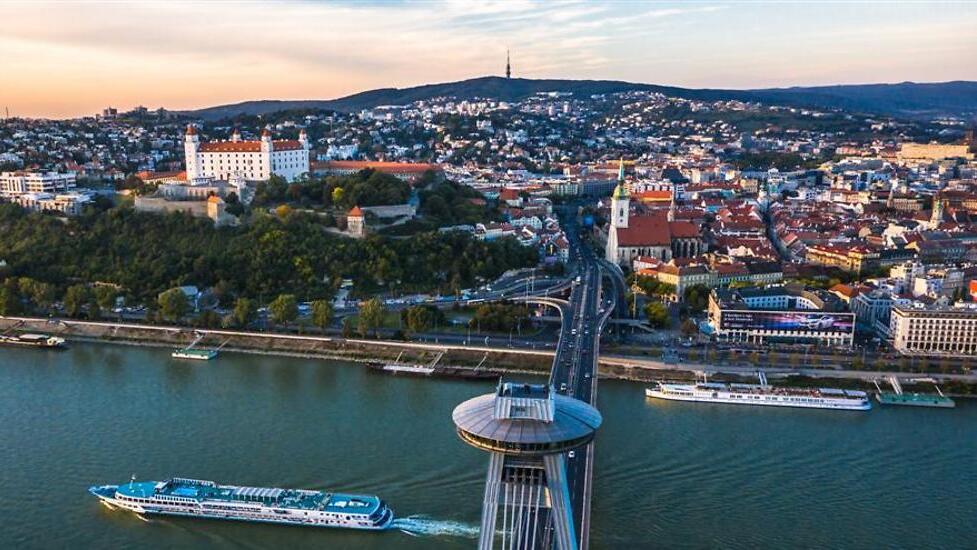
Bratislava, Slovakia
(Photo: Bratislava City Council website)
For many, the decision is driven by financial necessity rather than personal fulfillment. Some 30.3% of working retirees describe employment as an economic necessity, while 31% say continuing to work is financially worthwhile. Relatively few cite enjoyment or social connections as their primary motivation, placing Slovakia among the EU countries where retirees report the lowest levels of work-related enjoyment.
The healthcare system faces mounting pressure as the number of elderly patients with complex medical needs grows alongside persistent staffing shortages. The problem is particularly visible in residential neighborhoods built during the housing boom of the 1970s and 1980s, where large concentrations of elderly residents now live after younger families moved to suburban areas.
Pensions, healthcare and long-term care are competing for limited public funds alongside education, defense and infrastructure. At the same time, young households struggling with housing prices are finding it increasingly difficult to save for mortgage down payments, particularly without financial assistance from relatives. Many are postponing starting families, creating a cycle in which unaffordable housing contributes to declining births, leaving fewer young workers to support an aging population.