


As a growing bloc of Western nations moves to recognize a Palestinian state this September, visiting bipartisan British lawmakers are warning that these initiatives risk legitimizing terrorism and derailing hostage negotiations, all while placing the burden of peace solely on Israel.
Sir Gavin Williamson, former UK defence secretary, said that the message being sent is historically grave. “Britain didn’t hand over Northern Ireland to the IRA after Omagh,” he said.
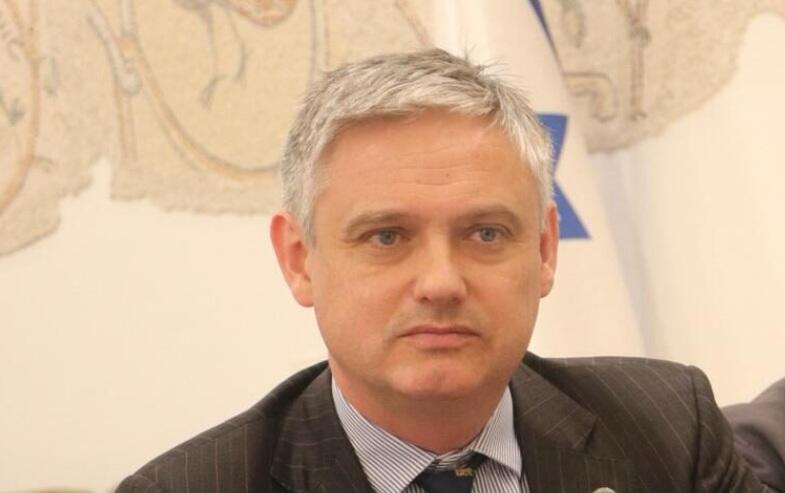
“No Western country has ever legitimized a terror movement mid-conflict. If we do that now, we abandon the very principles we claim to defend.” He warned that the consequences could reverberate far beyond the Israeli–Palestinian arena. “If this move goes forward without the hostages’ return, it will be remembered as the day the West broke its doctrine,” he added. “After 9/11, we told the world: you don’t negotiate with terror. But now we are not only negotiating—we are rewarding it.”
Lord Walney (John Woodcock), a crossbench peer and former independent adviser on political violence, echoed the concern. “My fear is certainly that Hamas will interpret it as a validation of their strategy … and it can send the signal that there can be a reward for this brutality.” He added: “We have to remember that we are not … this is not the British Mandate anymore,” warning against a sense of residual entitlement in Western diplomacy. “The era in which the UK could dictate terms in this region is long gone, and it’s dangerous to pretend otherwise. Israel is a sovereign democracy under existential threat. Outsiders dictating conditions—especially during war—do not bring peace, they make it harder.”
The dynamic was set in motion by UK Prime Minister Keir Starmer, who on July 29 declared that the United Kingdom would recognize the State of Palestine at the UN General Assembly unless Israel halts its military campaign in Gaza and allows expanded humanitarian access. The announcement laid out specific conditions for Israel, but made no demands on Hamas, and did not tie recognition to the return of the roughly 50 hostages still held in Gaza nearly two years after the October 7 massacre. But the impact, warn critics, is the same: a one-sided ultimatum that punishes Israel while sending the wrong message to Hamas and its backers.
Williamson said Starmer’s plan “demonstrates a callous disregard, not only for the security of Israel, but a callous disregard for the security and the safety of all democratic nations.”Their remarks came just hours after the Hostages and Missing Families Forum issued a scathing statement condemning the European recognition push. “Recognizing a Palestinian state while 50 hostages remain trapped in Hamas tunnels amounts to rewarding terrorism,” the group declared. “Such recognition is not a step toward peace, but rather a clear violation of international law and a dangerous moral and political failure that legitimizes horrific war crimes.” The statement warned that doing so without the return of the hostages “will be remembered throughout history as validating terrorism as a legitimate pathway to political goals.”
In his televised address, Starmer stated: “I can confirm the UK will recognise the state of Palestine by the United Nations General Assembly in September, unless the Israeli government takes substantive steps to end the appalling situation in Gaza, agree to a ceasefire and commit to a long-term sustainable peace.” The only references to Hamas were generic. Starmer said the group must “disarm and accept that they will play no part in the government of Gaza,” but did not condition recognition on that outcome. Nor did he mention the hostages. For Williamson, the omission is more than symbolic. “What Keir Starmer has done is say that acts of violence, acts of terrorism, acts of brutality and carnage can deliver a reward,” he said. “It can deliver your political aims.” That message, he warned, could be understood globally as “an enormous incentive” for terror groups. “Otherwise, you are just rewarding evil. And that is something that I do not think is the British way.”
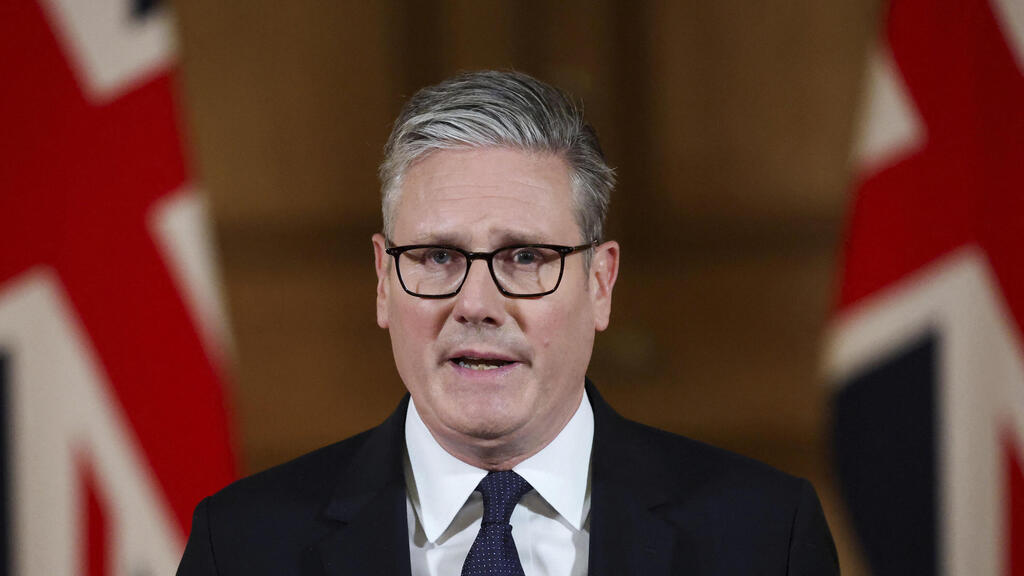
UK Prime Minister Keir Starmer
(Photo: Toby Melville, AP)
Lord Walney, who had just visited Kibbutz Nir Oz and viewed raw footage of the October 7 attacks, added: “It is appalling that, after all the promises that politicians from many countries, including the UK, have given to those hostage families … they have been blindsided by this, and … feel as let down as they do.” Both lawmakers said they had yet to hear any serious assurance from the UK government that hostage release would be a condition for recognition. “The statement is crafted to give space to recognize Palestine anyway, even if the hostages and their bodies are not home,” Walney said. “That’s unacceptable.”
Williamson said the lack of clarity was politically and morally indefensible. “Especially when (Starmer) has had families of those hostages into Number 10 (Downing Street, the Prime Minister’s official residence) … and acted as a person that cares,” he said. “I do not know how he would have the dignity to look at himself in the mirror and not feel anything other than shame.”Starmer’s announcement was quickly followed by Canada’s declaration on July 30. Prime Minister Mark Carney said Ottawa would support Palestinian statehood at the UN in September “in line with reforms,” though no deadlines or specific conditions were made public. That move triggered a strong reaction from President Donald Trump, who posted on Truth Social: “Canada has just announced that it is backing statehood for Palestine. That will make it very hard for us to make a Trade Deal with them. Oh, Canada!!!”
Get the Ynetnews app on your smartphone: Google Play: https://bit.ly/4eJ37pE | Apple App Store: https://bit.ly/3ZL7iNv
In Israel, Foreign Minister Gideon Sa’ar, a senior member of the War Cabinet, warned that “we are witnessing a distorted campaign of international pressure against Israel” and that the push to end the war, “while Hamas remains in power in Gaza … will be a tragedy for both Israelis and Palestinians.” He called the recognition effort “an attempt to force upon Israel a Palestinian terror state,” adding that “establishing a Palestinian state today is establishing a Hamas state, a Jihadist state… It ain’t gonna happen.” Sa’ar claimed that the diplomatic campaign was undermining sensitive negotiations. “International pressure on Israel during critical days in the negotiations for a ceasefire and hostage deal has already caused Hamas to harden its position,” he said.
“This pressure is directly sabotaging the chances for a ceasefire.”The week-long British delegation was organized by ELNET, a non-partisan organization focused on strengthening European-Israeli ties. During their visit, the lawmakers toured massacre sites in the Gaza Envelope, including Kibbutz Nir Oz and the Nova festival grounds, and met with Israeli officials and civilians. For Williamson, who last visited Israel at age 14, the experience was transformative. “Looking through the eyes of someone who has been defence secretary, you see the unique vulnerabilities that Israel has,” he said. “The sheer threat… the consequences when that threat materializes… are just so enormous.”
The imbalance of conditionality is what troubles both men most. “There are very, very few people who … think that in this deeply insecure, unstable environment, with an embedded terrorist entity, that you can start immediate construction of a Palestinian state,” said Walney. Williamson added: “It sends a message to Iran, to Hezbollah, to Hamas, to all those extremists who hate democracy … that the West is weak.”
Both MPs called on the UK government to reconsider. “Wiser heads will be speaking to Keir Starmer,” Williamson said. “They’ll be trying to work out a way to dig him out of the enormous hole that he’s managed to dig himself.” Still, Walney offered a closing note of pragmatism. “If people share the view of a two-state solution … you have to approach it from a point of view of realism. Otherwise … you actively make it worse.”