

Gulf Arab states did not ask the United States to go to war with Iran, but many are now urging Washington not to stop the campaign before the Islamic Republic’s military capabilities are significantly weakened, fearing Tehran could otherwise continue threatening the region’s oil lifeline and the economies that depend on it.
Three Gulf sources told Reuters that leaders worry Iran could emerge from the war still capable of threatening oil production and energy infrastructure across the Gulf. At the same time, the sources and five Western and Arab diplomats said Washington is pressing Gulf states to join the U.S.-Israeli campaign.
Gallery

Crown Prince Mohammed bin Salman and UAE President Mohammed bin Zayed lose patience; leaders of Saudi Arabia and the United Arab Emirates
(Photo: Nathan Howard/AP, AP)
According to three of the sources, U.S. President Donald Trump wants to demonstrate regional backing for the war in order to strengthen its international legitimacy and bolster domestic support.
“There is a wide feeling across the Gulf that Iran has crossed every red line with every Gulf country,” said Abdulaziz Sager, chairman of the Saudi-based Gulf Research Center and someone familiar with government thinking in the region.
“At first we defended them and opposed the war,” he said. “But once they began directing strikes at us, they became an enemy. There is no other way to classify them.”
Strait of Hormuz as leverage
Iran has already demonstrated its reach by attacking airports, ports, oil facilities and commercial centers in six Gulf states with missiles and drones while disrupting shipping through the Strait of Hormuz — the strategic waterway through which roughly one-fifth of the world’s oil supply passes.
The attacks have intensified fears among Gulf governments that if Iran retains significant offensive weapons or the ability to produce more, it could repeatedly threaten the region’s energy infrastructure and hold the strait effectively “hostage” during future crises.
As the war enters its third week, with U.S. and Israeli airstrikes intensifying and Iran continuing to target American bases and civilian sites in the Gulf, a regional source told Reuters that the prevailing mood among leaders is clear: Trump should comprehensively degrade Iran’s military capabilities.
The alternative, the source said, would be living under a permanent threat. Unless Iran is significantly weakened, it could continue to hold the region “to ransom.”
Predominantly Shiite Iran has long viewed its Sunni Arab Gulf neighbors — close allies of the United States that host American military bases — with deep suspicion, although relations with Qatar and Oman have generally been less tense.
Over the years Iran and its regional allies have been accused of attacks on Gulf energy facilities, including the 2019 strike on Saudi Arabia’s Abqaiq and Khurais oil sites — an attack Iran denied responsibility for — which temporarily cut Saudi oil production in half and shook global energy markets.
For Gulf leaders, the impact of the recent attacks extends beyond physical damage. They also threaten the image of stability and security that Gulf states have worked to cultivate in order to expand trade, attract tourism and diversify their economies beyond oil.
“If the Americans pull out before the task is complete, we’ll be left to confront Iran on our own,” Sager said.
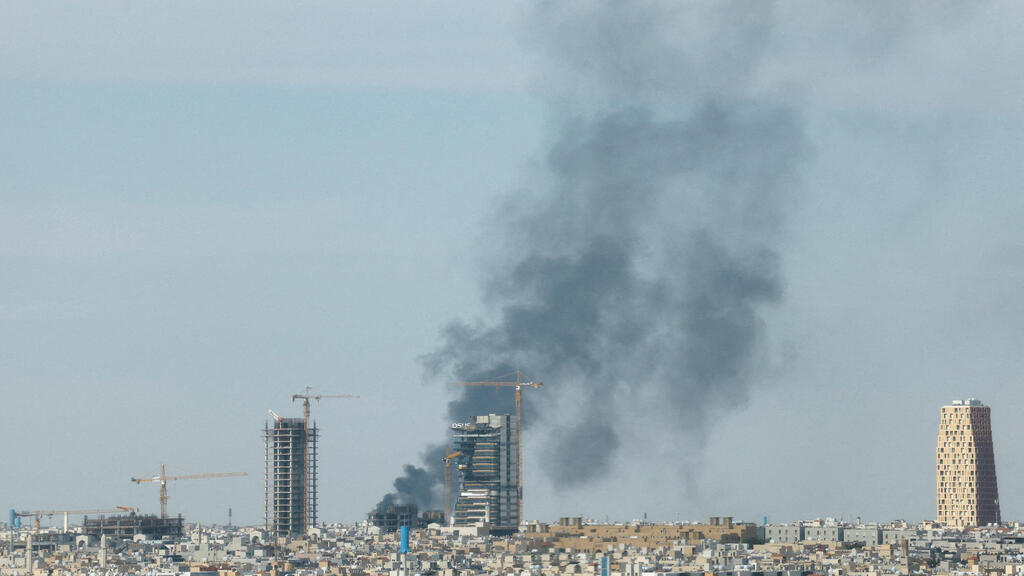
Smoke rises after an Iranian strike in Saudi Arabia
(Photo: Stringer/Reuters)
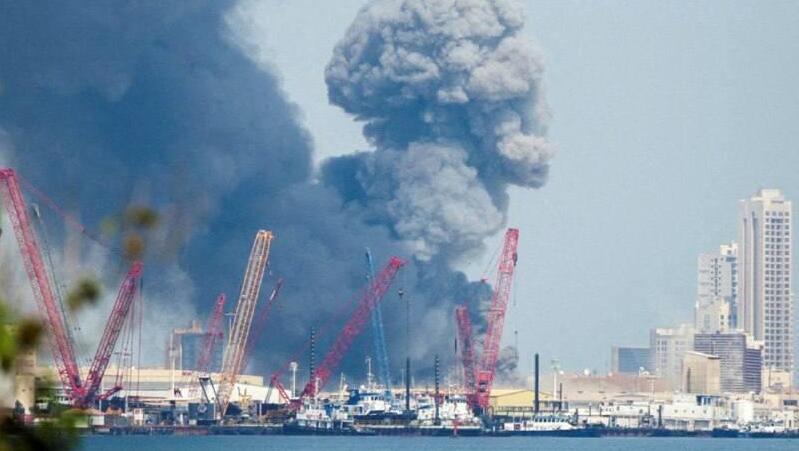
Footage from the moment of the attack in Bahrain
(Photo: Reuters)
Fear of triggering wider war
Responding to those concerns, the White House said the United States was “crushing (Iran’s) ability to shoot these weapons or produce more,” adding that Trump was “in close contact with our partners in the Middle East.”
Among Gulf countries, only the United Arab Emirates publicly responded, saying it “does not seek to be drawn into conflicts or escalation,” but reaffirming its right to “take all necessary measures” to protect its sovereignty, security and citizens.
Regional sources told Reuters that unilateral military action by any single Gulf state remains unlikely, since only a collective response could prevent Tehran from retaliating against an individual country.
However, consensus among the Gulf states remains limited. The six members of the Gulf Cooperation Council — Bahrain, Kuwait, Qatar, Saudi Arabia, Oman and the UAE — have held only one virtual meeting so far, and no summit has been convened to coordinate joint action.
Gulf leaders remain deeply concerned about triggering a broader regional conflict they might not be able to control.
U.S. Defense Secretary Pete Hegseth said last week that Gulf partners were “stepping up even more” and were willing to “go on the offense,” while also working with Washington on integrated air defense systems, though he did not elaborate.
A senior UAE official said Abu Dhabi had chosen restraint after Iran accused the United States of using Emirati territory to launch strikes on Kharg Island, Iran’s main oil export terminal.
Still, Sager said Saudi Arabia — Iran’s primary rival for regional influence — could be forced to respond if Iran crosses certain red lines, such as attacking major oil facilities, desalination plants or causing significant civilian casualties.
“In that case, Saudi Arabia would have no choice but to intervene,” he said.
The strategic dilemma
Gulf states therefore face a strategic dilemma, said Fawaz Gerges of the London School of Economics: balancing the immediate threat posed by Iranian attacks against the much larger risk of being drawn into a war led by the United States and Israel.
Joining such a campaign, he said, would add little to Washington’s military superiority in the region while significantly increasing Gulf states’ exposure to Iranian retaliation.
The result so far has been what he described as “calculated restraint” — defending sovereignty and signaling red lines while avoiding direct participation in a conflict that Gulf states neither initiated nor control.
For now, Iran’s leverage is evident. It has effectively been deciding which ships can pass through the Strait of Hormuz — a situation no country in the region considers acceptable.
“Now that Iran has shown it can shut down Hormuz, the Gulf faces a fundamentally different threat,” said Bernard Haykel, a professor of Near Eastern studies at Princeton University. “If it’s not addressed, this danger will be long-term.”