

President Isaac Herzog does not plan to grant Prime Minister Benjamin Netanyahu a pardon in his corruption trial at this stage, and will instead try to launch mediation aimed at reaching a plea deal, according to The New York Times, citing two senior Israeli officials familiar with the matter.
The decision comes after months of deliberations over one of the most politically explosive questions in Israel: whether the president should intervene in Netanyahu’s long-running trial, which has divided the country and drawn aggressive pressure from U.S. President Donald Trump on the prime minister’s behalf.
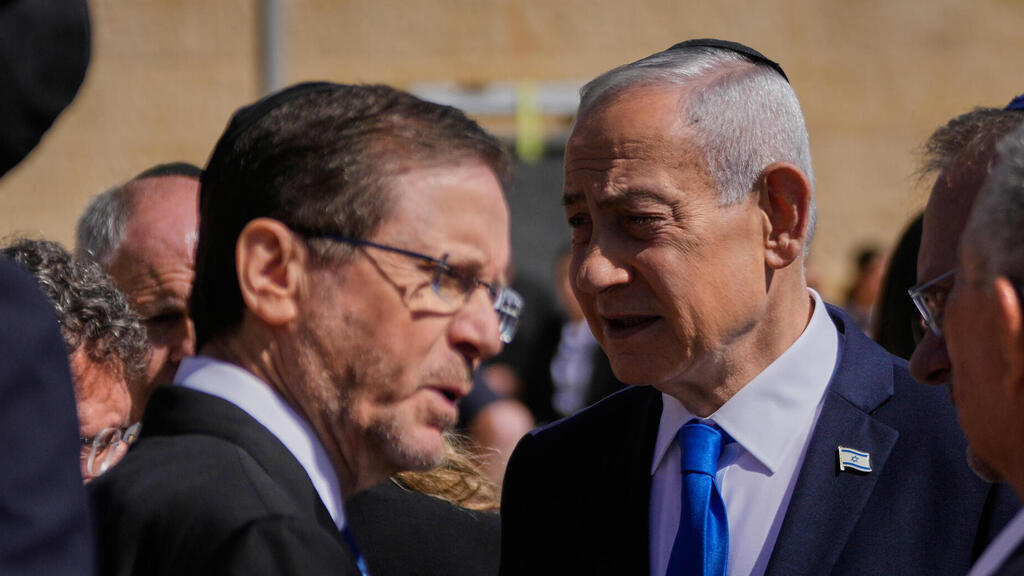
According to the officials, Herzog believes the matter should not be reduced to a binary choice between granting or rejecting a pardon. Instead, he wants to explore a negotiated solution that could help ease political tensions and avoid further damage to public trust. The officials spoke on condition of anonymity because of the sensitivity of the issue.
In a statement, Herzog’s office said: “President Isaac Herzog has stated on several occasions that he regards reaching an amicable solution between the parties as an important public interest. As for the decision on the pardon request, the president will act solely in accordance with Israeli law, guided by his conscience, and in the best interests of the state of Israel.”
Netanyahu’s office and his lawyer did not immediately respond to requests for comment.
Netanyahu, 76, has been on trial for almost six years on charges of bribery, fraud and breach of trust in three separate but connected cases. The allegations center on claims that he advanced favors for wealthy businessmen in exchange for gifts and favorable media coverage for himself and his family.
The prime minister denies all wrongdoing and has described the case as a political witch hunt by what he calls a liberal “deep state.” Trump has strongly echoed that framing, repeatedly urging Herzog to pardon Netanyahu and publicly attacking the Israeli president for failing to do so.
Israel remains deeply split over the issue. Polls indicate that about half of Israelis oppose a pardon, with views largely divided along political lines.
Herzog, whose presidency is mostly ceremonial but includes the authority to grant pardons, is said to be acutely aware of the timing. Israel is facing wars in Gaza, Iran and Lebanon, while national elections are expected within six months. A pardon decision, either way, would likely shape both his legacy and Netanyahu’s, as well as the country’s political trajectory.
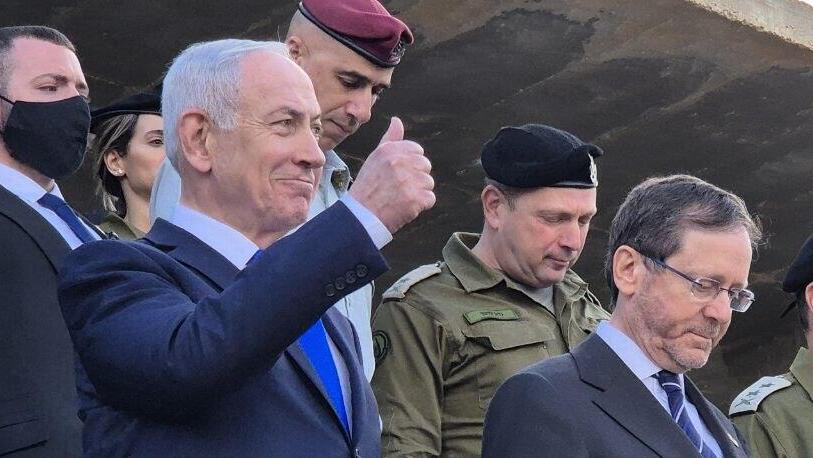
(Photo: Ilana Curiel)
The officials did not outline what a possible deal might include. In Israel, a plea agreement usually requires some admission of wrongdoing and some form of sanction. Legal experts have said any such arrangement in Netanyahu’s case should include his resignation from public office.
Netanyahu has shown no willingness to admit guilt or leave politics.
“Netanyahu knows the option of a plea bargain is always available to him,” said Yohanan Plesner, president of the Israel Democracy Institute. “An admission of guilt, expressing remorse and agreeing to leave — or not to run for — office would be the essence of any plea bargain,” he said, adding, “If you are giving up on a prison sentence, that’s the minimum that should be required.”
Still, officials familiar with Herzog’s thinking said he believes there is room for creativity within the legal framework, and that mediation may be the only path capable of reducing the rifts surrounding the trial.
Netanyahu submitted a formal request for a pre-emptive pardon in November, while his trial was still underway. He said he would prefer to prove his innocence in court, but argued that ending the trial would help heal national divisions and allow him to focus fully on state affairs.
The request followed months of pressure from Trump. During a visit to Israel in October, Trump turned to Herzog from the Knesset podium and said, “Mr. President, why don’t you give him a pardon?” He later repeated the request in a letter.
Herzog called Netanyahu’s request “extraordinary.” Critics, including legal experts, opposition figures, liberal groups and watchdog organizations, argued that granting it would undermine the rule of law.
Under Israel’s general legal practice, pardons are usually granted after conviction. Legal experts say a pre-emptive pardon would challenge the principle of equality before the law.
As part of the formal process, Herzog sought an opinion from the Justice Ministry’s Pardons Department. The department said last month that there was no legal basis for a pardon unless Netanyahu admitted some guilt, accepted responsibility by resigning or was found guilty in court. It said it could not recommend applying the president’s pardon authority in this case.
At the same time, the department said it lacked the tools to assess nonlegal considerations in Netanyahu’s request, including national security implications and the social divisions caused by the trial.
Herzog is also reviewing an alternative opinion submitted on behalf of the government by Amichay Eliyahu, a far-right member of Netanyahu’s coalition. That opinion argued that the Pardons Department had viewed the issue too narrowly through a technical legal lens, and that the president has authority to take a broader historical and national approach.
According to the officials, Herzog is waiting for his office’s legal counsel to review all the material and make a recommendation. The assessment in presidential circles is that Herzog may have the authority to pardon Netanyahu, but that such a move would almost certainly face petitions to the Supreme Court and could deepen the crisis.
Rejecting the pardon outright could also inflame Netanyahu’s supporters ahead of elections, strengthening claims that he is being persecuted by the legal establishment and intensifying the right’s campaign against the courts.
Herzog’s proposed alternative would involve informal talks under presidential auspices, with state prosecutors and the attorney general on one side and Netanyahu’s lawyer on the other.
A previous attempt to reach a plea deal failed in late 2021 and early 2022, when a former Supreme Court president tried to mediate between the sides under the attorney general who had filed the indictment. The sides could not reach an agreement before the attorney general’s term ended.
Officials close to Herzog dismissed the possibility that mediation would be seen as weakness or avoidance. Even if the chances are slim, they said, Herzog believes it is worth trying to resolve the crisis without a decisive public confrontation.