

In the past two years, the phrase “defending our home” has been used with growing frequency—appearing in headlines, speeches and everyday conversations. But for some soldiers, when the road to their military post in Lebanon or the West Bank is also the road back to their family home, the phrase becomes a lived reality.
That’s the case for Corporal A from the northern border of Shlomi and Corporal Y from the West Bank settlement Elkana, both serving in the 890th Paratroopers Battalion, who shared their story with the IDF website.
Gallery

Damage from Hezbollah attacks in the northern border of Shlomi
(Photo: Gil Nechushtan, Nachum Segal, Avihu Shapira, AP Photo/Leo Correa)
“We’re Y and A, combat soldiers in the 890th Battalion,” they said during an interview, repeating the same introduction they’ve given to high school students visiting the IDF’s training base in Tze'elim over the past two weeks as part of the Following the Warriors program.
“We enlisted in March 2024, went through eight months of training, and immediately after that we were deployed to Lebanon, where we maneuvered for about a month straight,” said Cpl. Y. “During the fighting, we targeted Hezbollah’s military capabilities—missiles, RPGs, machine guns, rifles. Really everything.”
From there, the battalion was sent to Syria. “After Lebanon, we were deployed to Syria,” he said. “We spent about six months on the front line, inside Syrian territory.” The battalion was then moved to southern Israel, where they fought in Gaza for three months. “We located tunnels with Yahalom engineering and Oketz K9 forces, destroyed buildings, blew up terror infrastructure—and right after that, we were moved to the West Bank, where we’ve been stationed ever since.”
At the start of the war, Cpl. A and his family were evacuated from their home in Shlomi after the shockwaves of a missile blast damaged their house. For him, the line between the battlefield and home life became difficult to separate.
“Before we went in for ground maneuvers, I had a video call with my mom—she showed me the hotel they were evacuated to,” he said. “A few weeks later, when I finally got my phone back in Lebanon, the first message I saw was that they were looking for contractors so we could come home.”
“I remember, as a kid, watching Hezbollah fighters on Telegram launching rockets at my town. Years later, during combat in Lebanon, we found a warehouse full of trucks equipped with rocket launchers. Suddenly I was standing next to something I only knew from a screen, and I realized: ‘Now I’m here, destroying the thing that once sent me running to a bomb shelter.’ That’s a moment you don’t forget.”
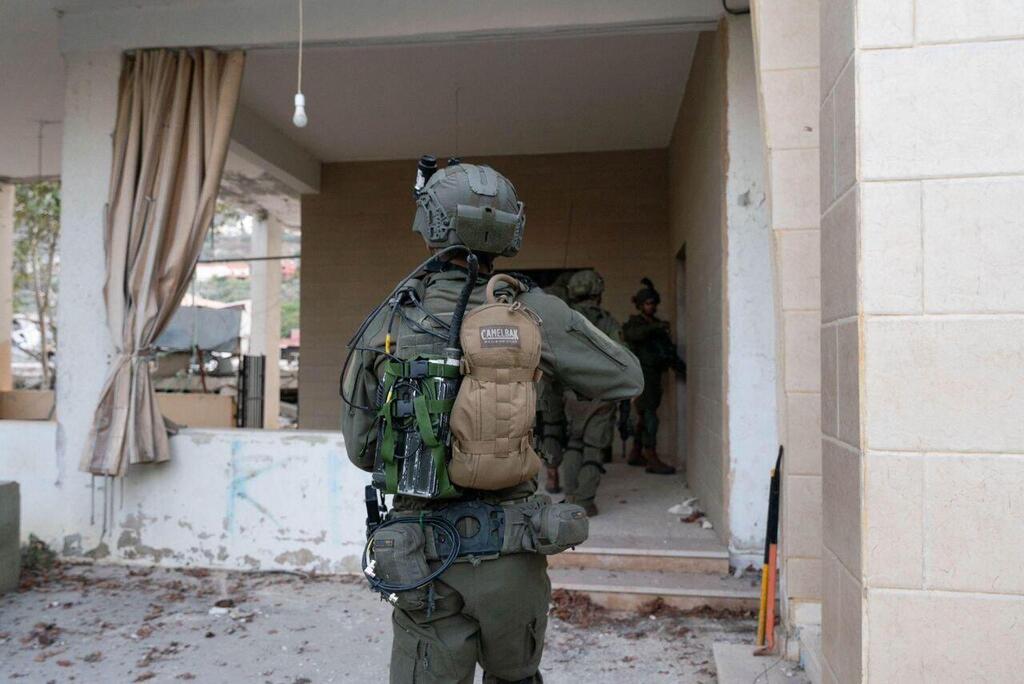
890th Paratroopers Battalion troops operating in Lebanon
Cpl. Y shared a similar feeling—just from a different front. “The sector we’re holding in the West Bank is really close to where I live—about a 15-minute drive,” he said. “It’s literally the same roads that lead to my home. I really feel like I’m defending my house. Every operation, I tell myself: ‘If there are terrorists driving there and we don’t stop them, they could reach my family.’”
For these soldiers, it wasn’t just the face of combat that changed after Oct. 7—it was also their decision to pursue a combat role in the first place.
“Suddenly, I felt a fire inside me to join an infantry brigade, to be in a battalion,” said Cpl. A. “We wanted to be in the place we always saw people go in first and didn’t come out until the mission was done,” added Cpl. Y.
Out of these experiences—evacuation, combat maneuvers in Lebanon, operations in Syria and fighting in Gaza and the West Bank—the 890th Battalion arrived in Tze’elim to speak with groups of high school students considering army service. As part of the Following the Warriors project, they met class after class.
“We didn’t just want to list operations,” said Cpl. Y. “We wanted to give them a real sense of what combat service is like. I told them that this service gives you life tools—you learn how to cope with hardship and discover what you’re capable of.”
The students, they said, were eager to ask questions. “They asked everything,” said Cpl. Y with a smile. “What combat routines are like, how many firefights we were in, how we deal with exhaustion and whether the food is any good—they’re trying to understand what it’s like to be in our shoes.”
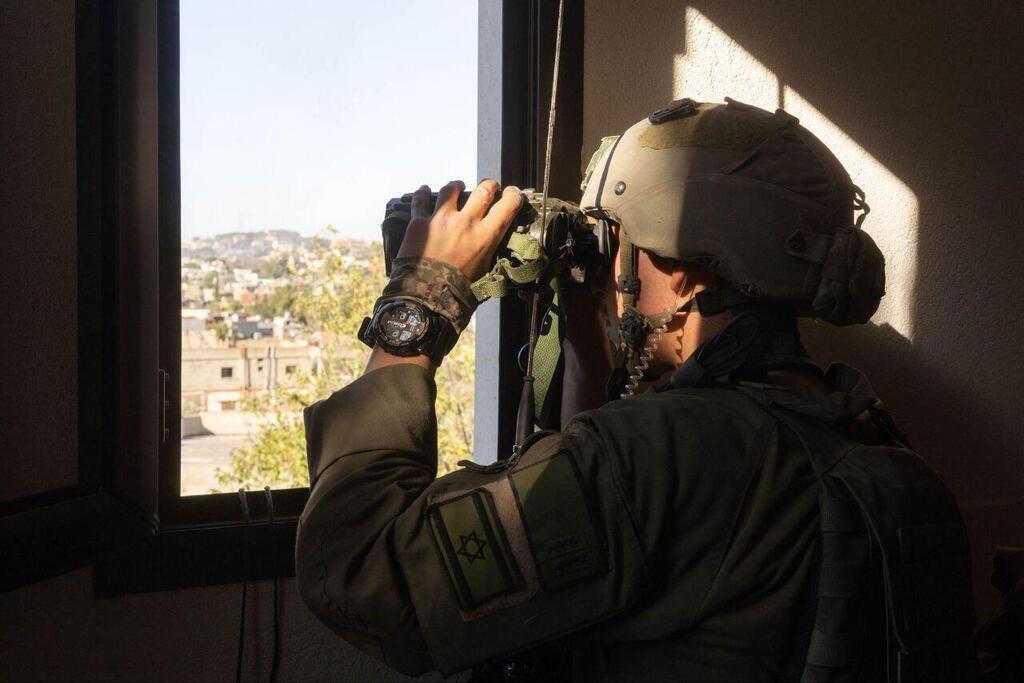
890th Paratroopers Battalion troops operating in Lebanon
But when it came time to answer, the two soldiers chose to paint a fuller picture. “We didn’t want to focus only on operations and encounters,” said Cpl. A. “What matters more to me is that they understand how service changes your relationship with this country.”
Cpl. Y agreed: “I told them that one day, after their service, when they travel, they’ll look at a mountain and say, ‘I did a drill there. We marched there. We held the line there.’ When you travel through the south and see the landscape, you’ll know you were there, you fought and defended that place. It makes you value the ground you walk on.”
According to them, the impact is visible. “Many students showed up confused, which is totally understandable,” said Cpl. Y. “But after the talks, quite a few told us we really helped them clear their heads. They said they understood this is a once-in-a-lifetime period—and that if they’re able, now is the time to become combat soldiers.”
At the end of each discussion circle, just before the students board the next bus, there’s a moment that stays with the soldiers. “Someone comes up, shakes your hand, looks you straight in the eye and says ‘Thank you,’” said Cpl. A. “No speeches, no drama. You can see they truly mean it, that they understand a little better what we did so they could sit safely in their classrooms. That hits deep.”
When asked what message they hope these future recruits take away, Cpl. A returned to the core idea. “That each person gives what they can. The responsibility now passes to them. In the end, all of us—each in our own way—are fighting to defend the home.”