

In a dramatic announcement, Rabbi Dov Landau, the spiritual leader of the Degel HaTorah faction within the ultra-Orthodox United Torah Judaism party, told the party’s Knesset members that they should work to dissolve the Knesset.
“We no longer have confidence in Netanyahu,” Rabbi Landau said. “From this point forward, we will do only what is good for Haredi Judaism and the yeshiva world. We must act to dissolve the Knesset as soon as possible. As far as we are concerned, the concept of a political ‘bloc’ no longer exists.”
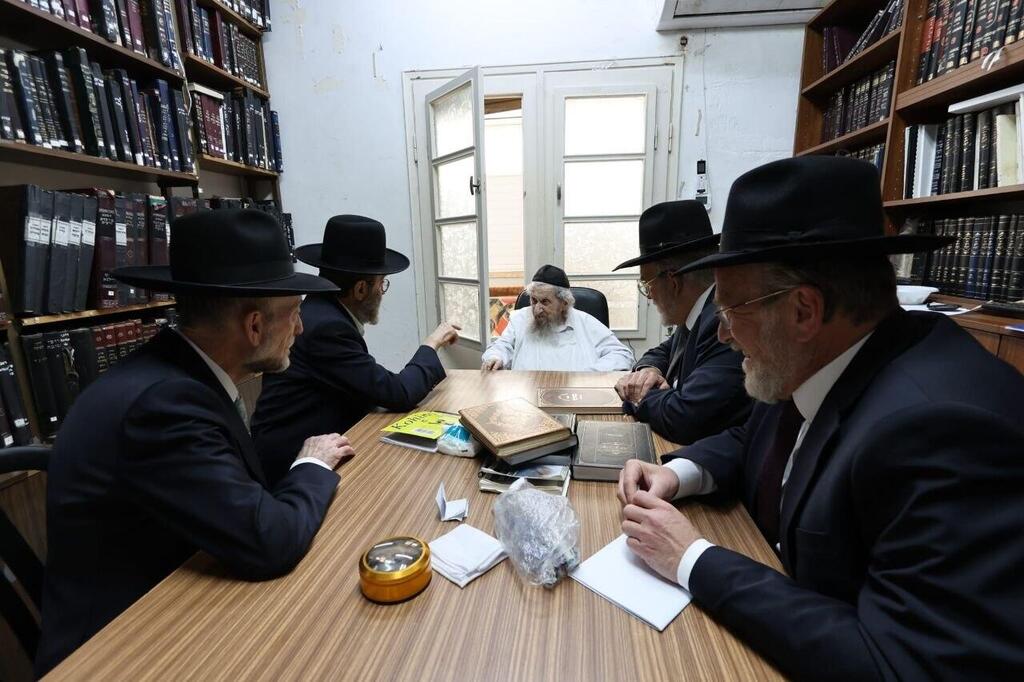
Rabbi Landau made the remarks following consultations at his home with party lawmakers, after Prime Minister Benjamin Netanyahu and his associates conveyed to Haredi parties that there is currently no viable path to passing the proposed military draft exemption law in its current form.
In a statement, Degel HaTorah said that “contrary to various reports, there is full unity and cooperation between Degel HaTorah and Shas regarding the status of yeshiva students.”
Degel HaTorah, led by MK Moshe Gafni and holding four Knesset seats, is effectively joining the position of the Gur Hasidic leadership and Housing Minister Yitzhak Goldknopf, who have argued that “Netanyahu cannot be trusted and there is no longer a bloc.” Senior party officials said before the meeting that they were serious about their threats.
“The ceremony is over,” senior party figures said. “Without a draft law, we have nothing to do here. We intend to disrupt legislative proceedings in the Knesset in order to dissolve it immediately and head to elections.”
Minutes after Degel HaTorah’s statement, opposition parties Yisrael Beiteinu and Yesh Atid — now politically aligned with former Prime Minister Naftali Bennett’s emerging bloc — submitted a bill to dissolve the Knesset. The legislation is expected to be placed on next week’s agenda.
Following Rabbi Landau's announcement, Degel HaTorah lawmakers are also expected to support dissolving parliament, significantly increasing the likelihood of elections in September.
Earlier this week, Gafni met with Ido Norden, Prime Minister Netanyahu’s chief of staff. During the meeting, Gafni said he believed the rabbis would ultimately approve the draft exemption legislation, while Norden expressed concern that the coalition lacked the votes necessary to pass it.
At the beginning of the week, Haredi parties asked Netanyahu to clarify whether a majority existed to pass the draft exemption law, so their rabbis would not endorse legislation that would ultimately fail. Netanyahu reportedly informed them yesterday that there was no majority.
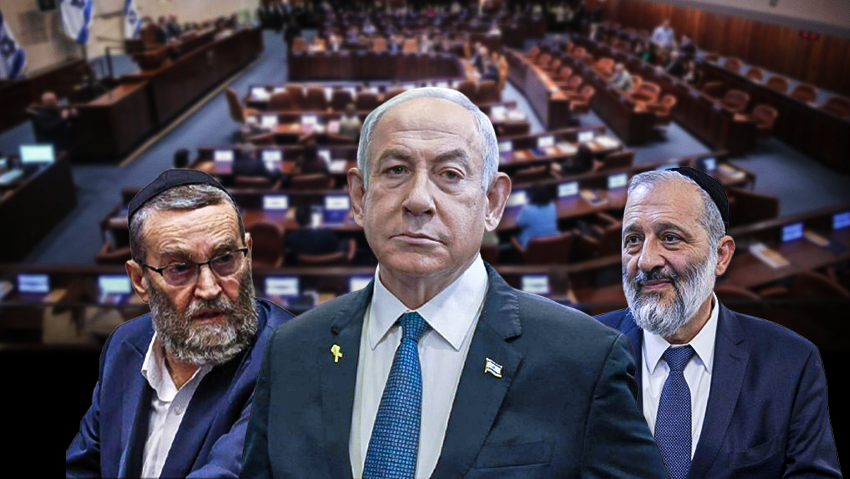
(Photo: Reuven Castro, Amit Shabi, Knesset Spokesperson’s Office)
From Netanyahu’s perspective, he does not want to advance the legislation at this stage. Beyond concerns that some coalition lawmakers may vote against it because they have “nothing to lose,” passing the law close to an election campaign could politically damage Likud. In addition, even if the law were passed before elections, there would not be enough time to demonstrate its effectiveness to voters before they go to the polls.
Likud spokesman Guy Levy told the Haredi radio station Kol Barama on Tuesday: “There are people who see the cliff in front of them and instead of stopping, they run toward it faster. We did everything possible to pass the draft law. We fought tooth and nail to protect the Haredi public.”
Shas chairman Aryeh Deri is now reportedly attempting to broker a compromise and agree on an election date. At present, the threat to dissolve the Knesset is coming primarily from Degel HaTorah.
Party officials fear that failure to pass a draft exemption law could depress voter turnout among their supporters.
Push to pass judicial overhaul legislation
With the opening of the Knesset summer session earlier this week, Netanyahu’s associates said one factor in determining the election date is the desire to complete legislation related to judicial reform.
The current Knesset session is scheduled to end in late July, though the final session of the 25th Knesset will conclude earlier depending on when elections are called. If Netanyahu opts for elections in early September, the Knesset would likely dissolve in early June. If elections are scheduled for October, legislative activity could continue through July.
Because of the tight timetable, coalition leaders have prioritized a series of bills, most involving changes to the judicial system and the civil service bureaucracy that are considered important to the right-wing base. However, the legislative calendar is unlikely to allow completion of most of them.
The coalition’s top priority is legislation splitting the role of the attorney general into two positions — a legal adviser and a separate chief prosecutor — sponsored by Religious Zionism MK Simcha Rothman, chairman of the Knesset Constitution, Law and Justice Committee.
Critics within the legal establishment argue the proposal would weaken the office of the attorney general, while coalition leaders are expected to push aggressively to complete the legislation before elections are called.