


Staff Sgt. Tamar (a pseudonym), a 22‑year‑old lone soldier, has been receiving treatment at the Mahut Center for about a year. From the age of six she experienced severe abuse and violence from her father.
“It started as ‘discipline,' a slap here and there. You did something wrong? You need to get hit for it. And it turned into a situation where Dad would take his nerves out on us,” she shared candidly about the treatment she and her two brothers endured in childhood. “I grew up in a complex, abusive home.”
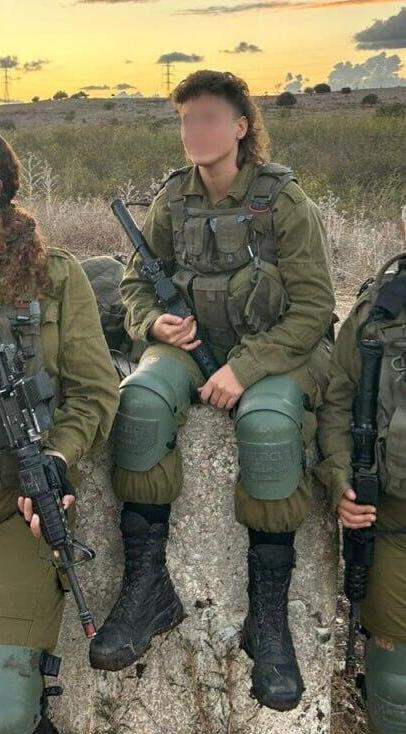
Tamar’s father tried to hide his aggression toward the children from their mother and took advantage of nights when she was away working shifts. “He would beat us to a pulp. Sometimes I’d come home and he’d leave my bag outside the door, send me to sleep in the street. Every night in the street I prayed they would murder me; every morning when I woke up I said that if I’m awake, I keep going. I went to school—anything to move forward,” she said. “My brother would get beaten a lot—I saw how hard and painful it was for him. We suffered together; we would cry and fall asleep together. I felt my father was getting what he wanted. What kept me going was keeping my soul strong. I wouldn’t let him mess me up for life.”
'When I was 14 my father tried to kill me'
The harsh memories of the abuse over the years still follow her today. “When he decided to, he forbade me to drink or eat, to shower or sleep. He’d yank me out of bed, throw me on the floor, and force me to stand by the light switch all night,” she recalled. “He would throw chairs at us, bang our heads against the walls, kick us, play soccer with us from wall to wall.”
One tragic moment that nearly cost her her life remains especially vivid. “When I was 14 my father tried to murder me,” she shared. “My mother came in at exactly the right moment and grabbed his hand. I was having a panic attack, I took a bag and left. Until then he had thrown me out of the house—this was the first time I ran away.” That same year, Tamar came out to her parents. “My father told me I was sick and that it would pass,” she remembered.
For two months she drifted among friends’ homes or slept in a hiding place at school, until she returned to live at her parents’ home, which she left at 18. She then moved into the Beit Hachi Achi association home in central Israel and began a pre‑military preparatory program. After that, she enlisted in the IDF as a lone soldier in the Search and Rescue unit. “I had zero doubts—years ago I knew I’d be a soldier,” she said. “My whole life I survived and fought, so what is being a soldier in the IDF for me? Easy.”
About a year ago she learned about the Mahut Center through a flyer at the base where she serves and decided to try the treatment offered to service members who were harmed during their service or beforehand, in a military or civilian context.
Tamar received individual therapy and took part in a self‑defense/krav maga workshop. “I came to Mahut to learn how to protect myself properly,” she said. “Once a week, no matter what was going on, I would come. I had an amazing therapist—I really connected with her. She helped me a lot.”
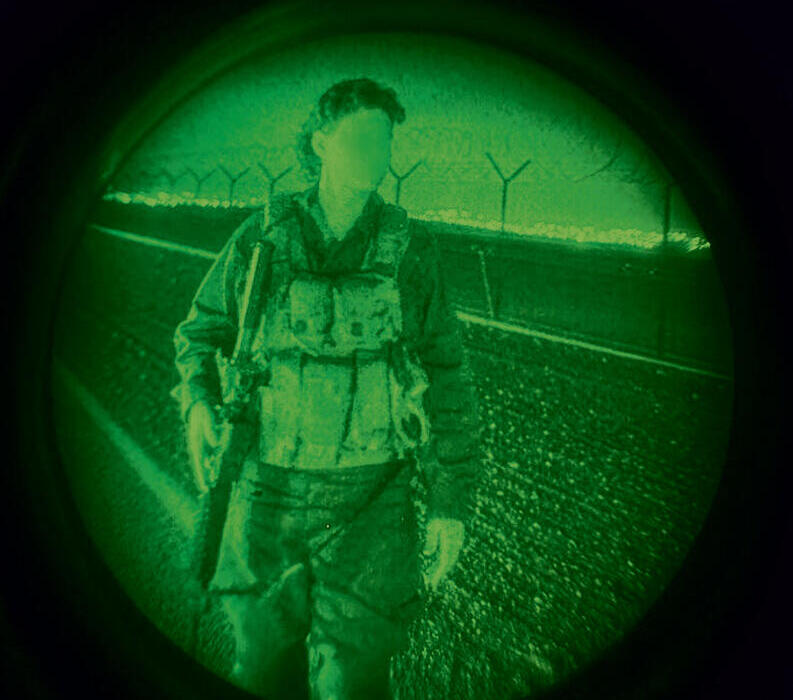
'My whole life I survived and fought, so what is being a soldier in the IDF for me? Easy.'
She said the five-session krav maga workshop also played a significant part in her process. “Girls came to every training session, each of them having gone through what she’d gone through. There were talks beforehand, processing afterward, and professional, available staff,” she recalled. “A really big, warm support system—it felt very safe to be there. I left feeling that I knew more, was stronger, and could protect myself better.”
'There’s nothing stronger than choosing to treat yourself'
Tamar wants to pass on a message to anyone who finds themselves in distress. “I wish for every woman who understands where she is—because a lot of times we’re in denial that what’s happening to us is our fault—to choose herself,” she said. “There is no better place to share and receive real, professional help than the Mahut Center. They want to take care of you and help you—a framework that protects you, supports you and helps you. You are not alone; many people go through many things—the question is how to get through them. There’s nothing stronger than choosing to treat yourself.”
The Mahut Center, affiliated with the Chief of Staff’s Gender Affairs Advisor Unit, is a center for treatment, assistance and support for victims of assault serving in the IDF. In addition to individual and group therapy, the center offers workshops such as therapeutic yoga and krav maga intended to support patients. The center also provides reserve‑duty legal advisers who give professional opinions, explain and reflect the implications of filing a complaint and criminal proceedings.
One trend emerging from the data is a significant rise in complaints about a harassing atmosphere in military units—that is, crude and sexual discourse within the unit itself. While in the first half of 2024 there were 133 complaints of this type, in the first half of 2025 there were 275 complaints concerning a harassing atmosphere.
The center serves both men and women. According to the data, in the first half of 2025 about one‑fifth of those treated there were men. “What’s different between men and women? Harm is harm,” said Mahut commander Maj. Hadas Matityahu. “On the broader level, men turn to us less. In my opinion, it’s because there’s fear or a feeling of less social legitimacy. The global mindset is that women are harmed. It’s important for us to emphasize this: the door is open for men too. There are male therapists, groups designated for men, the door is open to both genders.”
Importance of treatment within a military framework
Matityahu sees paramount importance in ensuring that treatment for service members who were assaulted during their service, or who are serving while coping with prior harm, is provided by people in uniform within a military framework, “out of broad responsibility toward those in uniform.”
“We will receive them whether it happened in military circumstances, civilian ones, or in the past,” based on the understanding that encountering the military system can bring up difficulties stemming from the harm, she said.
“We provide care to everyone who comes to us, regardless of why, or whether he or she wants to take action against the perpetrators," she added. "Therapy is not conditional on filing a complaint. Someone who was assaulted—their trust was damaged. When they come to the Mahut Center, we believe them, take them extremely seriously, give them care and the best possible support. We work on restoring trust in the world and in the military system. It is the army’s responsibility to provide this response; it’s not for nothing that this is a military center.”