

A series of maritime incidents and reported explosions in the Persian Gulf heightened tensions between Iran and the United States on Friday, even as President Donald Trump said Tehran was seeking negotiations and Washington was in no hurry to reach an agreement.
Iran's Islamic Revolutionary Guard Corps (IRGC) claimed that four oil tankers had struck naval mines and caught fire in the Strait of Hormuz after ignoring Iranian navigation warnings, while British maritime authorities reported separate incidents involving vessels struck by unidentified projectiles.
Gallery
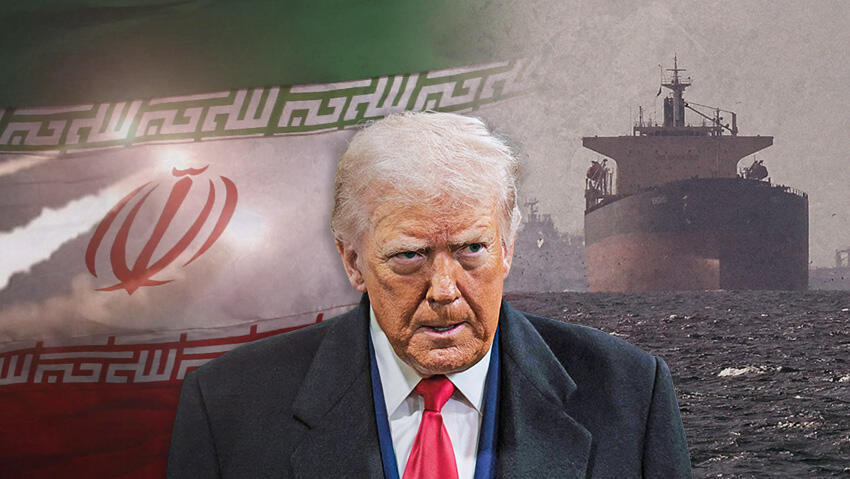
Iran claims four tankers hit mines as US weighs new strikes
(Photo: Anna Moneymaker/ AFP, Shutterstock, Reuters/ Stringer)
The United Kingdom Maritime Trade Operations agency (UKMTO) said a vessel was hit on its port side by an unidentified projectile approximately 40 nautical miles (74 kilometers) south of Iran's Lavan Island in the Persian Gulf. The impact sparked a fire on board, but the crew was reported safe and no environmental damage had been reported. The vessel's identity and the party responsible for the incident remained unknown.
In a separate report, UKMTO said an oil tanker had been struck by an unidentified projectile while leaving the Strait of Hormuz. The agency did not identify those responsible for the attack.
Iran claims four tankers hit mines after ignoring warnings
Iran's Revolutionary Guards said four oil tankers had caught fire following explosions in the strategically vital waterway. According to the IRGC Navy, the fourth tanker was carrying more than two million barrels of crude oil when it struck a naval mine, triggering a powerful explosion and fire.
Iranian officials claimed the tankers had attempted to cross the strait using routes not authorized by Tehran and that at least some had ignored repeated warnings from Iranian forces. Iranian state media also reported that some vessels had switched off their navigation and tracking systems before entering dangerous areas. The claims could not be independently verified.
Oil tanker reportedly on fire in the Strait of Hormuz, in footage released by Iran on Friday


It remained unclear whether the vessels mentioned in the British maritime warnings were among the four tankers cited by Iran's Revolutionary Guards.
Meanwhile, Omani authorities said they had evacuated 25 crew members from a Panama-flagged tanker that was attacked and caught fire near the coast of Musandam governorate, close to the Strait of Hormuz. Authorities did not immediately establish whether the vessel was among those mentioned by Iran.
The latest incidents underscore the continuing threat to commercial shipping through the Strait of Hormuz, one of the world's most important maritime chokepoints. Under normal circumstances, roughly one-fifth of global oil supplies pass through the narrow waterway connecting the Persian Gulf with the Gulf of Oman.
Since the war began in late February, Iran has intensified its efforts to control shipping through the strait, repeatedly warning that vessels attempting to cross without its authorization risk being attacked.
Trump: ‘They want to talk, we have time’
Against the backdrop of escalating maritime tensions, Trump said Friday that diplomatic contacts with Tehran were continuing and emphasized that Washington was under no immediate pressure to reach an agreement.
"There are talks. They want to talk. They keep talking," Trump told reporters at the White House. "We have time, frankly."
Trump described the conflict with Iran as "not a typical war" and claimed it was not imposing significant costs on American taxpayers. He also repeated his assertion that U.S. military operations had eliminated Iran's nuclear threat.
"I spent a lot of money in order to get rid of a nuclear weapon, which we've done," he said.
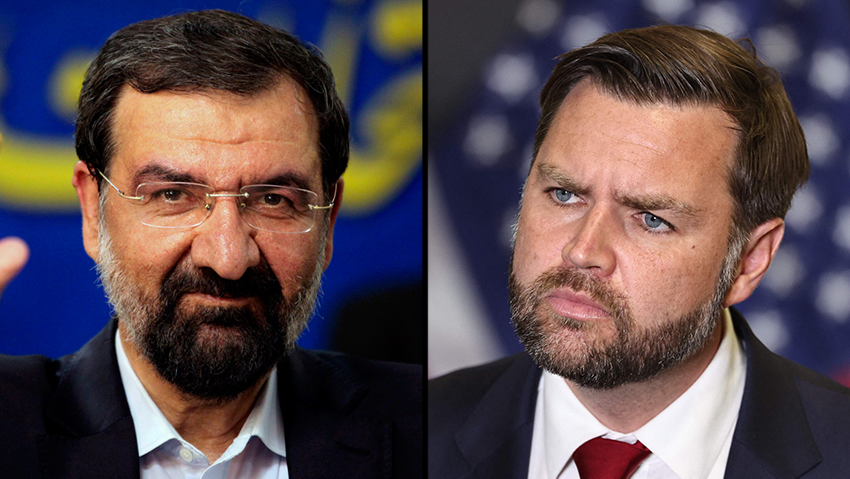
Iranian Supreme National Security Council Secretary Mohsen Rezaei and US Vice President JD Vance. A last attempt at a deal?
(Photo: AP, Fadel Senna/ AFP)
Earlier Friday, in an interview with Kansas City radio station KCMO, Trump expressed optimism that the confrontation would soon end. "It will end soon," he said, without explaining how an agreement might be reached.
The president reiterated that Washington's central demand for ending the conflict remained a guarantee that Iran would never possess nuclear weapons.
His remarks came just days before the U.S. midterm elections, scheduled for Tuesday, November 3. Trump has previously indicated that he would not order additional strikes against Iran before the elections, but has stopped short of ruling out renewed military action afterward.
According to a report published by the Associated Press this week, U.S. officials warned several Middle Eastern countries and regional allies to prepare for the possibility of renewed strikes against Iran following the elections.
The warnings also addressed the prospect of Iranian retaliation, potentially targeting energy facilities and other critical infrastructure across the region. Two diplomats briefed on the discussions stressed, however, that Trump had not made a final decision on whether to resume military operations.
Qatar pushes for a deal as fears of renewed US strikes grow
As tensions mounted in the Gulf, diplomatic efforts to avert another round of fighting continued Friday with the arrival of a Qatari delegation in Tehran.
According to Iran's official IRNA news agency, the delegation was headed by a senior adviser to Qatar's prime minister and was expected to meet senior Iranian officials to discuss bilateral relations and regional developments.
A source familiar with the negotiations told Reuters that Qatar's mediation efforts were being coordinated with the Trump administration.
Qatar had presented Iran with a draft agreement on Sunday aimed at ending the war, but a senior Iranian official dismissed the proposals as unacceptable and said Tehran would not change its position on the nuclear issue.
The main obstacle remains the sequence of steps toward a possible agreement. Washington insists that Iran's nuclear program be addressed from the beginning of negotiations, while Tehran is demanding that the United States first lift its blockade of Iranian ports and remove sanctions restricting Iranian oil exports.
Iranian Foreign Minister Abbas Araghchi said Wednesday that Tehran remained in close contact with mediators and was reviewing proposals that could help advance an Iranian seven-day plan for ending the conflict. He stressed that Iran was still giving diplomacy a chance, despite the substantial differences separating the two sides.
The mediation efforts have also been accompanied by a more direct American approach. According to reports, U.S. Vice President JD Vance sent a letter to Mohsen Rezaei, secretary of Iran's Supreme National Security Council, as Washington explored possible diplomatic channels.
Iranian authorities confirmed receiving the letter but said they had not yet responded. U.S. media reports indicated that the correspondence concerned the possibility of renewing negotiations, potentially establishing a framework for direct talks between Washington and Tehran.
Trump, however, offered a different explanation Thursday, saying the purpose of the outreach was to discuss the delivery of medical supplies and humanitarian assistance to Iran.
With Qatar pressing ahead on the diplomatic front and Washington weighing its options after the midterm elections, the gap between the two sides remains substantial. The tanker fires and explosions reported in the Strait of Hormuz have added another dangerous complication to negotiations already overshadowed by the possibility of renewed U.S. military action.