

The U.S. Navy’s expanding blockade of Iranian ports is triggering a fast-moving confrontation at sea, as Washington moves to disrupt Tehran’s long-running reliance on a covert network of oil and cargo vessels known as the shadow fleet. The system, built over more than a decade to bypass sanctions, is now facing its most sustained operational challenge yet.
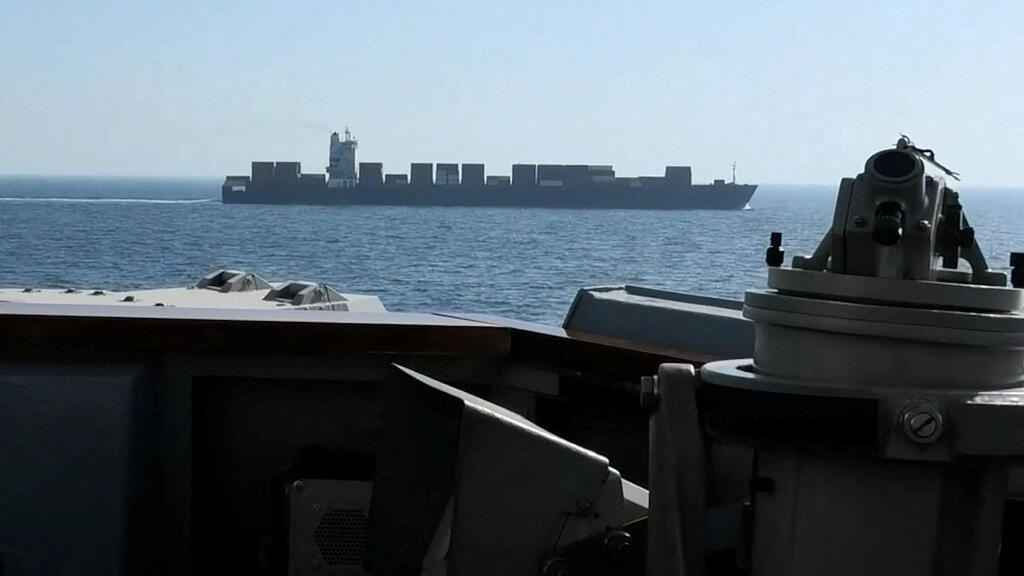
At the center of the latest escalation is the seizure of the Iranian cargo vessel TOUSKA, which was intercepted by U.S. forces after what Washington described as repeated warnings to comply with restrictions on movement in and out of Iranian ports. U.S. Central Command released footage showing Marines descending by helicopter onto the vessel as part of the operation, underscoring the increasingly direct enforcement approach being taken in the region.
US Seizure of Iranian Vessel TOUSKA


The ship’s seizure comes amid a broader blockade ordered by U.S. leadership aimed at tightening pressure on Iran over its maritime and energy exports, particularly through the strategically critical Strait of Hormuz and adjacent waters in the Gulf of Oman. U.S. officials say the operation is designed to prevent sanctioned cargo flows and force Tehran back to negotiations over regional maritime access and security arrangements.
Iran has condemned the move, accusing Washington of “piracy” and warning of retaliation. Iranian officials say the interception of commercial vessels violates international agreements and risks destabilizing ongoing diplomatic discussions. Tehran has signaled that the incident involving the TOUSKA could have direct consequences for already fragile talks with the United States and its intermediaries.
The confrontation is unfolding against the backdrop of a broader struggle over Iran’s so-called shadow fleet — a global network of aging tankers and cargo ships used to transport oil and goods while avoiding sanctions. These vessels often operate under multiple flags, obscure ownership structures, and frequently manipulate or disable their Automatic Identification System (AIS), the global tracking mechanism required for maritime safety.
According to maritime intelligence firms, many of these ships routinely “go dark,” switching off transponders or transmitting false positions in order to conceal their true location. Some vessels even spoof AIS signals, broadcasting misleading coordinates that suggest they are docked in one country while physically operating elsewhere. Others conduct ship-to-ship transfers at sea to obscure the origin of their cargo.
This system has enabled Iran — often in coordination with networks involving Russian and Venezuelan-linked shipping — to continue exporting oil despite international restrictions. Industry estimates suggest hundreds of vessels worldwide participate in similar sanction-evading operations, with a significant portion linked to Iranian crude flows.
However, the U.S. naval presence in and around the Strait of Hormuz appears to be disrupting those patterns. Shipping data trackers and defense analysts report that several vessels attempting to enter or exit the Persian Gulf in recent days have reversed course after encountering U.S. patrols or receiving warnings. In at least some cases, sanctioned ships appear unable to safely exit the region at all.
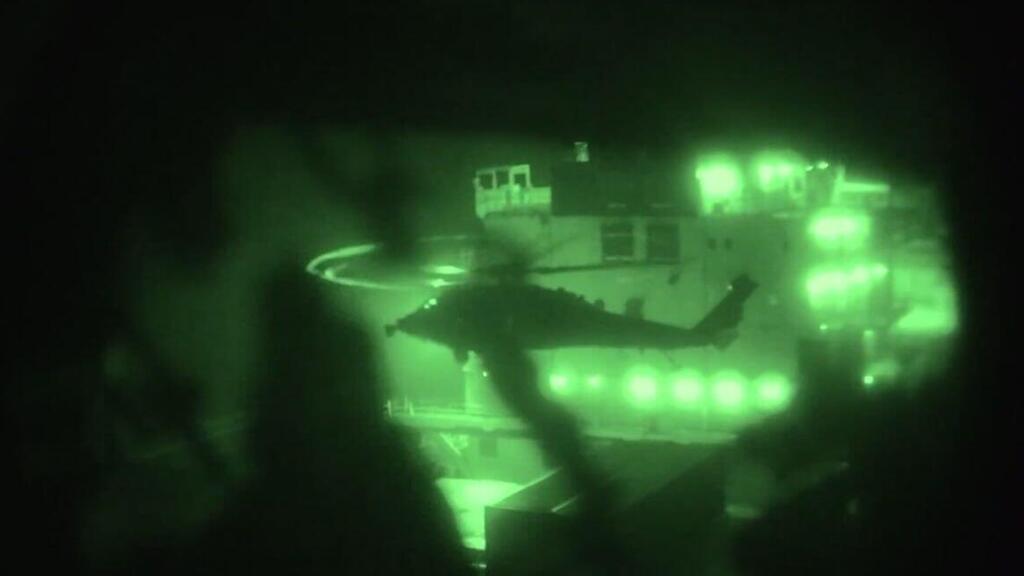
Marines take control of Iranian cargo ship
(Photo: CENTCOM)
The situation has created what analysts describe as a maritime “cat-and-mouse” dynamic, in which shadow fleet operators probe enforcement boundaries while U.S. forces attempt to identify and intercept suspicious vessels in real time. The challenge for naval forces is compounded by the sheer volume of traffic through the region and the difficulty of distinguishing legitimate commercial shipping from sanctioned or disguised operations.
One of the central enforcement problems is attribution. Ships frequently change names, ownership records, and flag registrations, making identification difficult even with satellite tracking and intelligence support. Analysts say some vessels have operated under multiple identities over their lifespan, complicating long-term monitoring.
At the same time, the environmental risks associated with the shadow fleet are drawing increasing concern. Many of the tankers involved are aging, poorly maintained, and operate outside standard insurance frameworks. Maritime experts warn that a major accident involving one of these vessels could result in a large-scale oil spill with severe ecological consequences across the Gulf and surrounding coastlines.
Estimates from maritime risk assessments suggest that a single major failure could contaminate hundreds of miles of coastline and trigger economic and environmental damage comparable to or exceeding historic disasters such as the Exxon Valdez spill. Experts warn that the combination of aged infrastructure and covert operations creates a “ticking risk profile” for the region.
Despite enforcement efforts, analysts say the shadow fleet remains highly adaptive. Operators frequently adjust routes, switch identifiers, and exploit gaps in surveillance coverage. Even with increased satellite monitoring, drone reconnaissance, and naval patrols, complete coverage of maritime activity in the region remains difficult.
The current U.S. blockade, however, marks a shift in enforcement intensity. With warships positioned along key maritime corridors and expanded interception authority reportedly in place, Washington appears to be moving toward a more active containment strategy rather than passive monitoring.
Still, questions remain over how far enforcement will go, particularly in cases involving neutral-flagged commercial vessels or disputed cargo origins. Legal and logistical challenges persist over detention procedures, port access for seized ships, and coordination with regional partners.
For now, the seizure of the TOUSKA has become a focal point in a rapidly intensifying maritime confrontation. As shadow fleet vessels continue to test the limits of the blockade, the waters around Iran’s coastline are emerging as a high-stakes zone of enforcement, deception, and geopolitical pressure — with global shipping, energy flows, and regional stability increasingly caught in between.