

White House Middle East envoy Steve Witkoff is expected to arrive in Israel on Tuesday, this time without Jared Kushner, President Donald Trump’s son-in-law. He is set to meet Prime Minister Benjamin Netanyahu, IDF Chief of Staff Lt. Gen. Eyal Zamir and Mossad Director David Barnea.
The visit comes against the backdrop of contacts with Iran. Iran’s Tasnim news agency reported earlier that Islamic Republic Foreign Minister Abbas Araghchi is expected to meet Witkoff in the coming days. The meeting is likely to take place in Turkey, and ahead of it Witkoff wants to hear Israel’s key positions for the negotiations — namely, what Jerusalem considers a good deal with the Iranians.
Gallery
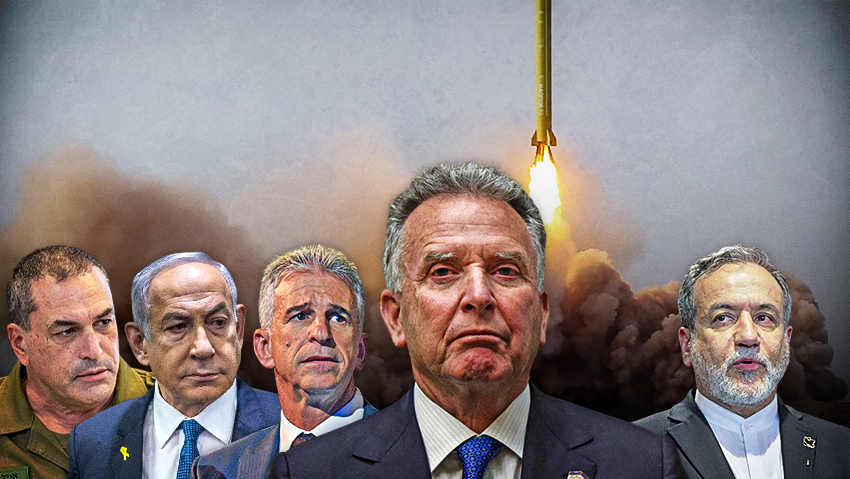
(Photo: Yoav Dudkevitch, IDF Spokesperson, REUTERS/Evelyn Hockstein, AP/Hassan Ammar, Haim Goldberg/Flash 90)
Israel also has red lines on the nuclear issue, including a demand for ‘zero enrichment’ and the removal of uranium from Iranian territory. But the main concern is that the Americans may ultimately settle for an agreement that addresses only the nuclear issue, while sidelining two others: Iran’s ballistic missiles and its campaign of terror and support for proxy forces.
Israeli officials believe Iran’s missile program is becoming an existential threat that must be addressed, and expect the Americans to insist on reducing missile capabilities, particularly their range. If Iran commits not to developing long-range missiles, the threat to Israel would diminish. But Iranian officials are hardening their positions and are unwilling to discuss the issue. The same applies to Iran’s export of the Shiite revolution.
According to Israel, the mandate given by Iran to its negotiating team deals only with the nuclear issue, a move seen in Jerusalem as a poor starting point. Witkoff is opposed to a military strike and is viewed in Israel as pushing an isolationist line that distances the United States from military confrontations. There is concern he could ‘fall into a trap’ set by the Iranian team. The key question is how determined Trump is to go all the way.
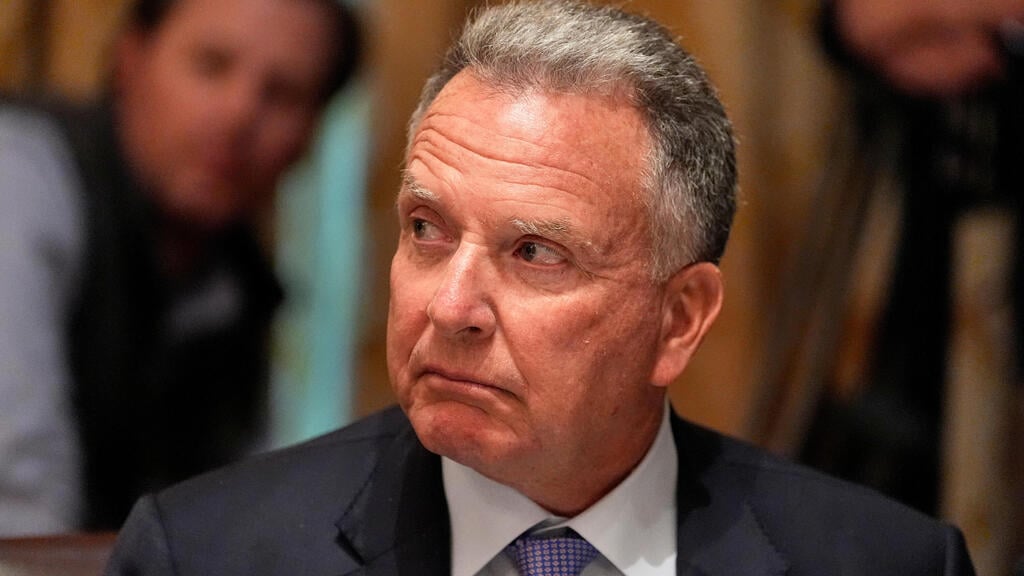
Steve Witkoff
(Photo: AP Photo/Alex Brandon)
Some in Israel believe the die has already been cast, and that Trump is effectively working to build legitimacy for military action. He would argue that negotiations have been exhausted and that the Iranians are being obstinate. This assessment is based in part on the massive naval force Trump has deployed to the region, at a cost of tens of billions of dollars — far more than preparations for action in places such as Venezuela.
U.S. officials would not, in Israel’s view, take such steps if they did not believe a military option was on the table. The problem, however, is that the military likely does not see a ‘silver bullet’ — one or two strikes that would topple the regime — and instead anticipates a longer campaign. The scale of the armada sent to the region and the apparent U.S. resolve suggest Washington is not deterred by that prospect.
Within days, it should become clear whether Iranian officials understand behind closed doors how precarious their position is, and that they have no choice but to ‘drink the poisoned chalice,’ or whether they will once again posture and assume Trump will back down.
Another issue expected to be central to Witkoff’s visit is the deterioration of the security situation in the Gaza Strip. Over the weekend, the IDF killed at least three militants in the Rafah area after eight were identified emerging from a tunnel in eastern Rafah. Gaza civilians were also hurt in the wave of strikes, and Nikolay Mladenov, head of the Peace Council, condemned both sides and called for restraint.
The IDF has briefed that Hamas is growing stronger and making significant money from an unusually large flow of aid trucks that the terror group is stealing. U.S. officials argue that this is precisely why the plan for Gaza must move to Phase Two. Israel has allowed the Rafah crossing to reopen, and on Monday civilians entered and exited for the first time, but several critical stages of the plan remain. Envoy Witkoff wants to ensure they are carried out.