

U.S. President Donald Trump said Monday he is considering renewing “Project Freedom,” the short-lived American effort to help move ships through the Iran-blocked Strait of Hormuz — but warned that if he restarts the operation, it will come in an expanded capacity.
In a phone interview with Fox News, Trump said he had not made a final decision on whether to revive the mission, which he first announced last week and then paused roughly a day later as peace talks with Tehran continued. The original operation was focused on escorting vessels through one of the world’s most important shipping routes, but Trump said a renewed version would go beyond that.
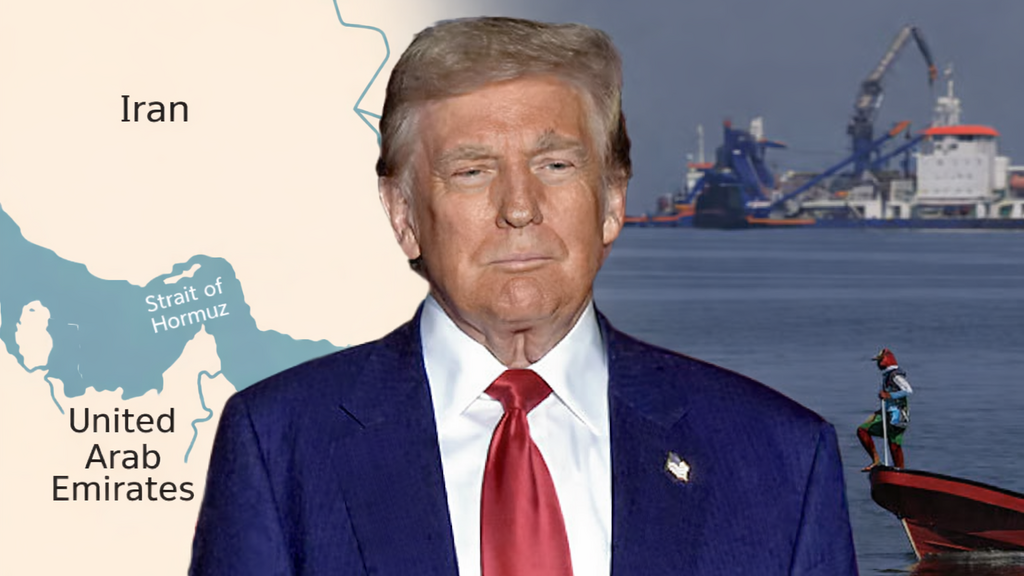
If restarted, Project Freedom would “only be a piece” of a larger military operation, Trump said.
The comments mark a renewed threat of escalation around the Strait of Hormuz, where Iran’s blockade has left commercial vessels trapped and raised fears of a broader confrontation. The narrow waterway is one of the world’s most critical energy shipping corridors, and any military operation there carries significant economic and security risks.
Trump first launched Project Freedom as an effort to guide ships safely through the strait, describing it as a way to assist vessels caught in the crisis. But the operation was quickly put on hold as Washington pursued a possible agreement with Tehran.
Those talks have not produced a deal. Trump told Fox News that negotiations with Iran are continuing, but he claimed the Iranian leadership is “going to fold” — despite Tehran showing no public sign that it is prepared to accept Washington’s demands.
Asked whether he could still work with the current Iranian regime, or whether another layer of leadership would need to be removed, Trump replied: “I will deal with them until they make a deal.”
The president also said Iran had told US negotiators that Washington would have to retrieve enriched uranium “nuclear dust” from damaged Iranian facilities because the material was buried too deep for Tehran to access. Trump said he did not know how the United States would enter Iran to remove it, but insisted that Iran would never be allowed to obtain a nuclear weapon.
Trump’s latest comments came after he sharply rejected Iran’s response to a US proposal to end the war. In a Truth Social post on Sunday, he wrote: “I have just read the response from Iran’s so-called “Representatives.” I don’t like it — TOTALLY UNACCEPTABLE! Thank you for your attention to this matter. President DONALD J. TRUMP.”
Iran pushed back Monday. Foreign Ministry spokesperson Esmaeil Baghaei said Tehran’s proposal to Washington was reasonable and accused the United States of continuing to make unreasonable demands. He said Iran was seeking to protect its rights and had offered what he described as generous and responsible suggestions.
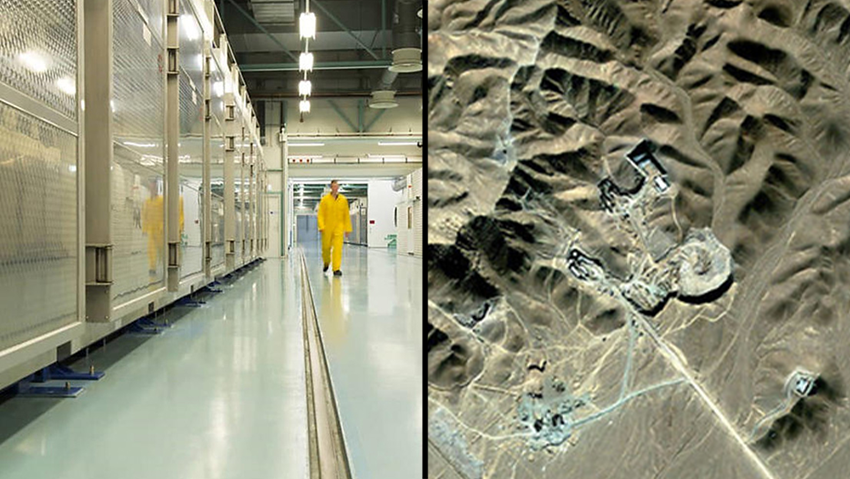
The US is demanding the removal of enriched uranium from Iran
(Photo: AFP)
An Iranian official also responded to Trump’s rejection by saying that “Iran does not draft plans to please the president of the United States.”
The full Iranian response has not been publicly released. According to the Hezbollah-affiliated Lebanese network Al Mayadeen, citing diplomatic sources, Tehran’s counterproposal includes demands for an end to the US blockade and restrictions on oil exports; a ceasefire in Lebanon, which Iran reportedly views as a red line; an immediate end to the war once an agreement is announced; the lifting of US sanctions and the release of frozen Iranian funds; the removal of restrictions on Iranian oil sales; and recognition of Iran’s management of the Strait of Hormuz.
Sources close to the talks told the Qatari outlet Al-Araby Al-Jadeed that Iran’s response was delivered to Washington through Pakistan and included 14 points. Those sources said Tehran showed flexibility by agreeing to discuss the nuclear issue within 30 days, after previously refusing to address it until later stages of negotiations.
Western reports, however, say the United States is demanding far more. Washington is reportedly seeking the transfer of Iran’s entire stockpile of uranium enriched to 60%, along with a commitment that Iran will not enrich uranium for the next 20 years. The US is also demanding that Iran dismantle its nuclear facilities, with the stated goal of ensuring the Islamic Republic cannot develop a nuclear weapon.
In addition, Washington is demanding that Iran significantly reduce its ballistic missile stockpile and end support for its regional proxies, especially Hamas and Hezbollah.
The disagreement leaves the talks at an uncertain point. Optimism heard last week has not translated into a memorandum of understanding or any public breakthrough, and Trump’s remarks suggest Washington is preparing for the possibility that diplomacy may fail.
Project Freedom now sits at the center of that pressure campaign. What began as a limited operation to assist stuck ships through Hormuz may become part of a wider US military move if Trump decides to restart it. His warning that the escort mission would be only one element of a larger operation was aimed at Tehran as much as at the shipping world: the United States may return to Hormuz not just to guide vessels, but to impose a broader response.
For now, Trump is keeping the decision open. But his message was clear: the pause in Project Freedom may be temporary, and Iran’s latest answer has not persuaded him to step back.
First published: 18:52, 05.11.26