

The alleged abuse of a Palestinian detainee by IDF troops at the Sde Teman detention center, along with the resignation of Military Advocate General Maj. Gen. Yifat Tomer-Yerushalmi after video footage from the incident was leaked, is expected to remain a major source of public controversy in the coming months.
This will remain true so long as the five Unit 100 reserve soldiers charged in the abuse case, including two officers, proceed to a full evidentiary trial rather than concluding via plea agreements.
Military Police confront Unit 100 reservists on Sde Teiman base


Indictments were filed earlier this year, and since then, the case has been tied up in preliminary proceedings like evidence disclosure. Since the defendants were released from custody under restrictive conditions, there’s been little urgency from either side to negotiate a plea deal or start the trial.
But that may change after a dramatic twist over the weekend: military prosecutors identified the source of the leaked video, from within their own ranks, which could further delay the main trial. Ynet breaks down the two interconnected sagas that have rocked the military justice system.
Could the case be thrown out, and what would that mean for the defendants?
Unit 100 is an IDF unit, made up mostly of reservists, that was assigned at the start of the war to guard hundreds of Hamas prisoners held at the Sde Teman facility. Among the detainees were members of Hamas’ elite Nukhba force who took part in the October 7 attacks. They haven’t yet been put on trial, partly to avoid putting Israeli hostages at greater risk.
In late July last year, military police raided the base and arrested nine soldiers on suspicion of abusing one of the detainees. The event triggered a public storm, and during protests against the arrests, right‑wing members of the Knesset broke into military bases.
According to the indictment filed in February against five of the soldiers, they violently assaulted a detainee who was bound hand and foot and blindfolded. Prosecutors say the soldiers stabbed him in the buttocks with a sharp object and caused serious injuries. Some of them allegedly used riot shields to block the security cameras. The charges are backed by extensive medical reports, video footage and witness testimony.
The prosecution ultimately dropped initial suspicions of rape or sodomy and settled on serious abuse charges. Still, the case caused a public uproar not just because of what allegedly happened, but because the raid on a military prison took place during wartime. Guards at the facility physically resisted the investigators, and protests escalated into a base breach by supporters, including lawmakers, who opposed the legal proceedings.
Gallery
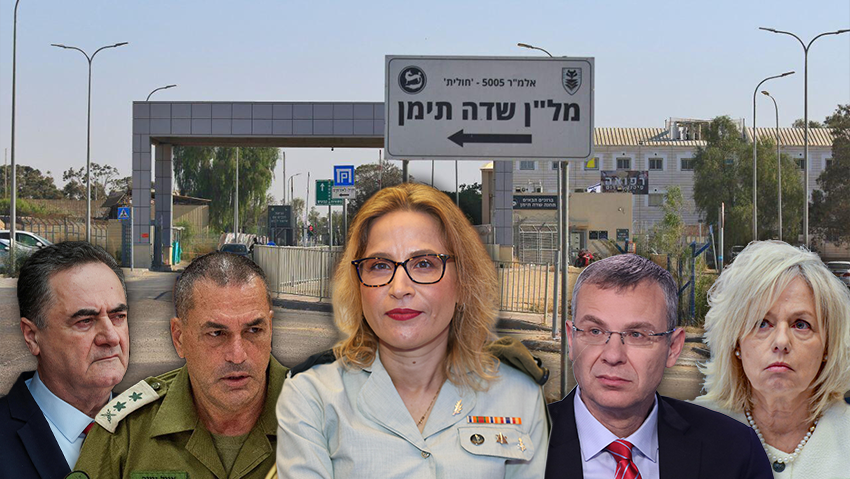
Defense Minister Israel Katz, IDF Chief of Staff Eyal Zamir, Military Advocate General Maj. Gen. Yifat Tomer-Yerushalmi, Justice Minister Yariv Levin, Attorney General Gali Baharav-Miara
(Photo: Meir Even Haim, Rafi Kotz, Avi Moalem, Avigail Uzi, IDF, REUTERS/Ronen Zvulun)
When footage from the incident was leaked and aired by the media, defense attorneys argued the trial should be put on hold, claiming the leak had seriously compromised their clients’ right to a fair process. The issue made its way to the High Court of Justice. At the time, a review committee led by Deputy Military Advocate General Col. Gal Asael concluded that it was impossible to identify the source of the leak, since the video had been widely circulated.
That conclusion was shared with the High Court, Attorney General Gali Baharav-Miara, the defendants, then-IDF chief of staff Herzi Halevi, and then-defense minister Yoav Gallant. All of them accepted that version of events, which has now turned out to be false.
Even so, legal sources familiar with the case say the discovery likely won’t lead to the charges being dropped or the trial being canceled.
“It’s still a strong case, evidence-wise, even though the defendants deny everything,” one source said. “The fact that the leak came from inside the prosecution could help the defense argue abuse of process, or get a lighter sentence if there’s a conviction. In extreme cases, it could even lead to an acquittal if it’s proven that the leak seriously harmed the defendants’ rights or the fairness of the trial.”
“Realistically, the trial would only be canceled if a new advocate general was appointed and brought in a new prosecutor with a very different approach — one that fits today’s political climate and is more favorable to the defendants,” the source added. “That would mark a turning point for the military prosecution, much like what we saw with the police — and the Sde Teman case would be the first sign of that shift.”
The leak: Kosher, but stinks to high heaven
One of the most revealing links between the Sde Teman affair and the leaked video, which was authorized by senior figures in the Military Prosecution, is the preliminary consultation held by Tomer-Yerushalmi with at least six senior officers in her unit. Among other issues, that internal discussion, now being investigated as a possible conspiracy, addressed whether releasing the footage would constitute obstruction of justice or endanger national security.
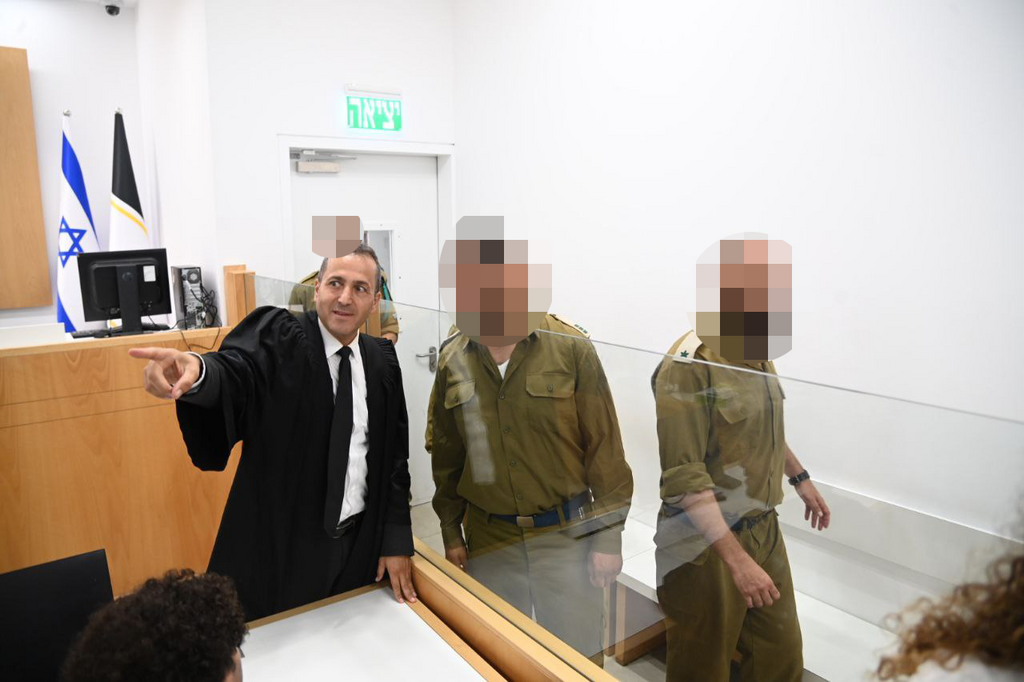
The suspects in court
(Photo: Yair Sagi)
On the face of it, the answer to both questions is yes. The law explicitly forbids releasing investigative materials, especially video evidence, and includes a specific prohibition in cases involving allegations of sexual violence. But in practice, the law is rarely enforced, and such material is often published by the media even before indictments are filed. For that reason, this leak may still fall within the grey zone of legally questionable but not clearly criminal.
As for potential national security risks, it’s assumed the video was cleared by the military censor, and the identities of the involved soldiers were not revealed in a way that would put them at risk of war crimes charges abroad. Still, it’s not a black-and-white issue. In light of the past year’s growing international scrutiny of Israel, the Military Prosecution itself had issued strict guidance against revealing the identities of soldiers who served in Gaza, citing serious legal risks for personnel traveling overseas.
In this case, however, the Military Prosecution itself effectively presented the world with evidence suggesting IDF soldiers committed a war crime. While those involved are protected both by the fact that their identities were not made public and by the ongoing legal process in Israel, which can prevent international prosecution, the decision to leak such material during wartime was still highly unusual. Tomer-Yerushalmi argued it was necessary to counter a political smear campaign targeting the Military Prosecution, and to uphold IDF values like the purity of arms — even in what Israel considers a just war.
During the internal consultation, the unofficial opinion was that the leak would not compromise the investigation or the trial, nor would it harm national security. However, some participants reportedly argued that leaking such a “powerful” piece of evidence crossed a line, and suggested that briefings to reporters would have been sufficient.
There are two more points worth noting about the leak. While Tomer-Yerushalmi did authorize it, instructing that two videos from the detention center be given to the media, she did so under authority granted to her to handle public communications independently. The Military Prosecution has long operated with a degree of autonomy, even in media affairs. It maintains a relatively independent spokesperson’s office that is professionally subordinate to the IDF Spokesperson's Unit, which distributes its statements, but still retains some freedom to engage directly with the press. This area has never been clearly defined in military regulations.
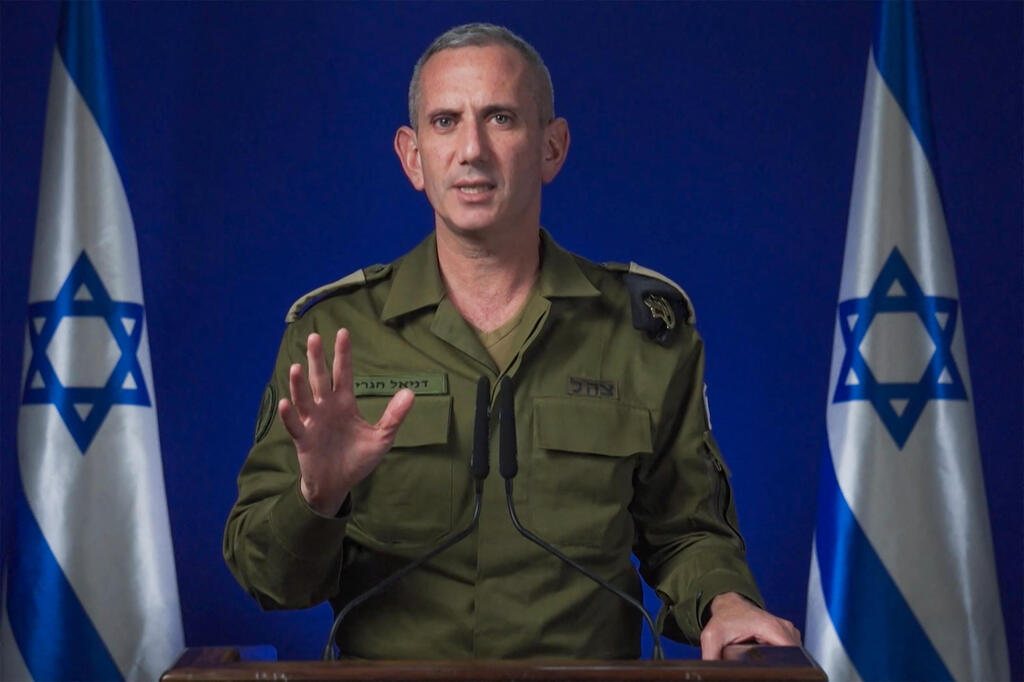
Rear Admiral (res.) Daniel Hagari
(Photo: AFP PHOTO / Handout / Israeli Army)
As a result, the IDF spokesperson at the time of the leak Rear Admiral (res.) Daniel Hagari and then-IDF chief of staff Herzi Halevi were neither informed about the leak nor involved in approving it. Senior IDF sources now tell Ynet the loophole is likely to be closed. “The IDF will formalize this, and there won’t be any more gray areas inviting abuse,” one source said. “It’s true that the Military Prosecution held a consultation in line with an informal practice, and this wasn’t some rogue leak by an anonymous source; it was officially approved.”
“From now on,” the source continued, “we can expect the IDF spokesperson to regain control over the Military Prosecution’s public messaging, despite the inherent problem that the IDF spokesperson represents accused soldiers, military prosecutors and the chief of staff’s office all at once.”
Another claim has emerged — that the video was “doctored.” But sources familiar with the case dispute the claim. The leak included two videos: one showing routine security at the facility and the other showing the violent incident. The clips were apparently combined in editing for clarity, not to distort the events.
A senior military legal source told Ynet, “The attorney general made a bold decision by opening a criminal investigation into Tomer-Yerushalmi, who reports to her professionally. She could have sent the Shin Bet report back to the chief of staff, recommended disciplinary action and dismissal and closed the case. But Baharav-Miara believes this amounts to criminal conduct, plain and simple.”
The cover-up: Gatekeepers’ web of lies
Tomer-Yerushalmi is expected to be questioned by police in the coming days over serious allegations, including obstruction of justice, leaking classified materials and making a false statement under oath. She won’t be the only one: several senior officials who were involved in the leak will also be investigated, and are likely to be dismissed, potentially gutting the leadership of the Military Prosecution.
That would leave just two senior officers still in place: Brig. Gen. Roni Katzir, head of the International Law Department, who is already scheduled to retire; and Col. Gal Asael, Tomer-Yerushalmi’s deputy, who had been expected to succeed her. Asael led the internal review of the leak and concluded there was no way to determine who was responsible, a claim that has now collapsed.
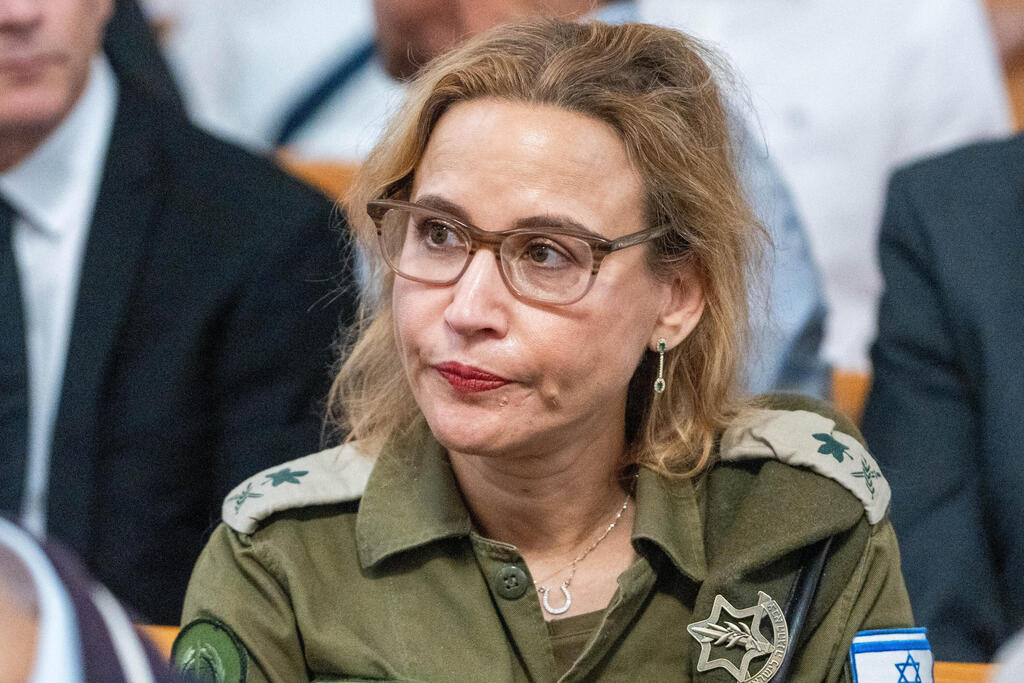
Tomer-Yerushalmi
(Photo: Shalev Shalom)
Asael has reportedly told colleagues in private that he didn’t know the leak came from within the prosecution, and that he too was misled. As such, his promotion is still on the table. However, the chief of staff is now said to favor appointing an outsider to overhaul a system whose handling of the case has further eroded already fragile public trust. Even if a case is filed against Tomer-Yerushalmi, the final charges may be reduced under a plea deal to a lesser offense, possibly breach of trust or the broad charge of “conduct unbecoming.”
The cover-up scandal, involving alleged lies by senior officials over months during wartime, is viewed within the IDF as more damaging and more serious than the leak itself. There is no known precedent for a major general and several top officers misleading two chiefs of staff, the High Court, the accused soldiers and the general public. Former defense minister Gallant made this clear earlier this week, accusing Tomer-Yerushalmi of “deliberately lying” to him when he asked why the leak investigation was stalling.
“Yifat is usually very cautious, chooses her words carefully, even in off-the-record conversations, but sometimes struggles to think a few steps ahead,” said a senior military lawyer who knows her well. “I wouldn’t say she’s a criminal mastermind, but I don’t think she anticipated the leak would spiral into High Court petitions, an internal investigation and a polygraph discovery during a Shin Bet vetting process for someone involved.”
According to the same source, “Yifat is a brilliant legal mind who was marked for senior roles back when she was a captain, serving as assistant to then-military advocate general Maj. Gen. (res.) Menahem Finkelstein during the Second Intifada. But the higher she rose, the more politically entangled her work became. This time, she made a serious misjudgment. The leak came before defense attorneys had even seen the material, so it clearly came from within the prosecution or the military police.”
Some in the military legal community believe the leak may also have been an attempt by top prosecution officials to protect themselves from future investigations by the International Criminal Court in The Hague. According to this theory, the footage was released to show the world that Israel investigates and prosecutes alleged war crimes by its own forces, a strategic message at a time when most IDF investigations since the start of the war have moved slowly. The Military Prosecution had boasted about opening 60 criminal investigations, but only a few have led to indictments or convictions so far.
An outside appointment and a rare legal case
If Tomer-Yerushalmi is indicted, Attorney General Baharav-Miara will have to decide whether she should be tried in a military or civilian court. That decision may now face a legal battle of its own. Justice Minister Yariv Levin sent a strongly worded letter to Baharav-Miara on Friday, barring her from any involvement in the case, citing a “high likelihood” that she herself was involved in the conduct under investigation. Levin said he would appoint another official to oversee any prosecution instead. The High Court is expected to weigh in soon on whether Levin has the legal authority to make such a move.
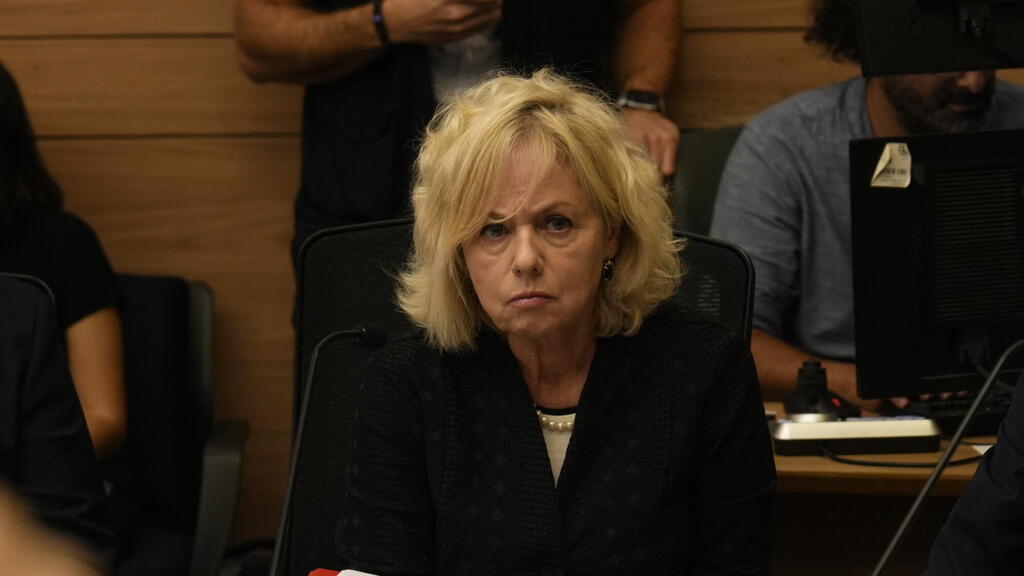
Attorney General Gali Baharav-Miara
(Photo: Alex Gamburg)
Either way, this is clearly a military case. Still, because of its extraordinary nature and the senior rank of the suspect, it may be handled by a special tribunal, possibly involving civilian judges appointed as reserve generals, along with reserve prosecutors, to avoid conflicts of interest.
Most of the IDF’s current judges and prosecutors have either worked with or under Tomer-Yerushalmi and would have to recuse themselves. Stripping her of her rank — she is only the second woman in IDF history to hold the rank of major general — could happen even before a verdict, if a special committee is formed to review the matter, likely chaired by a retired general, as Defense Minister Israel Katz has already demanded.
A replacement for Tomer-Yerushalmi is expected to be appointed in the coming days. On Friday, Katz announced he would meet with IDF Chief of Staff Eyal Zamir to discuss the appointment. In an interview on Channel 14’s The Patriots, Katz said he intends to approve the selection of a new military advocate general from outside the current ranks of the Military Prosecution. Still, it’s likely Zamir will suggest candidates with a background in the system.
One name being floated is Judge Aharon Levi, president of the Haifa District Court, who rose through the ranks of the military justice system. However, legal sources say Levi is likely to decline the offer, not wanting to jeopardize his potential nomination to the Supreme Court by taking on such a controversial role. Another leading candidate is Doron Ben-Barak, a former senior military prosecutor and former chief military censor.
If the appointment stays within the system, it may go to Col. Ofira Elkabets Rotshtein, who was initially considered a natural successor. Another possibility, according to sources involved in the process, is Brig. Gen. (res.) Ilan Katz, a former deputy military advocate general who could take the role on an interim basis — for about a year — to stabilize the system until a permanent replacement is found. Katz, who is aligned with the political right, has recently served as a reserve military defense attorney, making him a potentially acceptable candidate for Defense Minister Katz.