


It has been a tumultuous term as chairman of the Chairperson of Association of University Heads Prof. Daniel Chamovitz. Now, as he prepares to step down, Chamovitz reveals what took place between him and Education Minister Yoav Kish, discusses the brain drain from Israeli academia and questions why tens of millions of shekels promised to help students serving in the military reserves have yet to arrive.
"I was convinced he was calling to ask how he could help," Chamovitz recalled of a phone call from the education minister about two weeks after the October 7 massacre. "By then, it was already clear that we had lost so many people and that students had been kidnapped, and he asked me why I had signed a letter opposing his decision. I was in the middle of a shiva mourning visit for one of our students.
Gallery
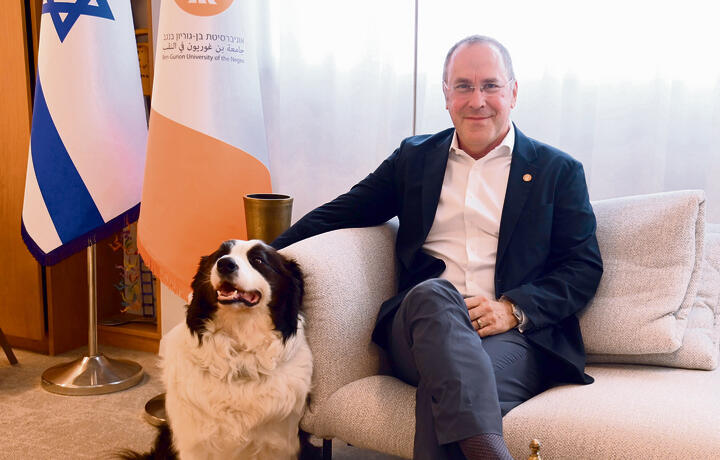
Prof. Daniel Chamovitz: "I said to him, 'Yoav, do you understand what happened here?''
(Photo: Herzl Yosef)
"I said, 'What? Yoav, I thought you were calling to see how the university was doing.' He said, 'No. Why did you sign it?' I said, 'Yoav, do you understand what happened here?' He replied that things had happened throughout the education system. What happened next was not my most presidential moment."
The letter in question was written by the Association of University Heads, known by its Hebrew acronym VERA, and signed by university presidents ranging from those of Bar-Ilan and Ariel universities to the Weizmann Institute of Science and the Hebrew University of Jerusalem.
The letter opposed Kish's attempt to require universities to expel students who expressed support for terrorism, arguing that the universities were already taking action against such students on their own.
"While we are burying our dead, visiting the families of those we have lost and dealing with a very small number of cases involving expressions of support for murderous terrorist organizations, you are advancing such a decision? We have lost confidence in you," the university presidents wrote.
Clashes from the start
Chamovitz said his first conversation with Kish focused on appointments to the Council for Higher Education.
"He told me, 'The only thing I have is appointments.' I tried to explain to him that there are public appointments and scientific appointments to the Council for Higher Education, and that the public appointments are his to make. He replied, 'I want them to be my appointments.'
"What do you mean, yours? Do you know who is a good biologist and who isn't? How can an education minister know which scientist is suitable to serve on the Council for Higher Education?
"When you start making appointments based on loyalty, you begin putting the system at risk. There were people whose appointments we ultimately agreed to because we thought they were qualified. But it makes no sense for a politician to say, 'I want Professor A or Professor B on the Council for Higher Education.' That's never how it worked."
Chamovitz then turned to the main challenges facing Israeli academia.
"Israel has fallen in the OECD rankings for funding per student since 2000, and that's why we're beginning to see a significant brain drain. No university wants to talk about the numbers because they're troubling.
"I'm talking about researchers who already held professorships here, with grants and laboratories, who decide to go on sabbatical and never come back. Over the past three years, Israelis leaving academia in Israel for positions abroad has become more than just an isolated curiosity. It's a worrying phenomenon."
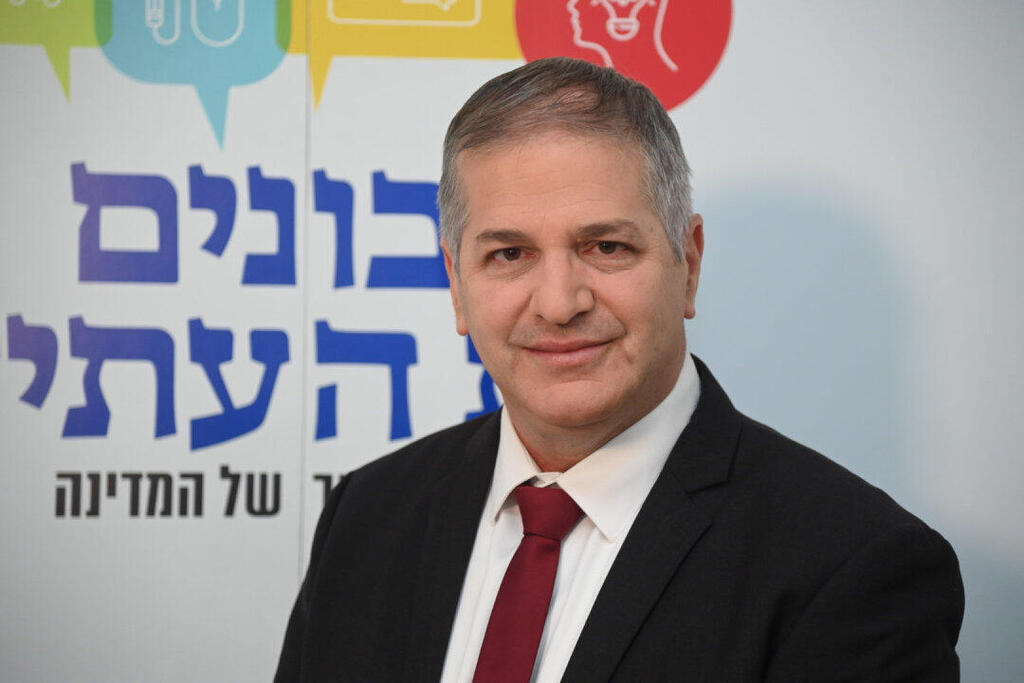
Education Minister Yoav Kish: 'He told me, 'The only thing I have is appointments.''
(Photo: Yair Sagi)
Do you have data on this?
"It's more than just a feeling. You can see it happening. Let's call it social science rather than exact science."
Isn't it natural for an outstanding researcher to receive offers?
"It's happening more than it used to. The Finance Ministry's Budget Department sees higher education funding as an engine of growth for the country. They're doing everything they can not only to protect the higher education budget but even to increase it. But it's not among the government's political priorities."
According to Chamovitz, there is also a threat from elements within the government seeking to restrict academic freedom.
"There's absolutely no doubt that some members of the outgoing government are uncomfortable with universities having the freedom to ask questions. There have been legislative proposals aimed at restricting universities, such as the one introduced by Knesset member Avichai Boaron, which Minister Kish supported. Academia and research thrive when universities have the freedom to operate and conduct research."
He added: "People confuse freedom with loyalty. Around the world, we see forces demanding that universities be loyal, whether in Turkey, Russia, China or certain U.S. states.
"And loyal to whom? Loyal to the ruler. Every time that happens, academia collapses. Look at what happened in Hungary, Turkey, Russia and Germany 100 years ago.
"Academia and research thrive when universities have the freedom to operate and conduct research without thinking about what the ruler wants. When we came under attack, it was because people interpreted statements or positions as disloyalty. Universities are not partisan."
"All the politicians who attack us in the media have no problem calling and saying, 'Hi Danny, this is Knesset member so-and-so. My daughter is amazing. She wants to get into medical school. She's just 50 points short.'"
Ben-Gurion University has seen its share of controversies. One example involved Knesset member Almog Cohen, who barged into a humanities and computer science class taught by Dr. Sebastian Ben Daniel, a lecturer who had made statements against IDF soldiers.
Chamovitz, however, appears unfazed.
"It's very convenient for politicians to attack academia. But there's something really, really funny about it: All the politicians who attack us in the media have absolutely no problem calling me and saying, 'Hi Danny, this is Knesset member so-and-so. Listen, my daughter is amazing. She wants to get into medical school. She's just 50 points short,'" he said.
The missing millions
Three years of war have taken a toll on universities, and especially on students, with military reservists bearing the brunt of the burden.
"As chairman of the Association of University Heads, I was involved in the various assistance programs. The government was supposed to transfer a relatively small sum of 10 million shekels to the universities to help reservists for the 2020-21 academic year, and we never received it. There's also a signed agreement with the chief reserve officer for 80 million shekels, and none of that money has arrived."
According to Chamovitz, although some reservists are frustrated by the situation, most have not dropped out of school. Universities have made accommodations and provided them with benefits.
"They actually performed better academically than the average student," he noted.
Education Minister Yoav Kish responded: "He's quick to point out others' faults while ignoring his own. Since taking office, I have led significant decisions at the Council for Higher Education to benefit combat soldiers and students serving in the reserves, and advanced a historic legislative change giving them priority in admission to higher education. I strengthened academia, particularly in Israel's peripheral regions, worked to expand medical education in Israel and opened four new medical schools within two years.
"Professor Daniel Chamovitz and some of his fellow university presidents opposed every attempt at change for political rather than substantive reasons. They fought against opening additional medical programs, even at the cost of having fewer doctors in Israel.
"When faced with incitement and expressions of support for terrorism on campuses, they took a weak and cowardly approach. At the same time, they fought to keep control of the Council for Higher Education in their own hands.
"They had grown accustomed to education ministers who simply rubber-stamped their decisions.” That era ended when I took office."
"It's amusing that Chamovitz, of all people, gave an interview to Yedioth Ahronoth on Thursday and lectured me about the politicization of academia. There is no limit to the hypocrisy."
The Defense Ministry also responded regarding funding for students serving in the reserves:
The ministry allocated 10 million shekels for the 2025-26 academic year to assist undergraduate students studying STEM subjects — science, technology, engineering and mathematics — who serve in the military reserves and qualify for the A+ classification.
"The ministry instructed universities to submit the necessary approvals and documentation for the financial assistance they have already provided to students. Once the required documentation is received, the transfer of funds can be completed in accordance with the government decision."