


Syria’s government announced Friday evening that it will redeploy forces to the southern region of the country in a bid to end five days of deadly clashes between Druze and Bedouin factions.
The Syrian presidency issued a statement calling for restraint and pledging to send troops to the predominantly Druze city of Sweida. “Our stance is rooted in a commitment to civil peace, not a logic of revenge,” the statement read. “We do not respond to chaos with chaos. Syria belongs to all its citizens—from the Druze to the Bedouins.”
Deadly clashes between Druze and Bedouin factions in Sweida


In Sweida’s last barely functioning hospital, overwhelmed medical staff issued a desperate appeal for international assistance as the morgue reached full capacity amid ongoing violence. “It's not a hospital anymore, it's a mass grave,” a member of the medical staff told AFP in tears.
Dr. Omar Obeid told the French news agency that more than 400 bodies had been brought in since Monday, including those of women, children and the elderly. “There's no more space in the morgue, the bodies are out on the street" in front of the hospital, he continued.
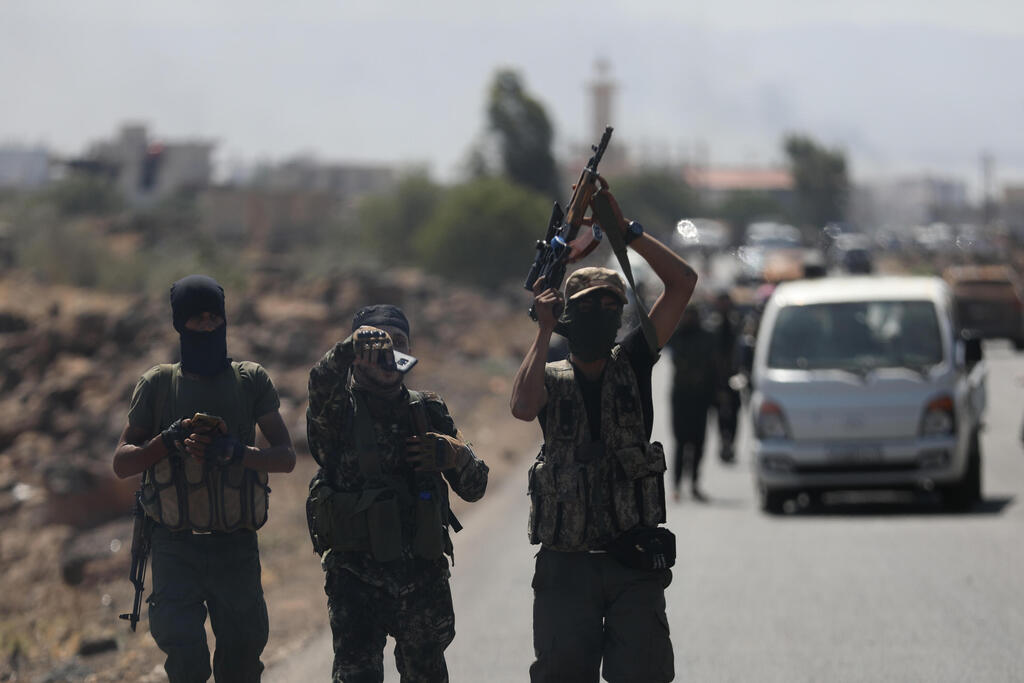
The escalating crisis prompted a dramatic policy shift from Israel, which until now had barred any Syrian military presence south of Damascus. On Friday, Israeli authorities reportedly agreed to allow Syrian forces to enter Sweida, a Druze stronghold, after renewed fighting between local Druze and jihadist Bedouin groups. Over 600 people have been killed since the outbreak of violence in the area.
An AFP correspondent who visited the hospital described hallways filled with the overwhelming stench of decomposing bodies, many unidentifiable due to their condition. “There are only nine doctors and medical staff left, and they are working nonstop,” said a staff member who requested anonymity.

Deadly clashes in Sweida
(Photo: REUTERS/Khalil Ashawi)
The decision to permit Syrian troop deployment marks a significant turn in regional dynamics, as Damascus attempts to reassert control over its fractious southern provinces and curb the rising death toll.
'No water, no electricity'
"The situation is very bad, we have no water and no electricity, medicines are starting to run out," Rouba continued.
"There are people who have been at home for three days and we can't manage to rescue them," she said.

Deadly clashes in Sweida
(Photo: Ali Haj Suleiman/Getty Images)
"The bodies are on the streets and no one can go out to get them. Yesterday, five big cars filled with bodies arrived at the hospital.
"There are women, children, people whose identities are unknown, cut-off arms or legs."
Get the Ynetnews app on your smartphone: Google Play: https://bit.ly/4eJ37pE | Apple App Store: https://bit.ly/3ZL7iNv
The United Nations on Friday urged an end to the bloodshed, demanding "independent, prompt and transparent investigations into all violations".
According to the Syrian Observatory for Human Rights, the violence has claimed the lives of nearly 600 people since Sunday.
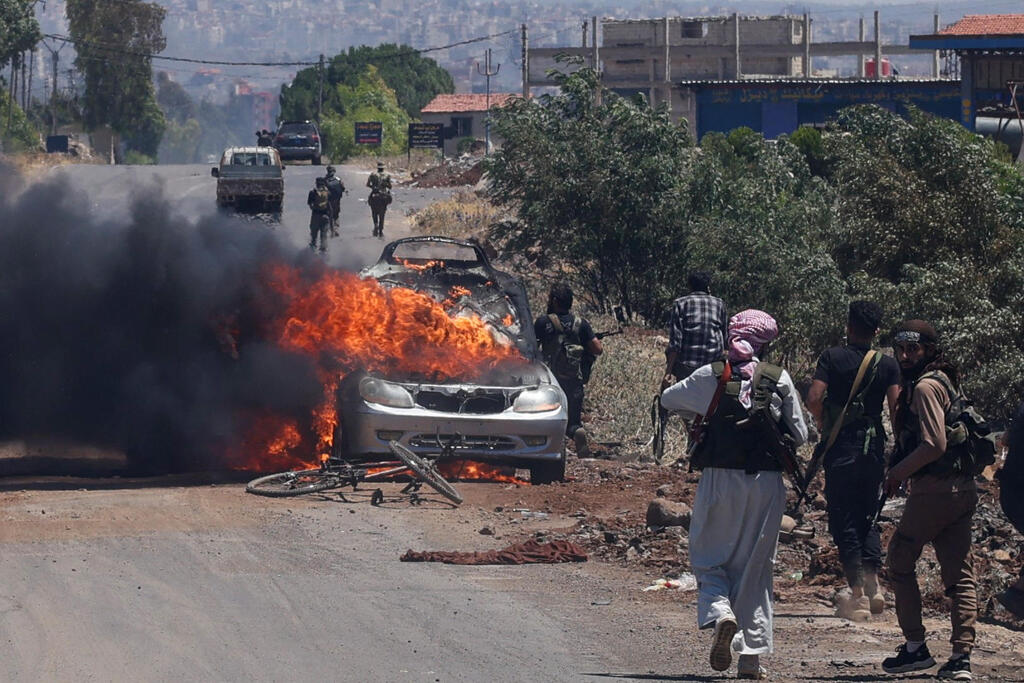
Deadly clashes in Sweida
(Photo: Bakr ALKASEM / AFP)
Omar Obeid told AFP that three of his colleagues were killed, including one who was "shot dead in his house, in front of his family".
Another was killed at point-blank range in her car as she drove through a security checkpoint, he said.
The third, "surgeon Talaat Amer was killed while he was at the hospital on Tuesday in a blue surgical gown to perform his duty", Obeid said.
"They shot him in the head. Then they called his wife and told her: your husband was wearing a surgical cap — it's red now."