



Prime Minister Benjamin Netanyahu celebrated his 77th birthday on Wednesday, receiving a cake during a visit to the southern Israeli city of Dimona. But next Tuesday, October 27, he will mark another milestone: At 77 years and six days old, he will become the oldest candidate for prime minister in Israel's history.
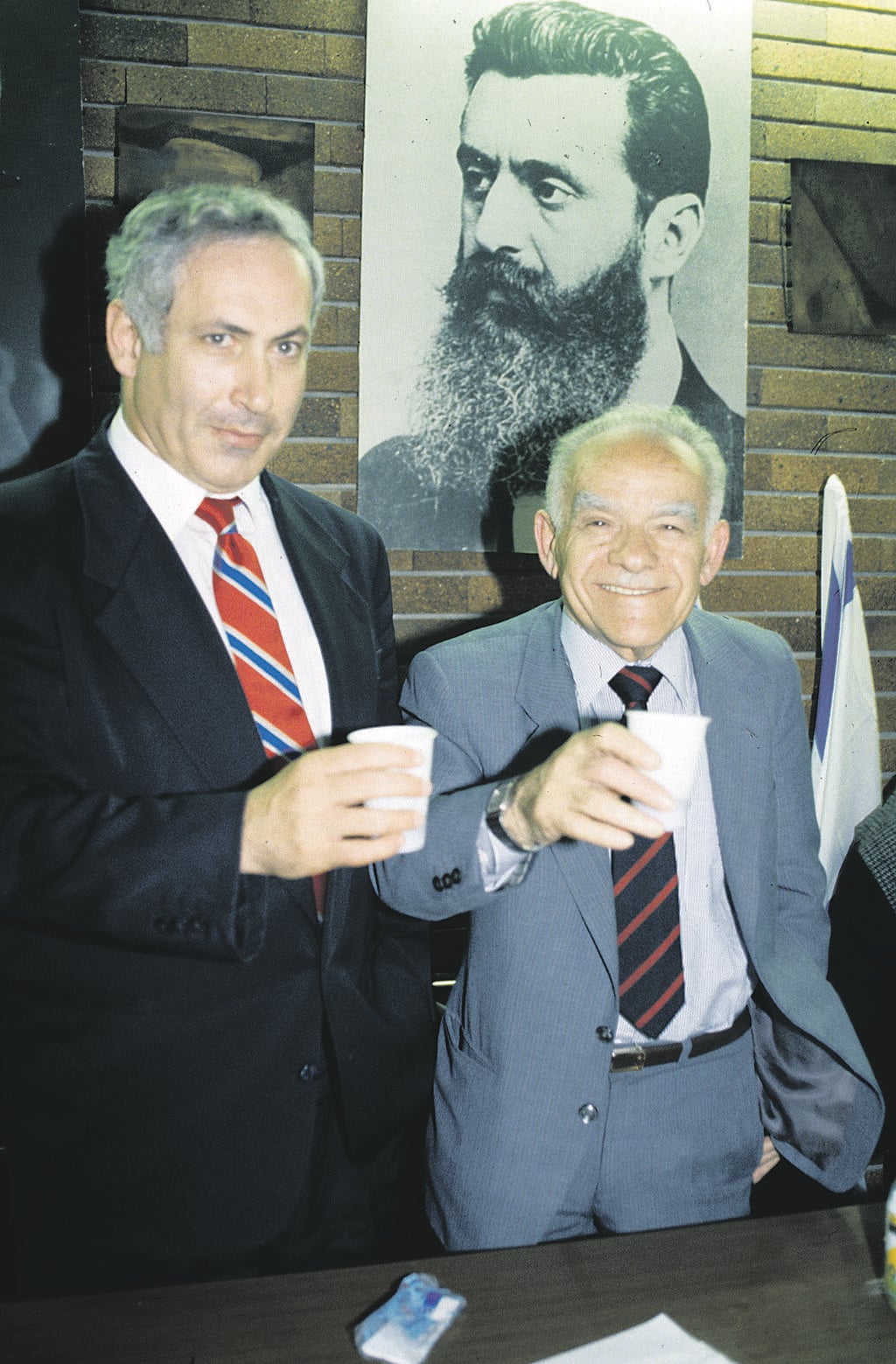
The previous record was held by former Prime Minister Yitzhak Shamir, who led the Likud party into the 1992 election at the age of 76 years and eight months, ultimately losing to Yitzhak Rabin. Netanyahu, already Israel's longest-serving prime minister in terms of cumulative time in office, is now poised to claim another historical distinction.
There is, however, an important difference between being the oldest candidate and the oldest person to hold the office. That record still belongs to Ariel Sharon, who formally remained prime minister until April 2006, when he was 78 years and one month old.
Netanyahu's new milestone is particularly striking given how his political career began. In 1996, at just 46, he defeated Shimon Peres in Israel's first direct election for prime minister, becoming the youngest person ever to lead the country. Three decades later, he is about to set a record at the opposite end of the age spectrum.
A look back at Israel's leaders reveals how the ages of its prime ministers have varied throughout the country's history. David Ben-Gurion, Israel's founding prime minister, was 61 when he declared independence in May 1948. Despite his nickname, "the Old Man," he was considerably younger than Netanyahu is today.
Ben-Gurion served as prime minister almost continuously until June 1963, when he stepped down at 76. He remained politically active as a member of the Knesset, Israel's parliament, before finally retiring in 1970 at the age of 83.

The birthday cake presented to Netanyahu during his visit to Dimona
(Photo: Ilana Curiel)
His successor, Levi Eshkol, was 67 when he took office. Eshkol led his party to victory in the 1965 election and was prime minister during the Six-Day War in 1967. He died in office in February 1969 at the age of 73.
Eshkol was succeeded by Golda Meir, who became Israel's first female prime minister at the age of 70. She remains the only woman to have held the position. Meir led her party to election victories in 1969 and 1973, when she was 75. But growing public criticism of the government's handling of the Yom Kippur War prompted her resignation in April 1974 and eventual retirement from political life.
Yitzhak Rabin succeeded Meir at the age of 52, becoming Israel's first native-born prime minister. His relatively young age stood in contrast to several of his predecessors.
The historic political upheaval of 1977 brought Menachem Begin to power, ending nearly three decades of Labor-led governments. Begin, who had spent decades leading the opposition, became the first Likud prime minister at 63.
Following Begin's resignation in 1983, Yitzhak Shamir took over. He celebrated his 68th birthday just 12 days after assuming office.
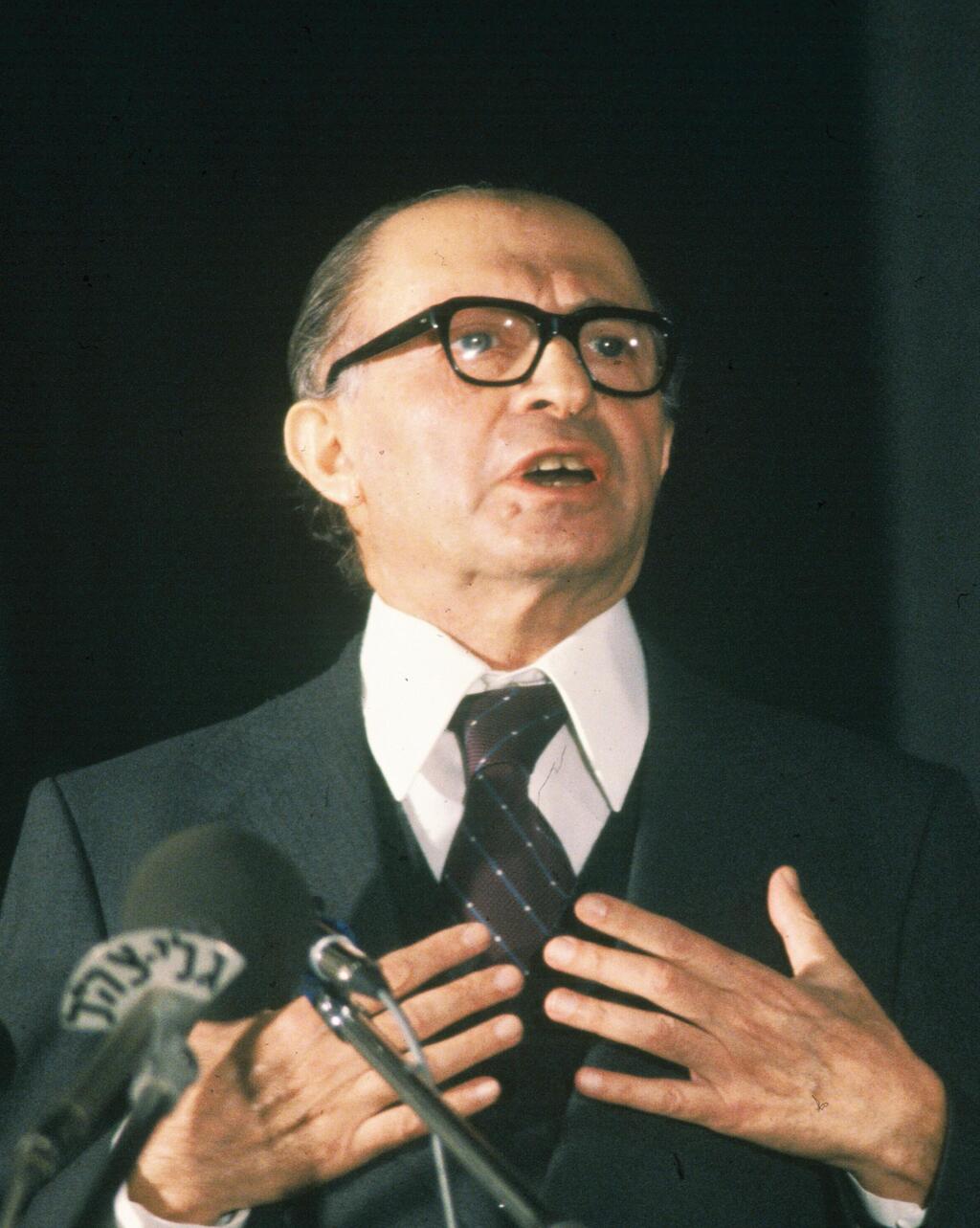
Menachem Begin, who became prime minister at age 63
(Photo: David Rubinger)
The national unity government established after the 1984 election introduced a rotation agreement between Israel's two major political blocs. Shimon Peres became prime minister first, at 61, before handing the position back to Shamir two years later. Shamir returned to office just two days before his 71st birthday.
Shamir remained prime minister following the 1988 election, but his political career reached its turning point in 1992. At 76 years and eight months, he led Likud into another election, only to lose to Rabin, who returned to the premiership at the age of 70.
After Rabin was assassinated on November 4, 1995, Peres again assumed the premiership, this time at 72. The following year, he faced Netanyahu in a direct contest for the country's leadership and lost to the 46-year-old Likud leader.
Netanyahu served until 1999, when he was defeated by Ehud Barak, who was then 57. Less than two years later, Barak was replaced by Ariel Sharon, who took office in March 2001 at the age of 73.
Sharon secured another election victory in 2003, less than a month before his 75th birthday. He continued serving until suffering a severe stroke in January 2006 that left him in a coma. Although Ehud Olmert assumed his duties, Sharon formally retained the title of prime minister until April 14, 2006, making him the oldest person ever to hold the position, at 78 years and one month.
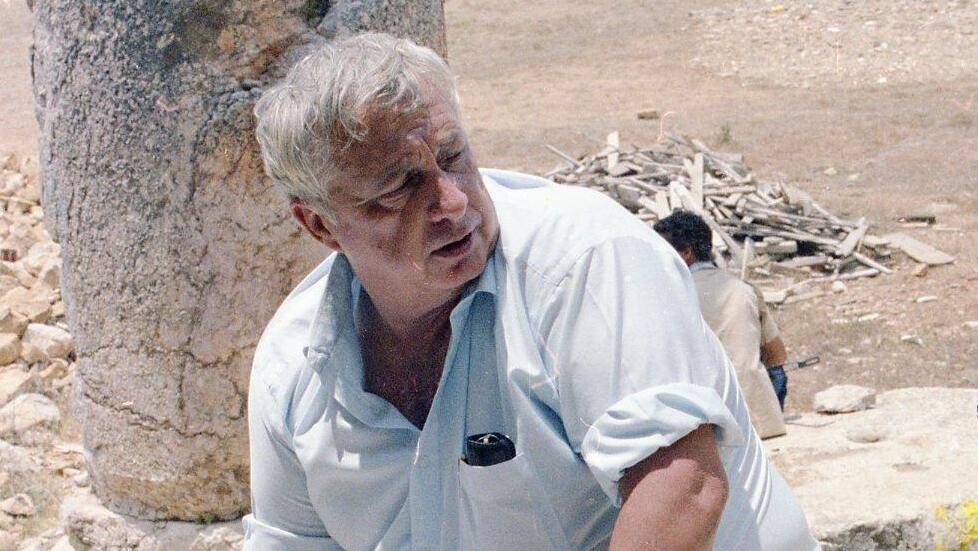
Ariel Sharon, the oldest person to formally hold office as Israel's prime minister
(Photo: IDF Archives, Defense Ministry)
Olmert, who succeeded Sharon, was 60 when he assumed office. In March 2009, Netanyahu returned as prime minister at 59, beginning more than 12 consecutive years in power. That period ended in June 2021, when Naftali Bennett replaced him at the age of 49.
Bennett served for just over a year before handing the premiership to Yair Lapid in July 2022. Lapid was 58 when he took office. Netanyahu subsequently returned to power in December 2022.
As Israel prepares for its October 27 election, the ages of the leading political figures span more than three decades. Netanyahu, at 77, is the oldest among the party leaders listed in the current race, followed by Avigdor Liberman, 68; Aryeh Deri, 67; Gadi Eisenkot, 66; and Yair Golan, 64.
Other figures include Yaakov Asher, 61; Ofer Winter, 55; Naftali Bennett and Yousef Jabareen, both 54; Mansour Abbas, 52; Yoaz Hendel, 51; Itamar Ben-Gvir, 50; and Bezalel Smotrich, 46.
For comparison, U.S. President Donald Trump celebrated his 80th birthday in June. Trump was 78 when he won his second, nonconsecutive presidential term in November 2024 and is expected to be 82 when his current term ends in January 2029.
Netanyahu's approaching election record requires no victory at the ballot box. Regardless of the outcome, he will surpass Shamir as the oldest person to seek Israel's premiership in a national election. Whether he will eventually surpass Sharon's record as the oldest serving prime minister is another question entirely.