

For the first time since Israel's election, and just ahead of the consultations with President Isaac Herzog over who should form the next government, the leaders of the bloc seeking to replace Prime Minister Benjamin Netanyahu are meeting Tuesday. Before the gathering at the Dan Accadia Hotel in Herzliya, opposition leader Yair Lapid told reporters that "the conduct of the past few days is another reminder that we need to remove Netanyahu and his people from the Prime Minister's Office."
Joining Lapid at the meeting are the leaders of the four parties in the bloc, which together won 48 Knesset seats: Yashar! chairman Gadi Eisenkot, Beyachad chairman Naftali Bennett, Democrats chairman Yair Golan and Yisrael Beytenu chairman Avigdor Liberman.
Gallery
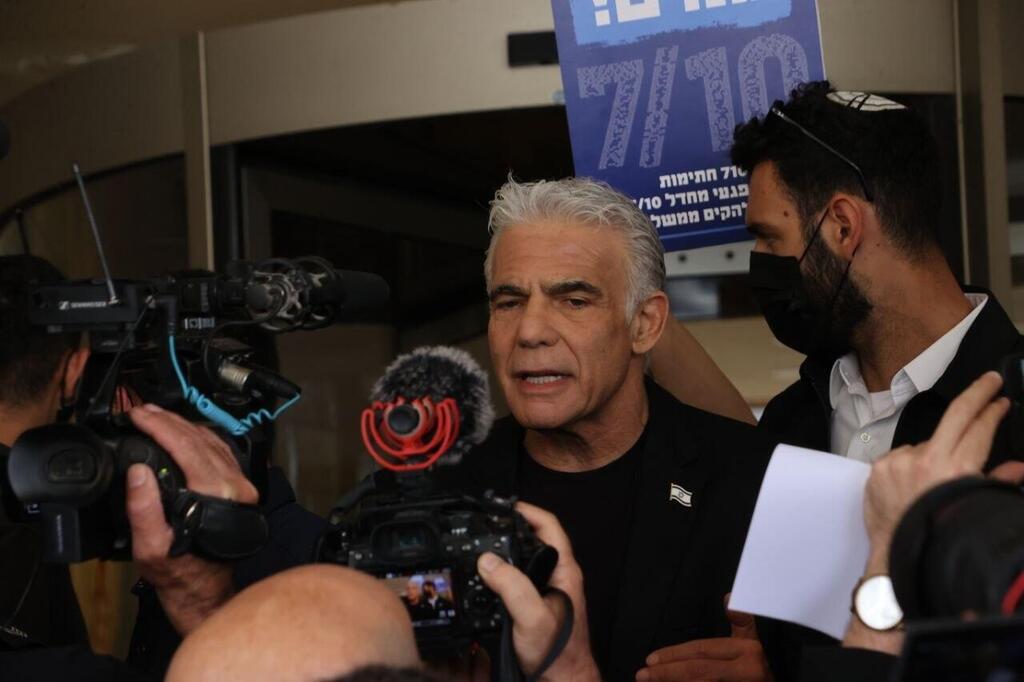
Opposition leader Yair Lapid arrives at the meeting: 'We need to remove Netanyahu from office'
(Photo: Moti Kimchi)
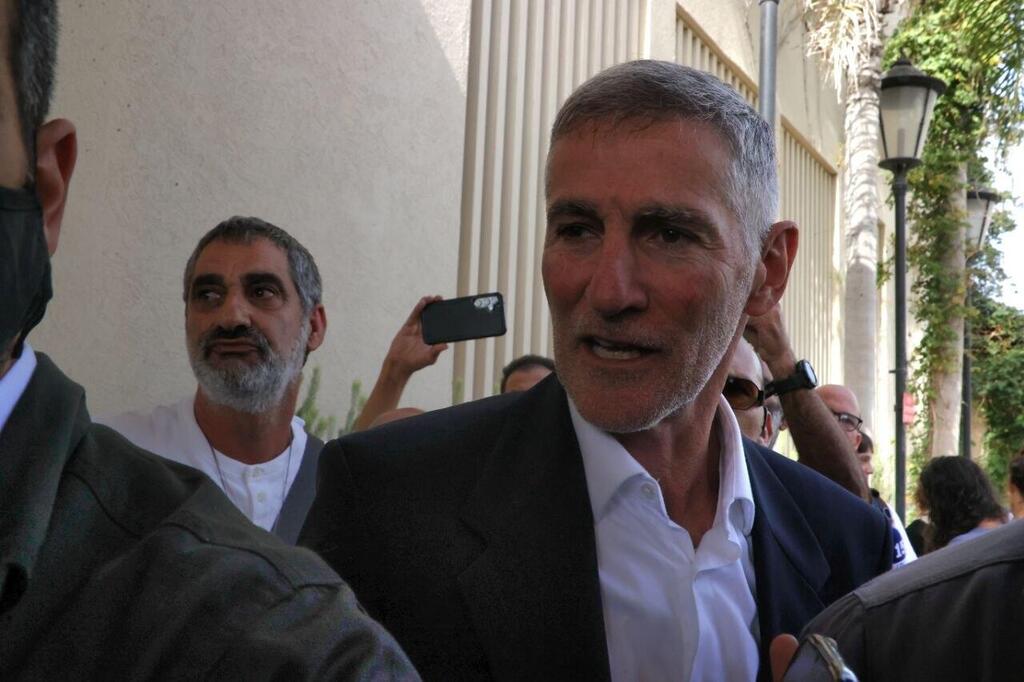
Democrats chairman Yair Golan
(Photo: Moti Kimchi)
Speaking as he arrived, against the backdrop of Likud's claims of "election theft" and an ongoing investigation into the matter, Lapid said: "We are facing an extreme and dangerous attempt to invalidate the election. I have been shown all the intelligence material. The election was conducted properly, and there is absolutely no reason to overturn it. They are simply unwilling to admit that they lost. Now we need to form a government. Netanyahu and his people have caused enough damage to the State of Israel and the people of Israel."
Golan, who is pushing for cooperation with the Arab parties, met earlier Tuesday with Joint List leaders Yousef Jabareen and Ahmad Tibi. Liberman, meanwhile, did not rule out forming a government with the ultra-Orthodox parties. In a social media post, he wrote: "We must prevent another election. In the current political situation, there is enough room for maneuver, and with the right navigation, we can quickly establish a functioning, stable government without Ra'am or the Joint List."
Senior figures in the change bloc say their immediate priorities include what they describe as a "takeover of the Knesset," replacing Speaker Amir Ohana, establishing the Arrangements Committee responsible for organizing parliamentary proceedings and repealing controversial legislation advanced by the coalition during the previous term. Beyond the Knesset, which the bloc now considers its "most urgent task" ahead of the swearing-in of the new parliament, discussions are also focusing on the party leaders' plans for the coming period. Each has a different position and a different understanding of the political opportunities available.
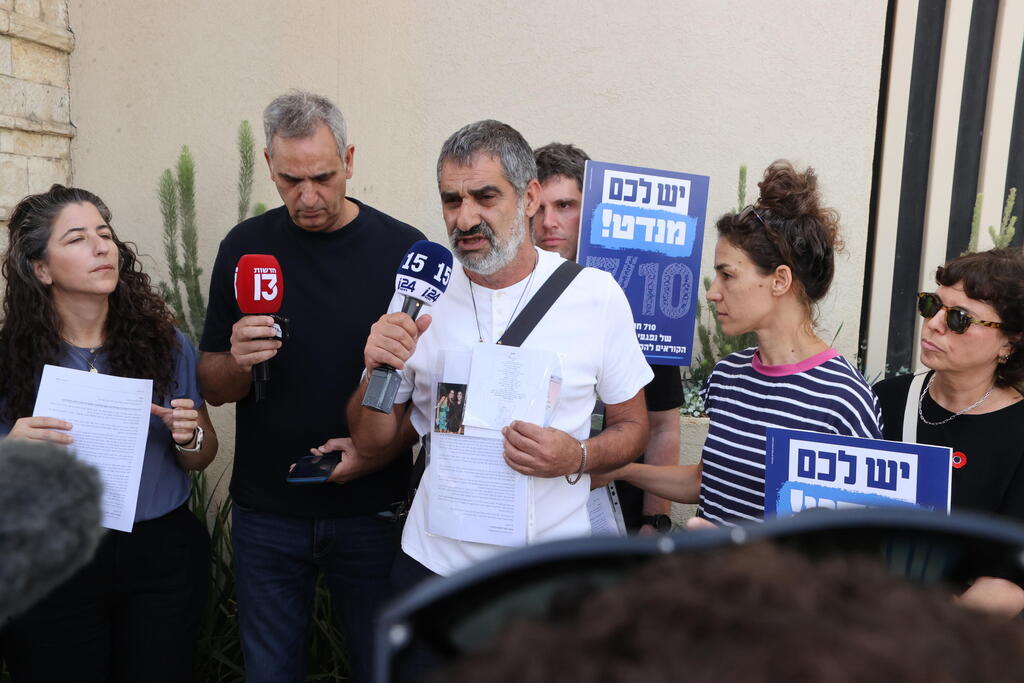
Representatives of families affected by the October 7 massacre protest outside the meeting
(Photo: Moti Kimchi)
Eisenkot is determined to advance the formation of a minority government and has decided to focus, among other things, on the ultra-Orthodox parties. However, he has not publicly ruled out relying on the Arab parties for support. Nor has he rejected the possibility of a unity government, although he remains concerned that Netanyahu could once again maneuver politically to the disadvantage of his partners.
Liberman categorically rules out serving in a government with Netanyahu but has left the door open to discussions about bringing the ultra-Orthodox parties into a coalition. That possibility remains complicated by the unresolved military conscription framework, which the next government will have to address.
Golan is pressing forcefully for a government supported by Ra'am, repeatedly emphasizing that the votes of Arab citizens, who turned out in unusually high numbers in this election, cannot be ignored.
Bennett, however, shares Liberman's view that a government cannot depend on the votes of the Arab parties. He believes that if Eisenkot pursues that path, the government would not survive, leading to another election in which Netanyahu could return stronger and remain in power for a lengthy term.
The disagreements extend beyond the composition of the next government to the appointment of the next Knesset speaker. Liberman and Bennett want Lapid to take the position, while Eisenkot wants it filled by a member of his own party. During Tuesday's meeting, the leaders are expected to discuss replacing the current speaker and the mechanisms for doing so. Such a move would require the signatures of 61 Knesset members.
Another issue concerns the preliminary work conducted by teams representing the parties during the election campaign. The teams held extensive discussions about legislation that could be advanced during a transitional period, although both Eisenkot and Liberman have reservations about some of the proposals. Eisenkot, for example, objected to applying a proposed "defendant's law" retroactively. Liberman, meanwhile, has made clear that he believes legislation establishing a state commission of inquiry could not be passed by a caretaker government if Israel were forced into another election.
Representatives of families affected by the October 7 massacre also arrived at the meeting. Outside the venue, they declared: "You have a mandate. Do not help legitimize leaders who were at the wheel during the massacre. Form a government of change."
They added: "The people cast a vote of no confidence in the government of October 7. We demand that you work together to replace the government of the massacre, establish a state commission of inquiry and restore the founding values on which the State of Israel was established."
First published: 12:23, 11.03.26